5 Simple Steps to Clean Your Glock 43X
Many Glock 43X owners know the struggle of keeping their firearm in top shape. You’re not alone—proper cleaning can seem intimidating or time-consuming.
But with a few simple steps, you can maintain your gun’s performance and longevity.
To clean your Glock 43X, start by gathering supplies like a brush, patches, solvent, and lubricant.
Safely disassemble the firearm following the manufacturer’s instructions.
Clean the barrel and chamber thoroughly with solvent and patches until they come out clean.
Apply a small amount of lubricant to key contact points on the slide and frame.
Finally, reassemble the gun, check its functions, and verify everything works smoothly.
If you keep going, you’ll learn even more tips for proper gun maintenance.
Key Takeaways
- Make sure the firearm is unloaded, then safely disassemble the Glock 43X following the manufacturer’s instructions.
- Clean the barrel and chamber thoroughly with solvent and brushes until the patches come out clean.
- Wipe all parts with a microfiber cloth, removing debris and residue from the slide, frame, and internal components.
- Apply a light, even coat of lubricant to the slide rails, barrel lug, and contact points.
- Reassemble the firearm, check for smooth operation, and perform a safety check before use.
Gather the Essential Cleaning Supplies for Your Glock 43X
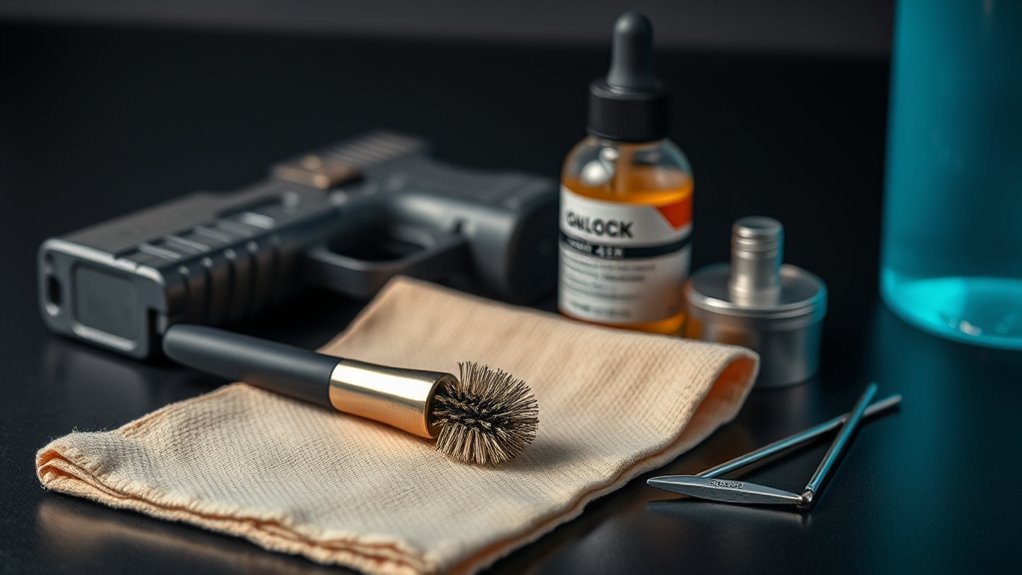
Before you start cleaning your Glock 43X, gather all the necessary supplies to make the process smooth and efficient. Having the right cleaning tools on hand means you won’t waste time searching during the job.
You’ll need a cleaning brush, patches, cleaning solvent, lubricating oil, and a microfiber cloth. A small brush or toothbrush helps reach tight spots, while cotton swabs are great for detailed cleaning.
Maintenance tips suggest using high-quality cleaning solvent to break down residue and prevent corrosion. Don’t forget to have a bore brush or cleaning rod for thorough barrel cleaning.
Keep a spray bottle for easy application and a soft cloth for wiping down parts. Gathering these supplies beforehand helps you stay organized and focused.
Plus, it reduces the risk of skipping steps or rushing through the process. Proper tools are key to effective cleaning and maintaining your Glock 43X’s reliability.
Safely Disassemble Your Glock 43X
Disassembling your Glock 43X safely is an important step to guarantee proper cleaning and maintenance. Before you start, make sure the firearm is unloaded—remove the magazine and check the chamber.
Always ensure your Glock 43X is unloaded before disassembly for safe and effective cleaning.
Follow the manufacturer’s instructions carefully to avoid damage or injury. Safety is key, so never force parts apart or rush through the process.
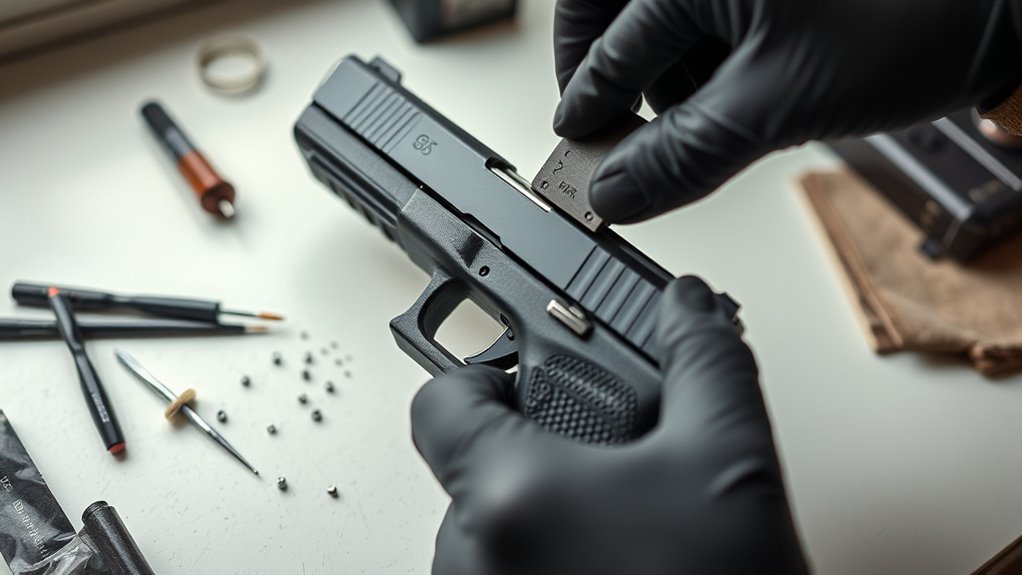
Begin by pulling down the slide lock and releasing the slide, then carefully remove the slide from the frame. Next, take out the recoil spring assembly and the barrel.
Keep track of small parts and spring tension to prevent accidental injuries. Always work in a clean, well-lit area, and wear eye protection if needed.
Following these tips ensures you disassemble your Glock 43X correctly and safely. This makes cleaning easier and helps keep your firearm reliable.
Proper disassembly also prepares your gun for effective cleaning and smooth operation.
Clean the Barrel and Chamber of Your Glock 43X
After you’ve safely disassembled your Glock 43X, it’s time to clean the barrel and chamber. Keeping these parts in great shape is key for reliable performance.
Start by applying a cleaning solvent to a bore brush and scrubbing the inside of the barrel thoroughly. This helps remove residue and fouling that can affect accuracy.
Be sure to clean the chamber area as well since carbon buildup there can impact chamber function and locking. Use a clean cloth or patches to wipe away loosened debris.
Repeat the process until the patches come out clean. Then, run a dry patch through the barrel to remove any remaining solvent.
Inspect the chamber for stubborn fouling and clean as needed. Keeping the barrel and chamber spotless ensures smooth operation and better accuracy.
Lubricate the Frame and Slide of Your Glock 43X
Once you’ve cleaned the barrel and chamber, it’s important to lubricate the frame and slide to ensure smooth operation and prevent wear. Proper frame maintenance helps your Glock 43X function reliably.
Lubricate the Glock 43X slide and frame after cleaning to ensure smooth operation and prevent wear.
Use a small amount of high-quality firearm lubricant and apply it to key contact points on the slide and frame. Focus on areas like the slide rails, barrel lug, and contact surfaces where metal touches metal.
Apply a few drops of lubricant, then spread them evenly with a clean cloth or your finger. Avoid over-lubricating, as excess oil can attract dirt and debris and hinder performance.
A well-lubricated slide reduces friction and wear, helping extend your firearm’s lifespan. The goal is to create a thin, even film that makes cycling smooth without any buildup.
Regular lubrication during frame maintenance keeps your Glock 43X operating smoothly and reliably.
Reassemble and Test Your Glock 43X
Begin reassembling your Glock 43X by carefully lining up all the parts and making sure each piece fits snugly into place. Use proper reassembly techniques, like aligning the slide to the rails and securing the recoil spring.
Make sure the slide moves smoothly without resistance and that the barrel sits properly. Once everything is assembled, do a thorough function test. Check the slide’s movement, trigger operation, and safety features to make sure they work correctly.
Verify that the magazine releases properly and that the gun cycles as it should. Always double-check that all parts are securely in place to prevent malfunctions. Conduct a basic safety check, like pulling the trigger to see if the striker cocks and releases properly.
If anything feels off during the function test, disassemble and review your reassembly steps. Correctly reassembling your Glock 43X and performing these tests ensures it functions reliably and safely.
Frequently Asked Questions
How Often Should I Clean My Glock 43X?
You should clean your Glock 43X after every 200 to 300 rounds fired or if it gets visibly dirty or wet.
Keeping up with regular cleaning helps ensure it performs reliably and lasts longer.
Adjust your cleaning schedule based on how often you shoot and the conditions you’re in.
But don’t skip routine maintenance—cleaning after each use is best for safety and proper function.
Staying consistent with your maintenance keeps your firearm in top shape.
Can I Use Regular Household Cleaners on My Glock 43X?
Think of your Glock 43X as a delicate instrument, not a kitchen sponge. You shouldn’t use regular household cleaners because their safety isn’t guaranteed for firearms.
Household cleaner safety varies, and some products can corrode or damage parts, undermining cleaning product effectiveness. Stick to gun-specific solvents and oils to preserve your firearm’s integrity.
This careful approach guarantees your Glock stays reliable and helps you avoid the pitfalls of harsh, unsuitable chemicals.
What Signs Indicate My Glock Needs Professional Maintenance?
If your Glock 43X shows signs like failure to fire, misfeeds, or inconsistent cycling, it’s a good idea to get it checked by a professional. These are clear indicators that maintenance is needed.
Keep an eye out for wear such as excessive slide or barrel wear, damaged springs, or corrosion. These issues can affect how safe and reliable your gun is to use.
When you notice any of these signs, don’t delay. Talk to a gunsmith to keep your firearm in top shape and ensure it’s safe to shoot.
Is It Necessary to Replace Parts During Cleaning?
Part replacement isn’t always necessary during cleaning, but it’s smart to keep an eye out for wear and tear that can shorten a part’s lifespan.
If you clean your gun often, you might prevent buildup that could cause damage, which means you might not need to replace parts as frequently.
But if you notice parts are visibly worn or not working right, it’s best to replace them to keep your Glock 43X safe and smooth.
Regular inspections are key—they help you decide if a part needs swapping, so your gun stays reliable and ready to go.
How Do I Prevent Rust and Corrosion on My Glock 43X?
To prevent rust and corrosion on your Glock 43X, make sure to regularly apply a light coat of gun oil, especially on the metal parts.
Store your firearm in a dry, cool place, and consider using silica gel packs to help control moisture around it.
After exposure to moisture or sweat, wipe down your gun to keep it dry, and check it regularly for any signs of rust.
Following these simple steps will help keep your Glock in top shape and protected from rust and corrosion.
Conclusion
Think of cleaning your Glock 43X like tuning a fine instrument. You keep it in harmony, ready when you need it most. Just as a musician carefully cares for each string, regular cleaning ensures your firearm performs flawlessly.
Skipping this step is like ignoring a warning light on your dashboard. It might seem minor, but it can lead to bigger issues down the road. Staying proactive helps keep your Glock 43X reliable.
Take care of your Glock 43X, and it will serve you well for years to come. Regular cleaning is the key to keeping it in top shape and ready whenever you need it.