Mastering Open Sights – A Step-by-Step Guide to Shooting
Struggling to hit your target consistently with open sights? You’re not alone—many shooters find it tricky to master proper technique and get the accuracy they want. The good news is, with some focused practice, you can improve faster than you think.
To master open sights, start with understanding how they work by focusing on the front sight while letting the target blur. Choose sights compatible with your firearm and adjust them carefully for accuracy.
Practice your stance, breathing, and trigger control to improve consistency. Use drills to build muscle memory and troubleshoot common mistakes like misalignment or unstable sight picture.
Keep refining your technique, and you’ll gain confidence. Continue exploring to uncover more tips and techniques for precision shooting.
Key Takeaways
- Focus on sharpening the front sight while letting the target blur for the best sight picture.
- Choose open sights that work well with your firearm and adjust them carefully for accuracy.
- Zero your sights at a specific distance so your point of aim lines up with the point of impact.
- Keep a steady stance, good posture, and control your breathing to stay stable and consistent.
- Practice targeted drills, focus on proper sight alignment, and troubleshoot common issues for continuous improvement.
How Open Sights Work and the Fundamentals You Should Know
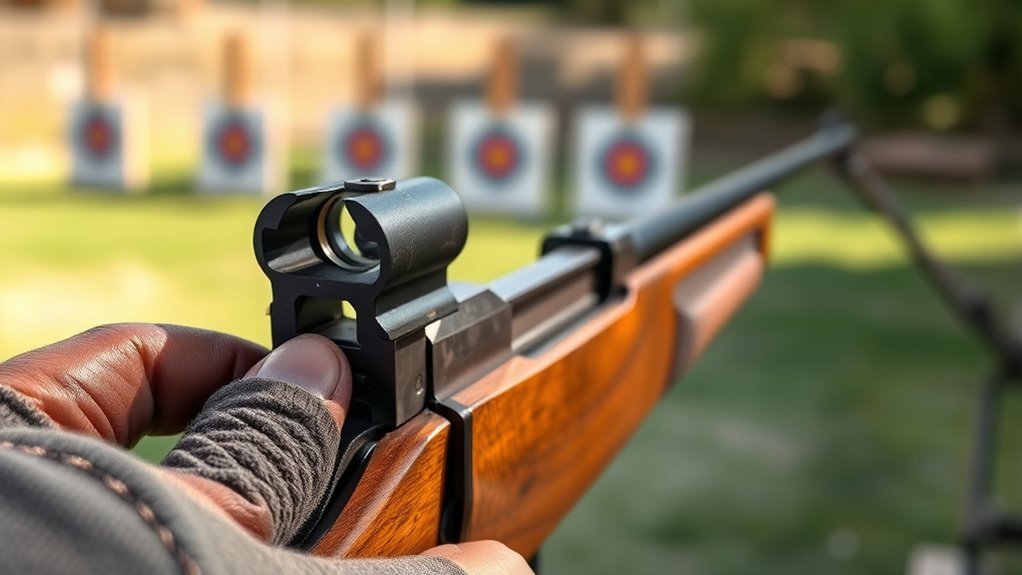
Open sights are one of the simplest aiming systems used on firearms, relying on a fixed front sight and a rear sight notch to align your shot. To use them effectively, you need solid sight acquisition techniques, which involve quickly and accurately lining up the front and rear sights with your target.
Focus on keeping the front sight sharp and clear, while letting the target blur slightly in the background. Your goal is to develop a natural, steady sight picture that becomes second nature.
Keep the front sight sharp and clear, allowing the target to blur slightly for steady, natural aim.
When engaging targets, focus on the front sight during the shot process rather than the target itself. This guarantees better precision and consistency.
With practice, you’ll improve your ability to swiftly acquire sights and maintain proper alignment, making your shots more accurate. Mastering these fundamentals boosts your confidence and effectiveness in many shooting scenarios.
How to Choose the Right Open Sight for Your Shooting Style
Choosing the right open sight really depends on your firearm and how you like to shoot. It’s a good idea to think about the kind of adjustments the sights offer and whether those match what you’re looking for in terms of accuracy and quick target acquisition.
When you keep these factors in mind, you’ll be able to pick sights that actually help improve your shooting performance and make your experience more enjoyable.
Compatibility With Firearm
Finding the right open sight for your firearm starts with understanding compatibility. You need to check sight material options like steel, aluminum, or polymer, which influence durability and weight.
Make sure the sight fits your firearm’s mounting system—some models need specific dovetail or rail mounts. Also, check the size and height to match your shooting style and how your firearm feels.
When installing, follow tips like tightening screws properly without overtightening to avoid damage. Confirm the sight lines up with your bore and stays zero after installation.
Compatibility isn’t just about fitting; it’s about making sure the sight matches your firearm’s design and your shooting preferences for the best accuracy and performance.
Sight Adjustment Features
Understanding the adjustment features of your open sight is essential because they directly impact your ability to fine-tune accuracy for different shooting conditions. Proper sight adjustment techniques help you achieve precise shot placement.
When choosing the right open sight, consider these key aspects:
- Adjustment turrets: Make sure they are smooth and easy to turn for quick calibration.
- Range of motion: Check if the sight allows fine, incremental adjustments suitable for your shooting distance.
- Calibration marks: Look for clear, visible indicators to help you perform accurate sight calibration.
Mastering these features enables you to make precise adjustments, improving overall accuracy and consistency. Focus on selecting sights with reliable adjustment mechanisms that suit your shooting style and environment.
Personal Shooting Preferences
Selecting the right open sight depends on your shooting style and the conditions you usually face. Your personal preferences really matter, as they affect how comfortable and confident you feel aiming.
If you’re into quick target acquisition, a larger front sight might be better for you. But if precision is your main goal, a finer sight could be the way to go.
Think about your shooting style—whether it’s hunting, target shooting, or casual plinking—as this will influence the best type of open sight for you.
Comfort and ease of use are key, so try out different options to find what feels natural.
Choosing sights that match your personal preferences will give you a better shooting experience and help improve your accuracy over time.
How to Properly Align Your Open Sights for Better Accuracy
To improve your shooting accuracy with open sights, you need to make sure they’re properly aligned before each shot. Achieving a perfect sight picture isn’t just about lining up the front and rear sights; it’s about being consistent with your technique.
Start by focusing on your dominant eye to make target acquisition easier and keep a steady shooting rhythm. Use focus drills to sharpen your ability to quickly center the sights on your target.
When aligning, make sure your front sight is level with the rear sight and centered within the notch. If needed, make windage adjustments to get the sights properly aligned, and set your elevation based on the distance.
How to Zero Your Open Sights for Consistent Shooting
Zeroing your open sights is key to hitting your target consistently. It involves adjusting your sights so your point of aim lines up with your point of impact at a specific distance.
Start by choosing the right ammunition and considering your eye dominance and shooting conditions. Use sight calibration techniques like windage and elevation adjustments to account for bullet drop and target distance.
Make sure you maintain a clear sight picture, keeping your sights steady and focused. Regularly check and clean your sights so your adjustments stay accurate over time.
After each shot, evaluate your accuracy and make small tweaks if needed. Consistency in calibration and assessment will boost your precision with open sights, helping every shot count.
| Shooting Factors | Adjustment Focus |
|---|---|
| Windage adjustments | Corrects horizontal drift |
| Elevation (bullet drop) | Compensates for distance |
| Sight maintenance | Keeps sights reliable |
How to Find a Steady Shooting Stance and Control Your Breathing
If you want to shoot accurately, the first thing you need is a steady stance and controlled breathing. Think of it like setting a strong foundation—you want to stand in a way that keeps you balanced and stable. Keep your posture upright but relaxed, and plant your feet shoulder-width apart to stay grounded.
Once you’ve got your stance down, focus on your breathing. Practice taking slow, deep breaths to help keep your hands steady and your aim on point. When you breathe steadily, it’s easier to hold your position and shoot accurately. It’s all about staying relaxed and in control.
Establish a Stable Base
Finding a stable shooting stance is key to accuracy, and it all starts with your footing. A solid base helps you control your breathing and improves your shooting fundamentals. To do this, focus on:
- Feet placement – Stand with your feet shoulder-width apart, slightly staggered for better balance.
- Grip techniques – Keep your grip firm but relaxed, supporting the firearm without tensing up.
- Body alignment – Lean a little forward, with your weight evenly spread on both legs for stability.
These steps create a steady platform, so you can focus on your breathing and sight alignment. Remember, a good stance minimizes movement and keeps you in control, making your shots more accurate.
Maintain Proper Posture
Maintaining proper posture is key for a steady shot and good breathing control. It ensures your body is aligned correctly, which directly affects your shooting accuracy.
Having a stable foundation is important. Stand with your feet shoulder-width apart and distribute your weight evenly. Keep your back straight, relaxed, and aligned with your hips, avoiding tension that could cause instability.
Support your arms comfortably so you can hold the firearm steady without strain. Proper body alignment helps reduce fatigue and keeps your aim consistent.
A stable, balanced stance minimizes movement, allowing you to focus on your breathing and trigger control. Prioritize good posture to improve your overall shooting consistency and accuracy.
Practice Controlled Breathing
Practicing controlled breathing helps you stay calm and focused, making it easier to find a steady shooting stance. Using effective breathing techniques reduces stress and boosts your stability. To master this, try these steps:
- Inhale slowly through your nose, filling your lungs completely.
- Hold your breath briefly, just enough to steady yourself.
- Exhale smoothly through your mouth, releasing tension.
Repeat this cycle until your breathing becomes natural and relaxed. Controlled breathing minimizes body movement caused by stress and helps you maintain a stable stance.
Focus on steady, even breaths to improve stress management and enhance accuracy. Remember, consistent practice of these techniques will make controlled breathing second nature, supporting your overall shooting success.
Techniques to Improve Your Sight Picture and Focus
To sharpen your sight picture and improve focus with open sights, develop intentional techniques that refine your visual attention. Practice consistent sight alignment, making sure the front and rear sights are perfectly aligned with the target.
Focus on acquiring the target quickly but stay calm, minimizing distractions. Keep your eyes relaxed and stay centered on the sight picture—avoid rushing.
Incorporate these methods into your routine:
| Technique | Benefit |
|---|---|
| Focus on the front sight | Sharpens sight alignment and focus |
| Maintain steady breathing | Reduces movement and boosts clarity |
| Use natural point of aim | Improves target acquisition speed |
Effective Shooting Drills to Improve Open Sight Shooting
Implementing targeted shooting drills can greatly improve your open sight skills by building consistency and confidence. To boost your performance, focus on different drill variations that mimic various shooting scenarios like static targets, moving targets, or timed exercises.
Use a variety of target types—paper, steel, or silhouette—to challenge your visual acuity and adaptability. Practice regularly, at least a few times each week, to reinforce muscle memory and mental focus.
Incorporate feedback mechanisms such as shot group analysis or coaching to identify weaknesses and track your progress. For competitive shooting, simulate match conditions to sharpen your skills under pressure.
Regular skill assessments and tracking your performance help you see improvements and set realistic goals. Remember, combining these drills with deliberate practice ensures steady progress, sharpening your open sight accuracy and confidence for every shooting situation.
Common Open Sight Shooting Mistakes and How to Fix Them
Many shooters struggle with common mistakes that hurt their open sight accuracy, often without realizing how small errors can add up over time. One typical issue is a shaky sight picture, which leads to inconsistent aiming.
Another problem is poor trigger control, causing jerky shots and missed targets. Rushing the shot or not focusing on proper sight alignment can also throw off your aim.
| Mistake | Fix | Tip |
|---|---|---|
| Unsteady sight picture | Practice steady breathing and slow focus | Use a relaxed grip to reduce movement |
| Poor trigger control | Practice smooth, deliberate trigger pulls | Avoid jerking or slapping the trigger |
| Rushing the shot | Take your time aligning sights before firing | Wait for a stable sight picture before squeezing the trigger |
Tips to Progress From Beginner to Advanced Open Sight Shooter
Building on your knowledge of common mistakes, honing your skills from beginner to advanced open sight shooter requires intentional practice and refinement. To improve, focus on these key areas:
- Refine your sight picture by practicing focus techniques that keep your dominant eye aligned with the open sights. This helps ensure you acquire your target clearly and quickly.
- Develop a consistent shooting rhythm that balances breath control and trigger squeeze. This consistency helps you maintain steady shot placement at different distances.
- Make precise windage adjustments and learn to estimate distances. Adapting your aim based on environmental factors or target range is essential as you progress.
Troubleshooting Accuracy Issues With Your Open Sights
Having trouble hitting your target when using open sights? First things first, take a look at your sight alignment. Even tiny misalignments can really throw off your accuracy. It’s worth taking a moment to make sure everything lines up perfectly.
Next, check for parallax errors. This happens when your eye isn’t exactly in the right spot relative to the sights, which can lead to inconsistent shots. Adjust your position if needed to keep everything aligned just right.
And don’t forget about your stance. A steady, consistent shooting position makes a huge difference. If your stance shifts or isn’t stable, it can affect where your shots go. So, keep your body steady and practice good technique—your accuracy will thank you!
Proper Sight Alignment Techniques
Proper sight alignment is key to shooting accurately with open sights, and getting it right can really boost your target hits. To shoot consistently well, keep these points in mind:
- Align the sights so the front sight is centered in the rear sight notch, and make sure your sight picture is clear and steady.
- Use focus techniques to keep your eyes sharply on the front sight, not the target, no matter the lighting or how far away the target is.
- Identify your eye dominance and adjust your shooting rhythm to keep proper alignment cues. This helps your sight picture stay clear and reduces parallax errors.
Identifying Parallax Errors
Even when your sights are well aligned and your focus is sharp, parallax errors can still make your shots drift off target. Parallax happens when the sight’s reticle isn’t on the same optical plane as the target, which can affect accuracy.
To spot these errors, watch how your sight picture changes as you move your eye. If the reticle shifts relative to the target, then parallax is likely present. Properly adjusting for parallax can help reduce this issue, especially at different distances.
Think about your distance and optical clarity when calibrating your sights. Focus on maintaining consistent sight alignment techniques and understanding your eye dominance. Improving target acquisition and keeping proper shooting form also help minimize parallax effects.
These steps ensure your aim stays precise, even with slight eye or head movements.
Consistent Shooting Stance
A consistent shooting stance is key for accurate open sight shooting because it gives you a stable base for your aim. To get there, focus on a few simple points:
First, use proper balance by distributing your weight evenly on both feet and keeping your body relaxed. This helps you stay steady and comfortable.
Next, adjust your grip so your hand holds the firearm firmly but not too tight. This reduces torque and unnecessary movement, making your shots more precise.
Finally, keep your posture steady by aligning your shoulders, arms, and head. This helps keep the sights lined up with your target.
Practicing these steps can eliminate variability in your shots, giving you better control and accuracy. Regularly check your stance and make small tweaks to stay consistent, which will improve your open sight shooting skills.
Frequently Asked Questions
How Often Should I Calibrate or Replace My Open Sights?
You should check your open sights regularly to ensure proper sight alignment. Perform sight maintenance every few months or after heavy use to keep them in good shape.
Replace your open sights if they get damaged, become loose, or are misaligned. This is important because it can impact your accuracy.
Regular calibration helps keep your shots on target. And don’t forget, inspecting and maintaining your sights often helps prevent issues caused by wear or accidental impacts.
Can Open Sights Be Used Effectively in Low-Light Conditions?
You might think open sights can’t handle low-light conditions, but with the right techniques, they can still work well.
Focusing on proper sight alignment and maintaining a steady, controlled grip can improve visibility even in dim settings.
Just keep in mind, their effectiveness drops as it gets darker.
If you shoot often in low light, consider adding a flashlight or using illuminated sights for better accuracy.
What Accessories Can Enhance Open Sight Shooting Performance?
You can improve open sight shooting by adding accessories like fiber optic front sights or night sights, which make sight alignment and target acquisition easier in different conditions.
A quality sight picture helps you focus on your target faster, especially in fast-paced situations.
Consider using a scope or magnifier if you want more precision. These accessories boost visibility and accuracy, so you can shoot more effectively no matter the lighting or distance.
They help make your open sight shooting more confident and consistent.
How Do Environmental Factors Affect Open Sight Accuracy?
Think of the wind influence as an unseen painter, subtly shifting your aim with each gust. Temperature effects are like the sun’s quiet magic, warming or cooling your equipment.
These environmental factors can cause your shots to drift, making accuracy a real challenge. You need to anticipate and adapt, kind of like reading the weather’s mood.
To maintain precision with open sights, adjust your stance, breathe steady, and stay aware of nature’s silent influence.
Are There Specific Open Sights Recommended for Different Firearm Types?
Yes, specific open sights are recommended for different firearm types based on sight types and firearm compatibility.
For handguns, simple iron sights work well, providing quick target acquisition and reliability.
Rifles often benefit from adjustable or fiber optic open sights, which improve visibility and accuracy at various ranges.
Shotguns may use bead sights, which are quick to line up and effective for close-range shooting.
Always choose sight types that match your firearm’s design and intended use to ensure proper alignment and accuracy.
Compatibility is key to improving your shooting experience and confidence with your firearm.
Conclusion
Mastering open sights takes patience, practice, and persistence. Understanding how open sights work is the first step toward becoming more accurate and confident.
Choosing the right sight is also crucial. Make sure it fits your firearm and feels comfortable to shoot with.
Aligning your sights properly is key. Take your time to get the front and rear sights perfectly aligned before aiming at your target.
Accurate zeroing helps you hit the mark consistently. Spend time adjusting your sights until your shots land where you want them to.
Maintaining a steady stance and grip prevents unnecessary movement. This stability improves your accuracy with open sights.
Keep refining your technique, and don’t rush the process. Practice regularly and learn from each shot you take.
Avoid common mistakes like rushing your shot or not checking your alignment. These can hold you back from progress.
Stay committed to your improvement. Remember, mastering open sights requires patience, consistent effort, and a willingness to learn.
Every shot teaches you something new. Embrace the journey and celebrate your progress as you become a more skilled shooter.