What Is Hard Cast Ammo and How Is It Made?
Are you tired of dealing with bullets that don’t perform when it counts most? Many shooters struggle with ammo that can’t handle high velocities or deep penetration.
If you’re looking for a reliable solution, hard cast ammo might be just what you need.
Hard cast ammo features specially alloyed lead bullets designed for high durability and deep penetration.
You’ll find these bullets are made by melting lead alloys with metals like antimony and tin, then pouring the mixture into molds.
They are then sized, lubricated, and coated with copper if needed for corrosion resistance.
This process results in bullets that can withstand higher velocities.
If you’d like to know more about how they’re crafted and used, keep exploring.
Key Takeaways
- Hard cast ammo features bullets made from specially alloyed lead for increased hardness and durability.
- It’s produced by melting lead alloys with metals like antimony and tin, then pouring the mixture into molds.
- Copper coatings are often added to prevent lead fouling and corrosion.
- The manufacturing process includes sizing, lubricating, and controlling lead hardness to ensure consistent performance.
- Hard cast ammo is designed for deep penetration, barrier resistance, and reliable performance in tough conditions.
What Is Hard Cast Ammo and Why Is It Popular?
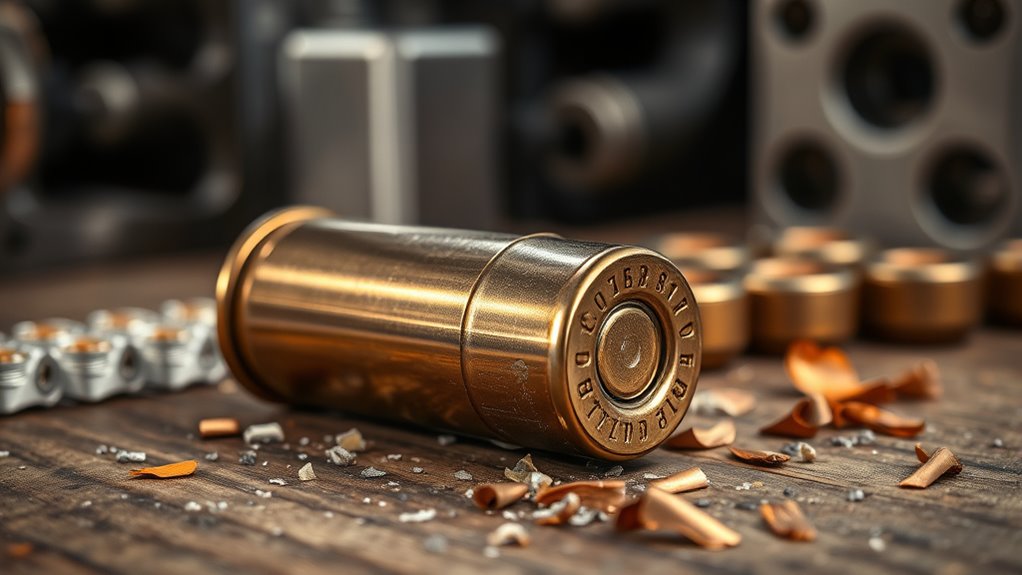
Have you ever wondered why some shooters prefer hard cast ammo? The answer often comes down to performance comparison and shooter preferences.
Hard cast bullets are known for their ability to withstand higher velocities and penetrate deeply, making them popular for hunting and self-defense. Shooters who prioritize stopping power and reliability often choose hard cast because it maintains its integrity better than softer bullets upon impact.
This durability reduces fragmentation and guarantees consistent performance, especially against tough targets like bone or thick hides. Moreover, many shooters prefer the predictable behavior of hard cast ammo, which they trust to perform reliably under various conditions.
The ability to customize loadings for specific needs also appeals to enthusiasts. Overall, the combination of durability, penetration, and consistent performance makes hard cast ammo a top choice for those looking for a dependable and effective option in their firearms.
What Materials Are Used in Hard Cast Bullets?
Hard cast bullets are mainly made from lead alloys combined with other metals to make them stronger and more durable. These alloys often include metals like antimony or tin to increase hardness and resist deformation.
The specific mix of metals affects how the bullet performs, including its weight and ability to penetrate targets effectively. Many hard cast bullets also feature a copper coating or jacket to prevent lead fouling and corrosion.
Copper coatings protect the lead core and can improve accuracy by providing a smoother surface. The choice of materials influences overall performance, balancing hardness and malleability.
How Are Hard Cast Bullets Made?
To make hard cast bullets, manufacturers start by melting down lead alloys combined with other metals like antimony or tin to get the right hardness. This process, called bullet casting, involves heating the metal until it becomes liquid.
Next, they pour the molten alloy into molds shaped like bullets. As it cools and solidifies, it takes the shape of the bullet, with lead hardness adjusted by changing the alloy’s composition. Adding antimony makes the bullets more resistant to deformation and fouling.
Molten alloy is poured into molds, then cooled to shape bullets with adjusted hardness through alloy composition.
Tin helps improve the casting process by making the surface smoother and reducing air bubbles. Once cooled, the cast bullets are removed from the molds and often go through sizing and lubricating.
This step ensures consistent dimensions and better performance in the firearm. Controlling lead hardness during casting is essential for producing hard cast bullets that can handle high velocities and deliver reliable, deep penetration.
How Do You Manufacture Hard Cast Ammo?
Once the bullets are cast and shaped, the manufacturing process moves on to assembling actual ammunition. You start by selecting the right alloy for your hard cast ammo. Alloy selection is essential because it affects the bullet’s hardness, malleability, and performance.
Typically, you mix lead with small amounts of tin and antimony to achieve the desired hardness. After choosing your alloy, you melt it in a furnace and pour it into molds during the bullet casting process. Once cooled, the cast bullets are cleaned and inspected for quality.
Next, you resize and seat the bullets into cartridge cases, guaranteeing a proper fit. You then load primers and propellant, carefully following load data for safety and consistency. Finally, you crimp the cartridge to hold everything securely.
This process guarantees that your hard cast ammo is reliable, consistent, and ready for use, combining precise alloy selection with careful assembly.
What Are the Differences Between Hard Cast and Traditional Ammo?
Hard cast ammo is made from a specially alloyed lead that’s harder and more durable than the typical jacketed bullets you might be used to. Because of this, it tends to hold up better under tough conditions, especially when you’re trying to penetrate barriers or heavy targets.
On the other hand, traditional ammo usually features a jacketed bullet, which means a metal casing around the lead core. This design generally provides smoother feeding in your firearm and can be more accurate at longer distances.
Material Composition Variances
Understanding the material composition of ammo is key to grasping how different types perform. Hard cast ammo usually uses specific mold types designed for uniformity and consistency, shaping the alloy into precise pellets.
The alloy ratios are crucial. Hard cast bullets often have higher amounts of lead, mixed with small amounts of tin and antimony to make them harder and more durable.
Traditional ammo might have softer lead cores or jacketed designs, which affect how they handle impacts. These differences influence not just performance but also how bullets deform or penetrate targets.
Performance in Different Scenarios
Material composition directly impacts how ammo performs in various scenarios. Hard cast ammo offers different performance metrics compared to traditional jacketed rounds, especially in tough conditions.
For example, in barrier penetration tests, hard cast bullets often outperform standard rounds, maintaining accuracy and stopping power. Scenario comparisons show that hard cast ammo excels in hunting large game and penetrating hard surfaces like steel or bone.
However, in target shooting or self-defense situations, traditional ammo may deliver better expansion and reduced over-penetration. Your choice depends on the scenario’s demands: hard cast is reliable for heavy-duty tasks, while traditional rounds are optimized for precision and expansion.
Understanding these performance metrics helps you select the right ammunition for each specific scenario.
Why Do Shooters Choose Hard Cast Ammo for Penetration?
People often go for hard cast ammo because it really delivers when it comes to penetration. It’s designed to push through barriers and tough targets more effectively than your regular rounds. So, if you’re in a situation where deep, consistent penetration matters, this kind of ammo can be a reliable choice.
Enhanced Penetration Capabilities
In the domain of penetrating tough barriers, shooters often prefer hard cast ammo because of its superior ability to punch through hard targets. Its improved penetration capabilities come from unique aspects of its mechanics and ballistic performance. Here’s why:
- Material Density: Hard cast projectiles are made from dense alloys, increasing mass per volume and boosting penetration.
- Design Shape: Their rounded or flat-nosed shape reduces deformation upon impact, helping them maintain momentum.
- Hardness Level: The increased hardness allows the projectile to resist deformation and break through barriers.
- Velocity: Higher velocities maximize kinetic energy transfer, further improving penetration performance.
Together, these factors make hard cast ammo a preferred choice for reliable, deep barrier penetration.
Improved Barrier Penetration
Because hard cast ammo is designed to withstand and penetrate tough barriers, shooters often prefer it for better barrier penetration. It’s especially effective against materials like sheet metal, auto glass, and drywall, which can deflect or stop softer rounds.
During penetration tests, hard cast bullets consistently show they can breach these obstacles better than other types. This means they perform reliably in real-world scenarios where barriers are present.
Their dense, hardened lead core along with a tough metal coating helps maintain momentum through barriers. This reduces deflection and deformation, making sure the bullet stays on course.
This reliable penetration makes hard cast ammo popular for tactical, hunting, or self-defense situations where barriers are likely. Overall, its ability to overcome different materials boosts your confidence in demanding environments.
What Are Common Uses for Hard Cast Ammo?
Hard cast ammo is often used for hunting and personal defense where penetrating thick barriers or tough targets is important. Its ability to deliver deep penetration makes it perfect for situations that need maximum stopping power.
For hunting, you can rely on hard cast rounds to take down large game, especially in thick cover or when animals are heavily clothed. It’s also great for target shooting because it offers consistent performance and durability during practice sessions.
Here are some common uses for hard cast ammo:
- Hunting large game like deer or boar, where deep penetration helps ensure humane kills.
- Shooting through barriers or cover, such as vehicle doors or dense foliage.
- Personal defense situations involving threats behind barriers or thick clothing.
- Training for scenarios that demand reliable, penetrating rounds in rugged or long-range conditions.
How to Choose the Right Hard Cast Ammo for Your Needs?
Choosing the right hard cast ammo depends on understanding your specific shooting needs and the type of targets you’ll encounter.
Consider bullet weight, which influences penetration and recoil management. Heavier bullets deliver more impact but may produce more recoil, affecting accuracy, especially at longer ranges.
Lighter bullets offer easier recoil control but might lack enough stopping power for certain targets.
Here’s a quick comparison:
| Bullet Weight | Shooting Range | Recoil Management | Accuracy Considerations |
|---|---|---|---|
| Heavier | Longer | More recoil | Less precise at distance |
| Medium | Moderate | Moderate recoil | Balanced performance |
| Lighter | Shorter | Less recoil | Easier to aim precisely |
Choosing wisely means matching your firearm, target type, and shooting environment to optimize your performance and safety.
How to Properly Maintain and Store Hard Cast Ammo?
To keep your hard cast ammo in good shape, it’s important to store it properly and check on it regularly. Make sure to keep your ammunition in a cool, dry spot—away from moisture and extreme temperatures—so it doesn’t corrode or degrade over time.
Every now and then, take a look at your rounds to make sure they’re still clean and free of any damage. Doing this helps ensure they’ll perform reliably when you really need them.
Safe Storage Practices
Properly storing hard cast ammo is essential to guarantee its safety, longevity, and reliable performance. To confirm proper storage conditions, follow these steps:
- Keep ammo in a cool, dry place away from direct sunlight to prevent corrosion.
- Store it in airtight containers or metal boxes to avoid moisture exposure.
- Maintain consistent temperature and humidity levels, avoiding extreme fluctuations.
- Secure storage areas to prevent unauthorized access and accidental handling.
Safe handling starts with proper storage, reducing risks of accidental discharge or damage. Always verify that your storage environment is free from corrosive agents or chemicals. Regularly inspect your storage setup for signs of deterioration.
Regular Maintenance Checks
Regular maintenance checks are essential to keep your hard cast ammo reliable and in top shape. Regular inspections help you spot signs of corrosion, damage, or wear early, preventing potential failures.
Make it a habit to clean your ammunition after use and store it in a dry, cool place. Check for any deformations or corrosion on the casings, and ensure the projectiles are securely seated.
Stick to a consistent schedule for these inspections so you can catch issues before they become bigger problems. Proper maintenance reduces the risk of misfires or jams and helps your ammo last longer.
Safety Tips for Shooting Hard Cast Bullets?
Shooting hard cast bullets needs extra caution because their unique properties can affect your firearm’s performance and safety. Always wear safety gear like eye and ear protection, and make sure your firearm is in good shape.
When handling hard cast ammo, keep these tips in mind:
- Use proper shooting techniques to control recoil and minimize misfires.
- Check that your chamber and barrel are clean to prevent lead buildup, which can cause malfunctions.
- Start with lower velocities to see how your firearm handles the hard cast bullets before increasing power.
- Carefully inspect bullets and cartridges for defects or deformations that could lead to jams or damage.
Frequently Asked Questions
Are There Legal Restrictions on Using Hard Cast Ammo?
You should know that using hard cast ammo can have legal implications depending on your jurisdiction, so check local laws before shooting.
While it’s generally legal for self-defense and hunting, some areas restrict certain types of ammunition due to safety concerns or regulations.
Always verify that your use complies with local laws to avoid legal trouble. Be aware that improper use or misfire risks might also raise safety concerns, so handle it responsibly.
How Does Hard Cast Ammo Affect Barrel Longevity?
Hard cast ammo can really impact your barrel’s lifespan. Some users say it can cause up to 50% more wear compared to softer rounds.
It tends to wear down the barrel faster, especially if you’re shooting a lot. While it’s great for penetration, this extra wear might affect your accuracy over time.
If you shoot often, it’s a good idea to weigh the benefits of hard cast ammo against the potential effects on your firearm’s precision and lifespan.
Can Hard Cast Bullets Be Reloaded Multiple Times?
Yes, you can reload hard cast bullets multiple times, but it depends on your reloading techniques and how well you maintain bullet performance. With proper resizing, cleaning, and inspecting, you can extend their usability.
Be cautious, though, as repeated reloading can cause lead deformation or fouling, which may affect accuracy and safety. Always monitor the condition of your bullets and adjust your techniques to ensure peak performance and longevity.
What Calibers Are Compatible With Hard Cast Bullets?
Hard cast bullets are compatible with a wide range of calibers, including popular options like 9mm, .45 ACP, .38 Special, and .44 Magnum.
When choosing a caliber, focus on your firearm’s specifications and what you plan to use it for.
Hard cast bullets provide excellent ballistic performance and penetration, making them great for hunting and defensive shooting.
Always ensure you select the right caliber to maximize safety, accuracy, and performance with your hard cast ammo.
How Does Hard Cast Ammo Perform in Different Weather Conditions?
Hard cast ammo generally performs well across various weather conditions, but weather can influence its performance factors. In cold weather, it maintains accuracy and consistency without much trouble.
In hot conditions, the metal’s hardness helps prevent deformation during firing. Moisture and humidity, however, can cause corrosion if the ammo isn’t properly coated or stored.
It’s a good idea to regularly check your hard cast ammo and keep it in a dry environment. That way, you can count on peak performance no matter the weather.
Conclusion
Now that you know what hard cast ammo is and how it’s made, you’re better equipped to decide if it’s right for your needs.
Remember, choosing the right ammo is like selecting the perfect tool for a job—precision matters. So, handle your hard cast bullets carefully, store them properly, and always prioritize safety.
After all, in the world of shooting, knowledge is your most powerful shot. Aim wisely!