6 Simple Steps to Safely Move a Heavy Gun Safe
Moving a heavy gun safe can be a real challenge, and you’re not alone if you’ve ever felt overwhelmed just thinking about it. Many people struggle with figuring out how to do it safely without risking injury or damage.
To safely move a heavy gun safe, start with careful planning to identify hazards and the best route. Gather essential tools like dollies, straps, and gloves, then clear the area of obstacles to create a safe path.
Use proper lifting techniques—keep your back straight, lift with your legs, and avoid twisting. Employ aids like dollies and secure the safe with straps during transport.
Following these steps will guarantee a smooth move and protect everyone involved; uncover more tips ahead.
Key Takeaways
- Plan the move carefully, checking the weight distribution and looking out for obstacles so everything goes smoothly and safely.
- Gather essential tools like dollies, straps, and protective blankets before you begin.
- Clear the route of clutter, narrow doorways, and any obstacles, and make sure the area is well-lit for safe navigation.
- Use proper lifting techniques by engaging your core muscles and keeping the load close to your body.
- Talk with your helpers, secure the safe on a dolly, and move slowly to avoid accidents.
Why Planning Is Crucial Before Moving a Heavy Gun Safe
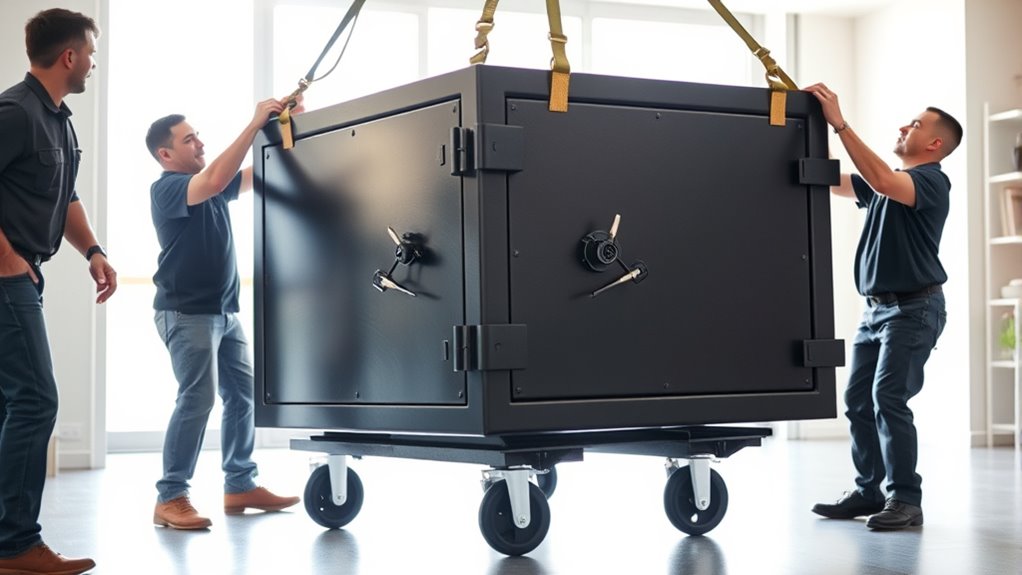
Before you try to move a heavy gun safe, proper planning is essential to avoid accidents and damage. You need to think about how the weight is distributed to keep the safe balanced during the move.
If the weight isn’t evenly spread, handling gets tougher and there’s a higher chance of dropping or damaging the safe. It’s also important to check for potential hazards like narrow doorways, stairs, or uneven floors.
Knowing these risks helps you plan the best route and decide if you need extra help or equipment. Good planning also means figuring out how you’ll lift and support the safe to avoid straining your body.
By analyzing the weight and risks ahead of time, you reduce the chances of injury or property damage. Skipping this step can lead to accidents that put you or the safe at risk.
That’s why thorough planning is a vital part of the moving process. It makes sure everything goes smoothly and safely.
Gather the Essential Tools and Equipment for Safe Moving
Having the right tools and equipment ready is crucial for moving a heavy gun safe safely and efficiently. Before you begin, make a detailed tool checklist to ensure you have everything you need.
Choosing the right equipment is key to preventing injuries and damage. Important items include heavy-duty dollies, lifting straps, and moving blankets. Use dollies to support the safe’s weight and lessen the strain on your body.
Lifting straps help distribute the load evenly, making the move easier. Moving blankets protect both the safe and your surfaces from scratches and dents. Additionally, gloves and proper footwear boost safety and stability during the move.
Having these tools on hand reduces risks and makes the process smoother. Remember, a well-prepared checklist and careful equipment choice are the foundation for a safe and successful move of your heavy gun safe.
Prepare Your Space and Clear a Safe Path
First, give yourself a minute to tidy up the area around your safe. Clear away any clutter or obstacles that might get in the way or cause you to trip. It’s all about making enough space so you can move safely and easily.
Once the area is nice and clear, check that the path you’ll take is safe and secure. Removing any hazards will help prevent accidents and make the whole process much smoother. Taking a little time to prepare now can save you a lot of trouble later!
Clear the Moving Area
Clear the moving area by removing any obstacles that could hinder your path or cause accidents. A clear space guarantees you can apply proper moving techniques and follow safety guidelines effectively.
Before starting, check for clutter, loose rugs, or cords that could cause slips or trips. Moving a heavy gun safe requires precise planning, so create a wide, unobstructed route from the starting point to the destination.
Keep the area well-lit to see hazards clearly. Move lightweight furniture or objects out of the way. Confirm doorways and hallways are wide enough for the safe.
Secure or remove any tripping hazards along the route.
Secure Obstacles and Hazards
Identify and secure any obstacles or hazards in the moving area before you begin. Do a quick obstacle check to spot items like furniture, loose rugs, or cords that could cause trips or slips.
Next, do a hazard assessment to evaluate potential dangers such as uneven flooring, sharp edges, or unstable surfaces. Remove or secure these hazards to make a clear, safe path for moving the safe.
Move furniture or decorations out of the way and secure loose wires. If needed, tape down cords or cover uneven flooring to prevent accidents.
Taking these precautions helps reduce the risk of slips, trips, or damage during the move. Properly securing obstacles and hazards ensures a smoother, safer process when relocating your heavy gun safe.
Use Proper Lifting Techniques to Prevent Injuries
Lifting a heavy gun safe without proper technique can lead to serious injuries, so it’s essential to prioritize safety first. Using correct lifting posture reduces strain on your back and helps prevent injury. Keep your back straight, bend at the hips and knees, and engage your core muscles to stay stable.
Avoid twisting your body while lifting, as this can cause muscle strain or spinal injury. Remember these key points: maintain a neutral spine and keep the load close to your body to distribute weight evenly. Use your legs to lift, not your back, by pushing through your heels.
Take your time and avoid rushing, ensuring steady movements throughout. Implementing these proper lifting techniques is vital for injury prevention and makes moving your safe more manageable and safe. Always prioritize safe lifting to protect yourself from unnecessary harm.
Employ Moving Aids Like Dollies and Straps for Safety
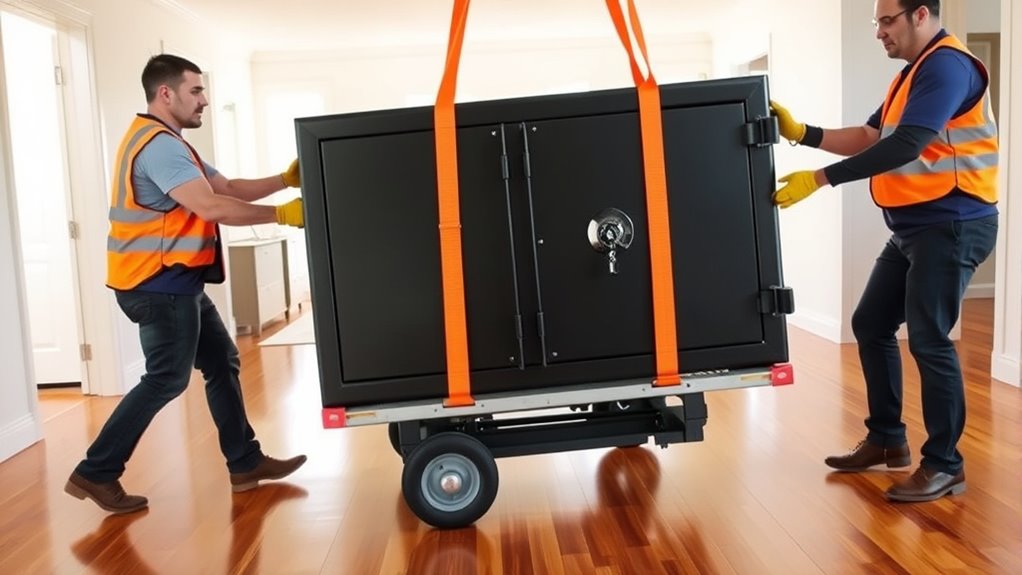
Using moving aids like dollies and straps makes relocating a heavy gun safe much safer. Picking the right dolly is important—look for one that’s sturdy and rated for heavy loads to avoid accidents.
Using proper moving aids ensures a safer, easier relocation of heavy gun safes.
A flat, wide platform on the dolly helps spread out the weight, which reduces strain on you. When using straps, secure the safe tightly to the dolly so it won’t shift during the move.
Wrap the straps around both the safe and the dolly frame, pulling them snug but not so tight that you damage the safe or make it hard to maneuver. Always double-check the straps and dolly for stability before you start moving.
Using these tools helps minimize physical effort and prevents slips, falls, or injuries. Remember, choosing the right dolly and properly securing the safe are key to a safe, efficient move, especially with such heavy, valuable equipment.
Follow a Step-by-Step Process to Complete Your Move
Moving a heavy gun safe might seem like a big task, but if you break it down into steps, it becomes much more manageable. First off, take some time to plan everything out. Think about the route you’ll take, check for any tight corners or obstacles, and gather all the tools you’ll need. It’s always better to be prepared than to scramble last minute.
Once you’ve got your plan, start preparing your safe and the surroundings. Clear the path, remove any loose items, and consider using furniture sliders or moving straps to help with the heavy lifting. Remember, safety comes first—make sure you lift with your legs, not your back, and ask for help if the safe is too heavy to handle alone. Staying organized and cautious from start to finish will help ensure your move is smooth, safe, and stress-free.
Planning and Preparation
Before you start moving your heavy gun safe, it’s important to plan each step carefully to avoid accidents and damage. First, measure the dimensions of the gun safe to make sure it will fit through doorways and hallways.
Check local moving regulations, especially since some areas have restrictions on transporting firearms or large safes. Planning your route is key—clear obstacles and identify the best path for the move.
Think about the weight distribution to ensure safe lifting. Gather the right equipment, like dollies and straps, to make the process easier and safer.
Safe Moving Techniques
Once you’ve planned your route and gathered the necessary equipment, it’s time to follow a safe, step-by-step process to move the gun safe. Start by guaranteeing safe handling by keeping the safe close to your body and avoiding sudden movements.
To prevent injury and protect the safe, focus on proper weight distribution, lifting with your legs instead of your back. Use dollies or hand trucks designed for heavy loads, and secure the safe to prevent shifting during transport.
Communicate clearly with your helpers throughout the move, coordinating each step. Take your time, avoid rushing, and regularly check your grip and stance.
Following these techniques guarantees a safe, efficient move while minimizing the risk of damage or injury.
Frequently Asked Questions
How Do I Determine the Weight of My Gun Safe?
You can find out your gun safe’s weight by checking the manufacturer’s label or product specs. These usually include details about the safe’s materials and total weight.
If those aren’t available, use a bathroom scale for smaller safes or a moving scale for larger ones. Understanding the weight and how it’s distributed can help you plan the safest way to move it.
Knowing this info reduces the risk of injury or damage during transport. It’s always better to be prepared before you start lifting or moving your safe.
What Are the Best Types of Moving Straps for Heavy Safes?
When choosing the best moving straps for heavy safes, look for ones with good weight distribution and durable strap materials like nylon or polyester.
Opt for ergonomic designs that make handling easier and safety features like adjustable straps and secure buckles.
A quality set of straps helps prevent injuries and keeps your safe protected during the move.
Can I Move a Safe Alone Without Assistance?
You can try moving a safe on your own, but it’s risky and not recommended for heavy safes.
If you decide to do it solo, take strict precautions: use proper equipment like moving straps and make sure the path is clear.
Lift with your legs, not your back, to avoid injury.
Remember, taking these precautions is important to prevent accidents or damage.
That said, enlisting help makes the process safer and easier, especially for heavy or bulky safes.
How Should I Handle Delicate or Sensitive Items Inside the Safe?
When handling delicate or sensitive items inside the safe, start by making an inventory checklist to know where everything is.
Next, protect fragile items by wrapping them in bubble wrap or soft cloths. Don’t stack or overcrowd these items, as that can cause damage.
During the move, keep these items secure and avoid jarring movements. This helps protect their interior and prevents any damage to your valuables.
What Are Common Mistakes to Avoid During Safe Relocation?
Sure, don’t forget to avoid common mistakes like neglecting proper safe positioning or ignoring weight distribution.
You might think you can muscle it alone or skip securing it properly—that’s a big mistake! Mishandling these details can lead to injuries or damage.
Always plan your route, use proper equipment, and don’t underestimate the weight. Remember, a safe move requires patience, planning, and respecting the safe’s bulk, not brute strength.
Conclusion
Moving a heavy gun safe might seem challenging, but with careful planning and the right tools, you’ll handle it smoothly—like a skilled captain steering through calm waters.
Remember to prep your space, use proper techniques, and enlist the right equipment.
Patience and caution are your best allies. When you follow these steps, you’re not just moving a safe; you’re safeguarding your belongings and yourself.
Stay safe, and your gun safe will be right where it needs to be.