What Is Ball Ammo?
Are you tired of dealing with unreliable ammunition that jams or costs too much? You’re not alone—many shooters struggle to find the right ammo that balances performance and affordability.
Ball ammo, also called full metal jacket (FMJ) ammunition, is a type of firearm bullet with a lead core covered by a metal jacket, usually copper or steel. It’s popular because it’s reliable, cost-effective, and feeds smoothly in firearms.
Many shooters prefer it for practice and self-defense.
If you continue, you’ll learn more about its components, calibers, safety tips, and why it remains a solid choice for various shooting needs.
Key Takeaways
- Ball ammo, also known as full metal jacket (FMJ), has a lead core enclosed in a metal jacket for added durability.
- It first came around in the late 19th century mainly for military use because it’s reliable and affordable.
- Made up of a bullet, casing, primer, and propellant, it’s designed to deliver consistent performance.
- Common calibers are 9mm, .45 ACP, and .223 Remington, which work well with different firearms.
- It’s known for reliable, accurate shooting but can be risky because of over-penetration and louder noise.
What Is Ball Ammo? A Complete Guide
Ball ammo, also called full metal jacket (FMJ) ammunition, is one of the most common bullets used today. Its history goes back to the late 19th century when militaries wanted more reliable and cost-effective rounds.
FMJs have a lead core wrapped in a copper or steel jacket. This design helps prevent barrel fouling and makes feeding in semi-automatic guns smoother.
Knowing safety practices when handling ball ammo is really important. Always treat every round as if it’s loaded, keep your muzzle pointed in a safe direction, and store ammo away from kids.
Following proper safety measures helps prevent accidents and ensures responsible firearm use. Learning about the history of ball ammo gives you insight into why it’s so durable and widely used.
Sticking to safety rules keeps you and others safe during handling, storage, and shooting. This knowledge builds a solid understanding of the role ball ammo plays in firearms today.
How Does Ball Ammo Compare to Other Types of Ammunition?
When you compare ball ammo to other types, you’ll see that there are differences in how well they penetrate and the kind of impact they deliver. These factors really influence how effective they are for different uses.
Cost and availability are also important to think about. Ball ammo tends to be pretty affordable and easy to find, which makes it a popular choice for many people.
Getting a good handle on these things can help you pick the right kind of ammunition for whatever you need it for.
Penetration and Impact
Unlike specialty ammunition designed for specific purposes, ball ammo usually offers consistent penetration and impact, making it a reliable choice for general use. Its penetration mechanics allow it to pass through targets with predictable depth, providing dependable performance at various ranges.
The impact dynamics of ball ammo deliver force efficiently, ensuring effective transfer of energy upon contact. This consistency is crucial for applications like target shooting and law enforcement, where predictable behavior matters.
Compared to hollow points or armor-piercing rounds, ball ammo tends to have less expansion or fragmentation, focusing more on penetration than stopping power. Its balanced penetration and impact make it a dependable option for straightforward, reliable performance without specialized features.
Cost and Availability
Compared to specialty rounds like hollow points or armor-piercing ammunition, ball ammo generally costs less and is easier to find. Its simple manufacturing process and high demand help keep prices down.
This makes it a popular choice for practice and training because you can buy in bulk without spending too much. Availability is also good since manufacturers produce large quantities to meet the needs of law enforcement, military, and civilians.
Unlike specialty rounds, which might be limited or more expensive due to special materials or regulations, ball ammo stays accessible. Its lower costs and steady supply make it a practical option for everyday shooting.
What Are the Components of Ball Ammo?
Ball ammo, also called full metal jacket (FMJ) ammunition, is made up of several key parts that work together to ensure it functions properly and hits accurately. The main components are the bullet, casing, primer, and propellant.
The bullet has a specific shape and is usually made of a lead core covered by a metal jacket to make it durable and help it penetrate. It’s designed to stay stable while flying and to expand consistently when it hits.
The casing holds everything together and is typically made of brass or steel. Inside the casing is the primer, which sparks to ignite the propellant—a chemical compound that creates the gas pressure needed to fire the bullet.
When you pull the trigger, the primer ignites and causes the propellant to explode, pushing the bullet forward. To picture it: a metal jacket surrounds the core, the primer sparks with a click, and the casing holds all the parts in place.
Each of these parts plays an important role in making sure your shots are reliable and accurate.
Why Do Shooters Prefer Full Metal Jacket Bullets?
You’ll notice that full metal jacket bullets tend to penetrate targets better, which is why many shooters prefer them for target practice and law enforcement use. They’re great at getting through tougher materials, so you can be more confident in hitting your mark.
Another advantage is that these bullets help keep your gun cleaner. Since they produce less lead residue and fouling, your barrel stays in good shape longer and doesn’t need as much cleaning. That means less maintenance and more time shooting instead of scrubbing.
Plus, full metal jacket bullets hold their shape really well, which helps improve your accuracy. When your bullets stay consistent and fly straight, it’s easier to hit your target every time. So, whether you’re at the range or on duty, they’re a popular choice for reliable performance.
Enhanced Penetration Capabilities
Shooters often prefer full metal jacket bullets because they provide enhanced penetration, allowing the projectile to pass through tough barriers and targets more effectively. This improved penetration boosts your chances of hitting critical areas and increases overall lethality.
In tactical situations, this means your round can penetrate thick clothing or cover, ensuring your shot reaches the target. It can also overcome barriers like glass or light metal while maintaining effectiveness.
FMJ bullets deliver consistent performance through tough materials, reducing the risk of deflection. This reliable penetration makes them ideal when you need heightened lethality and assured target impact.
Reduced Barrel Fouling
Full metal jacket bullets reduce barrel fouling because their smooth copper or brass coating minimizes the amount of residual lead and debris left inside the barrel after firing. This coating helps keep the barrel cleaner longer, making maintenance easier and less frequent.
With less fouling buildup, you’ll experience smoother operation and less need for aggressive cleaning routines. Fewer fouling issues also mean less carbon and lead residue sticking to the barrel, which can affect shooting performance over time.
By choosing FMJ bullets, you help maintain your firearm’s ideal function and longevity. Less fouling means less scrubbing and scraping during cleaning, saving you time and effort.
Improved Shooting Accuracy
Because FMJ bullets produce less fouling, they help keep your barrel in better shape after each shot. This consistency is key to improving your shooting accuracy.
When fouling is minimized, your barrel stays cleaner longer, which leads to tighter shot groups. To get the most out of your shooting, focus on a few simple techniques:
- Steady your grip to reduce movement and make your shots more precise.
- Align your sights carefully, so your sight picture stays consistent.
- Control your breathing to stay stable during each shot.
What Are the Benefits of Using Ball Ammo?
Ball ammo offers several advantages that make it a popular choice for both beginners and experienced shooters. Its reliability and consistent performance are key benefits, especially in self-defense and training situations. You’ll find that ball ammo typically delivers accurate shots, helping you develop proper shooting habits and confidence.
Its affordability makes it ideal for practice, allowing you to hone your skills without overspending. Using ball ammo simplifies training and improves your shooting skills, making it a versatile choice for practical, everyday use.
| Benefit | Description | Example Use |
|---|---|---|
| Reliability | Consistent performance during shooting | Self-defense drills |
| Affordability | Cost-effective for frequent practice | Range sessions |
| Accuracy | Precise shot placement | Target training |
| Training Applications | Ideal for developing fundamentals | Beginner lessons |
Are There Any Drawbacks to Ball Ammo?
Ball ammo can sometimes be a bit risky because it might over-penetrate targets, which isn’t ideal if you’re shooting in close quarters or around people. That extra penetration could lead to unintended damage or injury.
Plus, you’ll probably notice that it tends to kick back more and make more noise than other types of ammo. This increased recoil can make it trickier to stay on target, especially if you’re not used to it.
Thinking about these drawbacks can help you decide if ball ammo is the right choice for what you need.
Potential Over-Penetration Risks
While ball ammo offers reliable terminal performance, it can also pose risks related to over-penetration. Over-penetration happens when a bullet passes through a target, increasing the chance of unintended damage.
To picture this, imagine a bullet piercing drywall and then hitting a neighbor’s wall. Or a round passing through an intruder and possibly striking a bystander. Sometimes, a projectile exits a target and continues into areas you didn’t intend to hit.
These risks show why safety measures are so important. Choosing the right ammunition and understanding your firearm’s capabilities can make a big difference. Proper training helps you control shot placement and reduces the chances of over-penetration.
Being aware of your environment and background is also crucial, especially in populated areas. This helps prevent collateral damage and keeps everyone safe. Addressing over-penetration risks is a key part of responsible firearm use.
Increased Recoil and Noise
Despite their reliability, ball ammo often produces increased recoil and noise compared to other types of ammunition. This can make recoil management more challenging, especially during rapid firing or extended shooting sessions.
The higher recoil may lead to decreased accuracy if you’re not prepared, so practicing proper grip and stance is essential. Moreover, the noise generated by ball ammo can be intrusive, making sound suppression strategies necessary.
This is especially true in indoor ranges or urban environments. Using hearing protection helps mitigate the impact of loud shots. While ball ammo’s simplicity and affordability are advantages, these drawbacks mean you might need to invest in recoil mitigation tools or sound suppression equipment for a more comfortable shooting experience.
What Calibers and Sizes of Ball Ammo Are Available?
There are many calibers and sizes of ball ammo available to fit different firearms and shooting needs. These vary based on the caliber specifications and size options, making sure they’re compatible with a wide range of guns.
When browsing, you’ll see options like:
- 9mm: Compact and very popular for handguns, great for self-defense and target shooting.
- .45 ACP: Larger caliber with more stopping power, often used in full-sized pistols.
- .223 Remington: Common for rifles, perfect for hunting and tactical shooting.
Each caliber has its own advantages, depending on your firearm and what you’re aiming for. The size variations range from small, lightweight rounds for quick handling to larger, heavier ones for more impact.
Knowing these options helps you pick the right ball ammo, so your firearm performs well and stays safe. Whatever your choice, the available calibers and sizes cover a wide range of shooting styles and needs.
How Do I Choose the Right Ball Ammo for My Firearm?
Choosing the right ball ammo for your firearm depends on several key factors, including the caliber of your gun, its intended use, and your personal preferences.
First, verify your ammo is caliber compatible with your firearm. Using the correct caliber prevents malfunctions and safety issues.
Always ensure your ammo matches your firearm’s caliber for safe and reliable shooting.
Next, consider projectile materials; some ammo uses lead, while others feature jacketed or steel projectiles. Lead bullets are affordable and effective for target shooting, but jacketed projectiles reduce barrel fouling and improve accuracy.
Steel or alloy projectiles may suit specific needs but can be harder on your firearm. Moreover, think about your primary purpose—self-defense, target practice, or hunting—as different ammo types excel in different scenarios.
Always check manufacturer recommendations and consult with experts if you’re unsure. By paying attention to caliber compatibility and projectile materials, you’ll select the best ball ammo tailored to your firearm and shooting goals.
Common Uses and Applications of Ball Ammo
Ball ammo is widely used across various shooting activities because it’s reliable and versatile. You’ll find it in many practical and recreational settings, such as:
- Defensive applications. It provides dependable stopping power when protecting yourself or loved ones.
- Training scenarios. It helps shooters develop accuracy, control, and familiarity with their firearms.
- Hunting purposes. It’s used for small to medium game, offering consistent performance in the field.
Additionally, ball ammo is popular in competition shooting, where speed and precision matter. Its historical uses include military and law enforcement, where durability and penetration are key.
Whether you’re practicing at the range, hunting game, or competing, ball ammo’s simple design and proven track record make it a top choice. Its reliable performance across different environments keeps it a staple in shooting communities worldwide.
Key Takeaways: Tips for Handling and Storing Ball Ammo
Handling and storing ball ammo properly is key for safety and keeping it effective. Always follow safety rules by keeping ammo away from heat, moisture, and direct sunlight to prevent damage or accidental firing.
Proper handling and storage ensure safety and maintain ammo effectiveness over time.
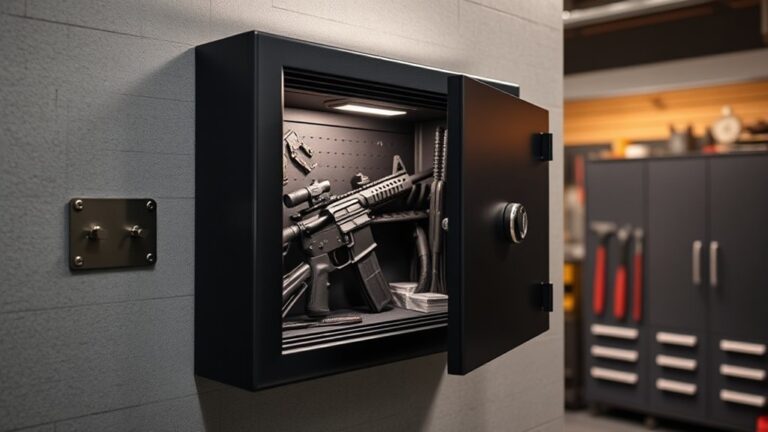
Use designated storage like locked cabinets or safes to keep ammo secure and out of reach of children or unauthorized people. When handling ammo, wear gloves if needed, and make sure the firearm is unloaded before loading or inspecting rounds.
Label containers clearly to tell different calibers and types apart, which helps prevent mix-ups. Regularly check your stored ammo for signs of rust or damage and replace any compromised rounds right away.
Store ammo in a cool, dry place to help it stay in good shape over time. Following these safety tips and using proper storage methods will keep you safe and help your ammo last longer.
Frequently Asked Questions
Is Ball Ammo Suitable for Hunting Purposes?
Ball ammo isn’t the best choice for hunting purposes because it often lacks the hunting effectiveness you need for humane kills. Its design can lead to less reliable expansion and penetration on game animals.
Instead, you should consider ball ammo alternatives like soft point or hollow point bullets. These expand better, increase stopping power, and improve your chances of a clean, ethical shot.
Always choose your ammo based on your specific hunting needs.
How Does Ball Ammo Perform in Different Weather Conditions?
You’ll find ball ammo performs surprisingly well across various weather conditions. Ironically, humidity effects can cause slight corrosion, and temperature impact might influence velocity, but overall, it remains reliable.
When it’s humid, expect a bit more maintenance; in cold weather, expect minimal impact on accuracy. So, while weather challenges it, ball ammo’s straightforward design keeps it functioning, making it a dependable choice regardless of rain, heat, or cold.
Can Ball Ammo Be Reloaded or Reused?
Yes, you can reload or reuse ball ammo, but it depends on the ammo types and your reloading techniques. Reusing spent brass cases is common, and with proper techniques, you can safely reload ball ammo for multiple uses.
However, some types of ball ammo are designed for single use only. Be sure to inspect brass cases carefully and follow recommended reloading procedures to keep everything safe and performing well.
What Safety Precautions Are Necessary When Handling Ball Ammo?
Ever wondered about ball ammo safety? You should always handle it carefully, using proper techniques to prevent accidents.
Wear eye and ear protection, keep your finger off the trigger until you’re ready to shoot, and store ammo securely away from children.
Always check for any damage before use, and follow the manufacturer’s safety instructions.
Staying cautious ensures safe shooting experiences for everyone involved.
Are There Legal Restrictions on Using Ball Ammo?
Yes, there are legal restrictions on using ball ammo, which vary depending on where you are. It’s important to know the specific laws in your area and what they say about different types of ammunition.
Historically, ball ammo has been used widely, but some places have restrictions or regulations on its use for activities like hunting or self-defense. Always make sure you’re familiar with local laws to stay compliant.
Violating these rules can lead to fines or other legal issues, so it’s best to double-check before using or purchasing ball ammo.
Conclusion
Understanding ball ammo helps you make informed choices for your shooting needs. Did you know that full metal jacket bullets, like ball ammo, are the most common type used by law enforcement agencies nationwide?
With their affordability and reliability, they’re a practical choice for many shooters. Proper handling and storage are essential for both safety and performance.
Stay informed, choose wisely, and enjoy your shooting experience with confidence using ball ammo.