What Are the Legal Implications if You 3D Print a Glock Switch?
Are you curious about the legal risks of 3D printing a Glock switch? You’re not alone—many people are exploring DIY firearm parts and wondering where the line is.
But it’s important to understand the potential consequences before diving in.
If you 3D print a Glock switch without proper authorization, you could face serious legal consequences. This includes felony charges for manufacturing or possessing an illegal firearm device.
Federal law classifies these switches as “machine guns,” making their production illegal without a license.
You may also face civil penalties or criminal prosecution if caught. State laws could add further restrictions, making the situation even more complicated.
To fully understand the risks and potential penalties, it’s essential to learn more about the legal landscape surrounding 3D printed firearm parts.
Key Takeaways
- 3D printing a Glock switch makes it a “machine gun” under federal law, so it’s illegal without the right license.
- If you’re caught possessing or making a 3D printed Glock switch, you could face serious charges, fines, and even jail time.
- Sharing files or distributing 3D printed Glock switches can lead to federal civil and criminal penalties.
- Laws vary from state to state, and some places criminalize making or owning these firearm parts.
- Law enforcement has advanced tools to detect and pursue people who manufacture or possess Glock switches without proper authorization.
What Is a Glock Switch and How Is It Made Using 3D Printing?
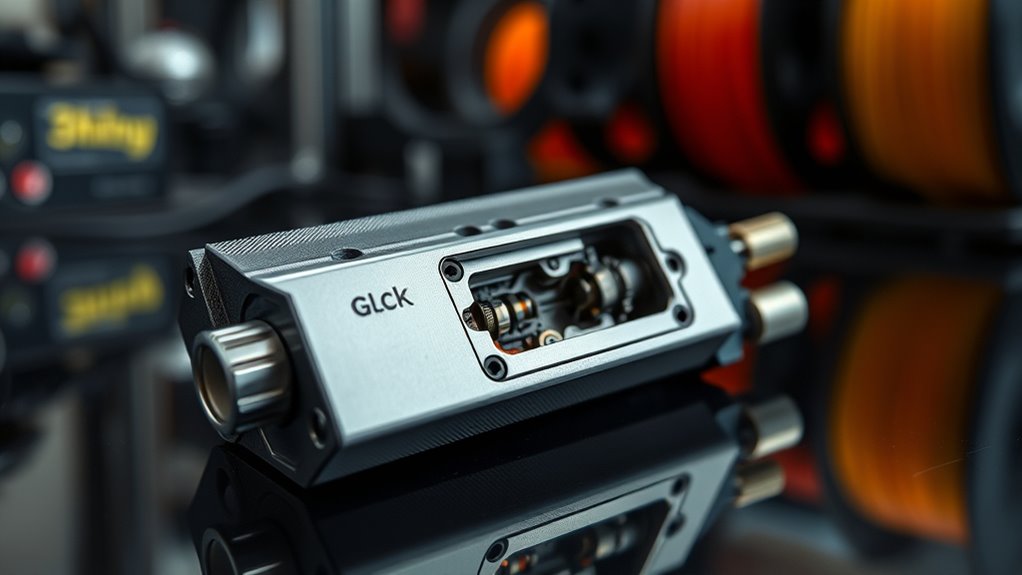
A Glock switch is a device that, when attached to a firearm, can turn a semi-automatic pistol into a fully automatic weapon. You might wonder how these devices are made, especially with modern technology like 3D printing.
Using 3D printing techniques, enthusiasts can create Glock switch designs by layering materials like resin or filament to replicate complex mechanical parts. This process allows for rapid prototyping and customization, but it also raises concerns about legality and safety.
The design of the Glock switch typically involves intricate components that facilitate continuous firing, which makes precision in 3D printing essential. By carefully selecting printing parameters and materials, you can produce functional-looking switches.
Precision in 3D printing is crucial for creating functional Glock switches with intricate components.
However, keep in mind that the quality of a 3D printed Glock switch heavily depends on your 3D printing techniques and understanding of the design’s mechanics. This process makes weapon modification more accessible but also more controversial.
Are 3D Printed Glock Switches Legal Under Federal Firearm Laws?
You should know that federal laws really cover how firearms and their parts are made and kept, including things made with 3D printing. If a 3D printed Glock switch is considered a firearm or a part of one under the law, then it could fall under some pretty strict rules.
Breaking these laws can lead to serious consequences, so it’s really important to understand what’s legal and what’s not before getting involved.
Federal Law Restrictions
Federal law strictly regulates the manufacture, possession, and distribution of firearm components, including devices like Glock switches. If you 3D print or possess a switch that turns a semi-automatic firearm into a fully automatic one, you risk severe legal consequences.
These devices are considered “machine guns” under federal law, regardless of how they’re made. This classification highlights the importance of firearm safety and legal compliance.
Possessing or manufacturing such devices without proper authorization violates the National Firearms Act and related regulations. Penalties can include hefty fines, imprisonment, and permanent firearm restrictions.
Never assume that 3D printing a Glock switch is legal. Federal law aims to prevent unlawful firearm modifications that threaten public safety.
Legal Definitions of Firearms
Understanding how firearms are legally defined under federal law is key to figuring out if 3D printed Glock switches are lawful. Federal regulations classify firearms based on specific criteria, like whether they are fully functional or modified devices.
If a 3D printed Glock switch can turn a firearm into a machine gun, it’s probably considered a firearm under federal law. This classification matters because owning or making such devices without the right license is illegal.
Even if the switch itself isn’t officially called a firearm, using it could still run afoul of federal rules if it makes a gun more dangerous or illegal to own. Knowing how firearms are classified helps you understand the legal risks of 3D printing these devices.
Penalties for Violations
Violating laws related to 3D printed Glock switches can lead to serious penalties, including criminal charges and hefty fines. The legal consequences are strict because federal authorities actively enforce laws against illegal firearm modifications.
If you’re caught, you could face felony charges that carry years of prison time and significant fines that can reach thousands of dollars. Authorities may also require the destruction of any 3D printed parts and firearms.
These penalties are meant to deter illegal firearm manufacturing and possession. Federal agencies closely monitor and enforce laws related to firearm parts, especially those that bypass licensing requirements. Ignoring these regulations can have severe legal consequences, so it’s important to understand and follow the law to avoid prosecution.
Federal Regulations on 3D Printing Firearm Parts Explained
Federal firearm laws cover the manufacturing and possession of gun parts, including those made with 3D printing. If you’re into 3D printing and guns, it’s really important to understand these rules so you don’t get into legal trouble. Creating or sharing gun parts without following the law can have serious consequences, so knowing what’s allowed is key.
Federal Firearm Laws
While 3D printing firearm parts offers new possibilities, it also comes with serious legal risks under federal law. Federal firearm laws strictly regulate the manufacturing and possession of gun components, especially items like a Glock switch. Violating these laws can lead to hefty fines and even jail time.
You should know that making a firearm or part without the right license is illegal. Distributing 3D printed firearm parts can also result in federal charges. Possessing unregistered firearms or accessories may lead to criminal penalties.
Federal laws are in place to prevent illegal firearm production and keep everyone safe. Ignoring these rules can turn minor acts into serious crimes with severe legal consequences. Remember, even 3D printed parts are subject to these regulations, and breaking them can be very costly.
3D Printing Restrictions
Because 3D printing firearm parts is subject to strict regulations, your activities are legally limited by federal rules designed to prevent unlicensed manufacturing and distribution. These rules aim to improve firearm safety and prevent unauthorized access.
You need to understand that printing gun parts without proper licensing can lead to serious legal consequences. It’s important to stay informed and follow the law.
There are different types of regulations. Licensing laws control firearm production, and penalties can include fines or imprisonment.
Distribution rules prevent illegal sales, and violating them can lead to federal prosecution. Additionally, printing bans restrict certain 3D printed parts, which can result in criminal charges.
Following these rules helps promote responsible use of 3D printing technology and keeps you on the right side of the law.
Legal Penalties Overview
Understanding the legal penalties for 3D printing firearm parts is crucial because breaking federal laws can have serious consequences. If you ignore these laws, you could face significant legal trouble and criminal charges.
Federal regulations strictly prohibit manufacturing or possessing unregistered firearm parts, including 3D-printed switches. The penalties for doing so can include hefty fines, jail time, or both.
You might be charged with illegal firearm manufacturing or possession of an unregistered firearm. Getting caught with a 3D-printed Glock switch, for example, is taken very seriously by federal authorities.
These charges can lead to years of imprisonment, large fines that reach thousands of dollars, and a permanent criminal record that can impact your future opportunities.
How Do Authorities Detect and Prosecute 3D Printed Firearm Devices?
How do authorities identify and prosecute crimes involving 3D printed Glock switches? They use a variety of methods and detection techniques to uncover illegal firearm devices.
Law enforcement agencies examine seized items for manufacturing marks or unique features that can link them to 3D printing. They also use advanced scanning technologies like 3D scanners and chemical tests to detect polymer materials typical of 3D printed parts.
Digital forensics are crucial too. Investigators analyze online activity, purchase histories, and patterns related to weapon production. Surveillance footage and informants can provide leads on how these devices are made and distributed.
Once they identify a suspect, authorities gather evidence such as lab reports and digital data to establish possession and intent. These combined approaches make it harder for individuals to avoid detection and highlight the importance of staying within legal boundaries.
What Criminal Charges Could You Face for Making or Possessing a Glock Switch?
Making or possessing a Glock switch can really get you into some serious legal trouble. Usually, it’s considered a felony, which means the consequences can be pretty severe. If you’re caught with one, you might face hefty fines, lengthy prison sentences, or both. It’s important to understand just how serious these charges are before even thinking about getting involved with one of those devices.
Potential Felony Charges
Possessing or manufacturing a Glock switch can lead to serious criminal charges because these devices are classified as illegal firearm modifications in many jurisdictions. The felony implications are significant, and the criminal consequences can include lengthy prison sentences and hefty fines.
If you’re caught making or owning a Glock switch, you risk being charged with federal or state firearm trafficking offenses or possession of an unregistered firearm device. These charges can also be worsened if you have prior convictions or if the device was used in a crime.
These charges highlight how dangerous tampering with firearms can be. The legal system treats such offenses as felonies, meaning the consequences are severe. It’s important to understand the seriousness of these felony implications to avoid risking your future.
Possession Penalties Explained
Owning or being caught with a Glock switch can lead to serious criminal charges that carry significant penalties. If you’re found in possession of one, the legal consequences are severe, even if you didn’t manufacture it yourself.
Authorities may charge you with possession of a firearm accessory meant to turn a semi-automatic weapon into a fully automatic one, which is often illegal. Your ownership rights don’t protect you if law enforcement proves you knew about or controlled the switch.
Penalties can include hefty fines, long prison sentences, or both. It’s important to understand that simply possessing a Glock switch can lead to felony charges, regardless of your intent.
Protect yourself by knowing the law and avoiding illegal possession.
Can You Face Civil Penalties for 3D Printing or Sharing Glock Switches?
Are you aware that you could face civil penalties if you 3D print or share Glock switches? Civil liability can come into play if your actions harm others or break the law, even outside criminal courts. Sharing or distributing files for 3D printed Glock switches might lead to lawsuits for copyright infringement, especially if the design is protected.
Imagine being sued for damages by someone harmed by a switch you shared online. You could also face court orders to stop sharing or making more switches. Civil penalties can include hefty fines and settlement payments, no matter your intentions.
You might be sued for damages if someone gets hurt by an unsafe or illegal firearm part. Courts could order you to stop sharing or printing Glock switches altogether. And you could face big fines for copyright violations or helping with illegal firearm production.
How Do State Laws Regulate 3D Printed Firearm Components?
State laws vary widely in how they regulate 3D printed firearm components, and many have put specific restrictions in place to prevent unauthorized production and distribution.
Some states classify 3D printed parts as firearms or firearm components, making it illegal to produce or possess them without the proper licensing. Others restrict manufacturing certain parts like switches or receivers to ensure safety and prevent unsafe guns from circulating.
You should know that state regulations often focus on the manufacturing process, not just the finished product, to help curb untraceable guns. Violating these laws can result in serious penalties, including fines and jail time.
Many states also require serial numbers or background checks for certain components. If you’re thinking about 3D printing firearm parts, understanding your state’s specific rules is crucial to avoid legal issues and promote safety.
What Are the Legal Risks of Selling or Distributing 3D Printed Glock Switches?
Selling or distributing 3D printed Glock switches comes with serious legal risks because federal laws classify these devices as prohibited firearm accessories. That means selling or transferring them without the right license is illegal.
Getting involved in this can lead to tough legal consequences, like criminal charges and even jail time. Law enforcement actively targets unlicensed sellers, which can result in big fines and seized assets.
Imagine a raid where they take your inventory and charge you with making or trafficking an illegal firearm accessory. You could face years behind bars, and your reputation might never recover.
- You could face criminal charges with heavy fines and prison time
- Your assets might be seized by law enforcement
- Your personal and professional reputation could be permanently damaged
How Violating Firearm Laws Can Impact Your Future and Record?
Violating firearm laws can have long-lasting effects on your future, often leaving a permanent mark on your criminal record.
The legal consequences of illegal activities like 3D printing or possessing unregistered firearm parts are serious. If you’re caught, authorities may charge you with crimes that carry significant penalties, including fines, probation, or even jail time.
These convictions can show up on your criminal record, making it harder to find jobs, housing, or pass background checks. A record related to firearm violations can also hurt your reputation and personal relationships.
Even minor infractions can turn into more serious charges if you’re not careful. It’s important to understand that the consequences go beyond legal penalties—they can affect your future opportunities and stability.
Staying within the law is the best way to protect yourself from these long-term repercussions and keep a clean record.
Why It’s Important to Know the Law Before 3D Printing Gun Parts?
Understanding the law before trying to 3D print gun parts is really important because firearm laws are strict and complicated. If you’re not aware of the legal boundaries, you could face serious criminal charges that might impact your future.
Knowing the laws helps you steer clear of accidental violations that could lead to fines, jail time, or even a permanent criminal record. It’s better to be informed than sorry later.
Being informed about firearm laws prevents costly fines, jail time, and lifelong legal consequences.
To see why it matters:
- You might accidentally make a firearm that’s illegal in your state or country.
- Sharing 3D printed gun parts could break laws about firearm distribution.
- Manufacturing without the right licenses can land you in legal trouble.
Being aware of the legal landscape keeps you from crossing any lines and helps you understand what’s at stake. Ignorance isn’t usually a defense in firearm laws. Having this knowledge protects you from unintended criminal consequences and keeps you compliant and safe.
Frequently Asked Questions
Can I Legally Own a 3D Printed Glock Switch?
You probably can’t legally own a 3D printed Glock switch. These devices are generally considered illegal under firearm laws, especially if they allow for fully automatic firing.
Laws differ depending on where you live, but in most places, having or making these switches without the right license is against federal and state firearm rules.
It’s always best to check your local laws before trying to own or make any firearm parts to avoid serious legal trouble.
What Are the Penalties for Manufacturing Illegal Firearm Parts?
Manufacturing illegal firearm parts can lead to serious penalties like fines, jail time, and a permanent criminal record.
You’re risking violating strict firearm laws designed to keep communities safe.
If authorities catch you making these parts illegally, you could face federal charges that result in lengthy sentences and hefty fines.
It’s important to know that illegal manufacturing undermines gun control laws and puts public safety at risk.
The consequences are serious and difficult to avoid, so understanding these risks is crucial.
Are There Any Exceptions for 3D Printing Firearm Components?
You generally can’t 3D print firearm components without risking legal trouble, as 3D printing regulations are strict. Exceptions are rare and usually involve licensed manufacturers or specific educational purposes.
However, even if you’re within legal bounds, prioritize firearm safety. Make sure your 3D printed parts are safe and reliable.
Ignoring regulations or safety protocols could lead to serious legal consequences and safety hazards. Always stay informed and compliant.
How Does Federal Law Classify 3D Printed Firearm Devices?
Federal law classifies 3D printed firearm devices, like a Glock switch, based on their firearm classification and legal definitions. If the device functions as a firearm or a firearm component, it’s considered a regulated item.
You need to follow licensing, serialization, and manufacturing laws. Failing to do so can lead to serious legal consequences, including fines and imprisonment.
Always stay informed about evolving regulations to avoid unlawful possession or distribution.
Can 3D Printed Glock Switches Be Traced by Authorities?
3D printed Glock switches can potentially be traced by authorities using methods like serial number analysis, digital footprints, or manufacturing metadata.
While 3D printing allows for personalized designs, firearm regulations usually require serial numbers or registration. This makes untraceable devices illegal.
If law enforcement suspects illegal activity, they may use digital forensics and other investigative techniques to identify and trace these 3D printed firearm parts.
This process risks legal consequences for those involved in making or possessing untraceable firearms.
Conclusion
Knowing the laws before 3D printing a Glock switch is essential. Failing to do so could land you in legal hot water faster than you can imagine, with penalties that could ruin your life like a wrecking ball.
The risks are real, from hefty fines to serious criminal charges. Don’t let curiosity or convenience turn into a catastrophe. Stay informed, stay compliant, and protect your future from being shattered like fragile glass.
Remember, 3D printing a Glock switch can have serious legal implications. It’s better to be cautious than to face the consequences of illegal firearm modifications.