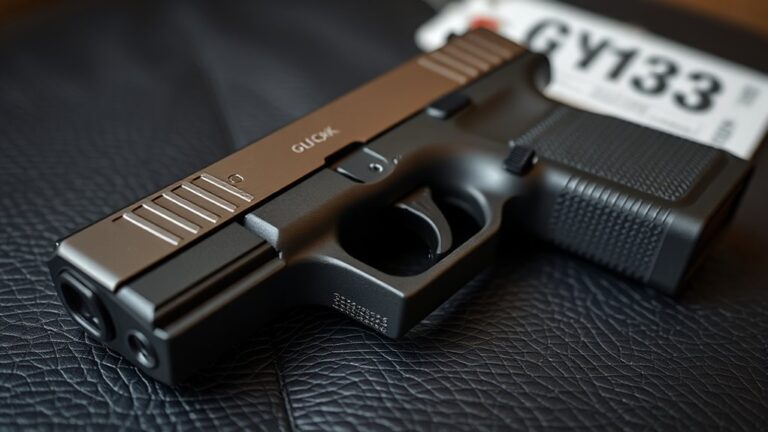
5 Simple Steps to Change Pistol Sights
Changing pistol sights can feel intimidating if you’ve never done it before. You’re not alone—many gun owners struggle with making quick, accurate adjustments to their firearm.
Luckily, it’s a manageable process once you know the right steps.
To change your pistol sights, start by safely securing your firearm and choosing the right new sights for your needs, like fiber optic or night sights.
Remove the old sights carefully using the proper tools, such as a sight pusher or tiny screwdriver.
Next, install the new sights, ensuring they’re centered and secure.
Then, zero and align them for accuracy by firing test shots and making small adjustments.
Finally, maintain your sights regularly to keep them in top condition.
More tips follow if you keep exploring.
Key Takeaways
- Make sure the pistol is unloaded and secured in a safe position before you start.
- Carefully remove the old sights using the right tools, and apply penetrating oil if needed to loosen them.
- Align and install the new sights into the dovetail slots, making sure they are centered and flush.
- Gently secure the new sights in place with a sight pusher or a small hammer.
- Finally, zero and fine-tune the sights for accurate targeting, then clean and maintain them regularly.
Identify the Best Pistol Sights for Your Gun
Choosing the right pistol sights is crucial for accuracy and confidence in your firearm. To do that, you need to understand the different sight types available.
Some common options include three-dot sights, fiber optic sights, and night sights. Each offers unique benefits for different shooting situations.
Three-dot, fiber optic, and night sights each provide advantages for various shooting environments.
As you decide, consider the sight materials—metal, polymer, or composite—that influence durability and visibility. Metal sights are usually sturdy and long-lasting, while fiber optic sights help with quick target acquisition in bright conditions.
Night sights contain tritium or other glowing elements, making them ideal for low-light shooting and defensive use. Your choice depends on your shooting environment and personal preferences.
Safely Remove Your Old Pistol Sights
Before installing new sights, you need to remove the old ones safely to prevent damage or injury. Different sight types, like fixed, adjustable, or night sights, require specific removal techniques.
For example, fixed sights often need a sight removal tool designed for their dimensions, while adjustable sights might require a small screwdriver. Always start by securing your pistol in a safe, unloaded state.
Use the appropriate removal tools to carefully loosen or pry off the sights without scratching or damaging the slide. If you encounter stubborn sights, applying a little penetrating oil can help loosen them.
Be gentle and patient to avoid bending or marring the slide. Remember, each sight type has its own removal method, so consult your firearm’s manual or a professional if you’re unsure.
Proper removal guarantees your pistol remains in good condition and ready for the new sights to be installed securely.
Install New Pistol Sights Step-by-Step
Begin by aligning the new sights with the slide or the existing sight dovetails, making sure they sit flush and are properly oriented. Depending on your sight type—whether they’re fiber, night sights, or standard metal—you might need specific installation tools like a sight pusher or a small hammer with a punch.
Carefully insert the sight into the dovetail slot, ensuring it’s centered and level. Use the installation tools to gently tap or push the sight into place, avoiding excessive force. For fiber or night sights, double-check that the luminescent or colored elements are correctly oriented for quick target acquisition.
Confirm that the sight sits flush against the slide and doesn’t wobble. Take your time during installation to prevent damage. Properly installed sights will sit securely and be aligned correctly, setting the stage for precise aiming.
Zero and Align Your New Sights for Accuracy
To guarantee your pistol hits where you aim, carefully zero and align your new sights. Proper sight alignment means making sure the front and rear sights are perfectly level and centered.
This step is key for improving your shooting accuracy. Start by securing your pistol in a stable position, like a vise or a steady grip, and aim at a target from a consistent distance.
Adjust the sights so the front post is centered within the rear notch, with equal light on both sides. Fire a series of test shots and see where they hit in relation to your target.
If the shots are off, make small adjustments to the sights—moving the front sight slightly left, right, up, or down—until your shots consistently hit the bullseye. Zeroing and aligning your sights helps ensure your point of aim matches your point of impact.
This makes every shot more reliable and precise, boosting your overall shooting accuracy.
Maintain Your Pistol Sights for Longevity
Once your sights are properly aligned and zeroed, keeping them in good shape is crucial for ongoing accuracy. Regular cleaning removes dirt, dust, and debris that can block your view or throw off sight alignment.
Use a soft brush or cloth with a mild solvent to gently clean the sights. Be careful not to scratch the surface. Protect your sights from damage by avoiding bumps or rough handling, which can misalign or scratch them.
Applying a light coat of protective lubricant or lens cleaner designed for firearms can help prevent corrosion. When storing your pistol, keep it in a case that minimizes moisture and dust exposure.
Consistent cleaning and protection will extend the life of your sights. This keeps them clear, accurate, and reliable every time you shoot. Proper maintenance is simple but essential for maintaining precision.
Frequently Asked Questions
Can I Change Pistol Sights Myself Without Professional Help?
Yes, you can change pistol sights yourself if you’re comfortable with basic installation techniques. Proper sight alignment is essential, so follow clear instructions and use the right tools.
Carefully remove the old sights, making sure you don’t damage the slide, then install the new sights securely. Take your time to guarantee proper alignment, and test your firearm’s accuracy afterward.
If you’re unsure, consulting a professional is always a good idea for safety and precision.
What Tools Are Required for Changing Pistol Sights?
Ever wondered what tools you need to change pistol sights? You’ll usually need a sight pusher tool, which makes sure everything stays aligned properly.
You might also need a punch or small hammer for some sight types. Depending on your pistol, a screwdriver or pliers could come in handy too.
Are you ready to handle different sight types like fiber optic or night sights? Having the right tools makes the job easier and keeps your firearm accurate.
How Long Does It Typically Take to Replace Sights?
Replacing sights usually takes about 15 to 30 minutes, depending on your experience. You’ll want to focus on proper sight alignment during installation to make sure everything is centered and secure.
Using the right tools and gentle tapping helps prevent damage. Take your time to double-check the fit and alignment, and you’ll have your sights replaced quickly and effectively.
Are There Different Sight Options for Specific Shooting Styles?
Yes, there are different sight types designed for specific shooting styles. For example, fiber optic sights help improve accuracy in low light conditions, while night sights are great for visibility in darkness.
Red dot sights allow for quick target acquisition, making them perfect for fast shooting scenarios. Traditional iron sights are still popular for precise aiming.
Choosing the right sight depends on your shooting style and environment. Picking the right one can really boost your accuracy and overall performance.
Will Changing Sights Affect My Pistol’s Warranty?
Changing sights can impact your pistol’s warranty, especially if the modification causes damage or voids certain terms. It’s a good idea to check your manufacturer’s warranty policy before making any changes. Some brands are more lenient and allow sight replacements without issues, but others might require professional installation to keep coverage intact.
Keep in mind that proper sight alignment is crucial for accuracy. So, make sure you follow the right steps when changing sights to avoid any unintended warranty problems.
Conclusion
So, there you have it—five simple steps to upgrade your pistol sights and boost your accuracy. Who knew changing sights could be so straightforward?
Just remember, with a little patience and the right tools, you might actually enjoy tinkering with your firearm. Ironically, the more you learn about your pistol, the better your aim becomes.
That’s proof that sometimes, the simplest upgrades can make the biggest difference. Happy shooting!