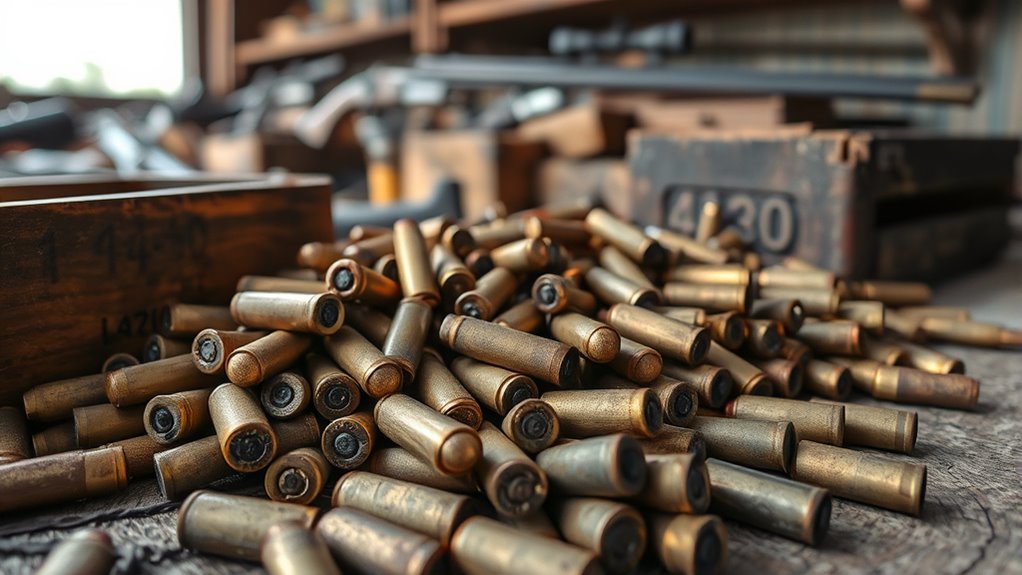
Why Is .44-40 Ammo Hard to Find?
If you’re into vintage firearms or collecting classic cartridges, you’ve probably noticed how tough it can be to find .44-40 ammo. Many enthusiasts struggle with sourcing this historic round, and you’re not alone.
You’ll find .44-40 ammo hard to get because it’s fallen out of favor due to its age and the rise of modern cartridges. Ammunition manufacturers focus on newer, more popular calibers, leaving limited supply for the vintage .44-40.
Firearm compatibility issues and declining collector interest also reduce production and availability.
If you want to learn more about its history and how to navigate current shortages, there’s more to uncover.
Key Takeaways
- Declining popularity and demand have led manufacturers to produce less .44-40 ammunition.
- Modern firearm designs and tighter tolerances make .44-40 less compatible with current guns.
- Ammunition production shifted to newer calibers, which has reduced the supply of .44-40.
- Limited collector interest decreases market availability and raises prices.
- Because of how scarce commercial .44-40 ammo is, many people turn to handloading or vintage replicas as alternatives.
Why Was the .44-40 Cartridge So Popular Historically?
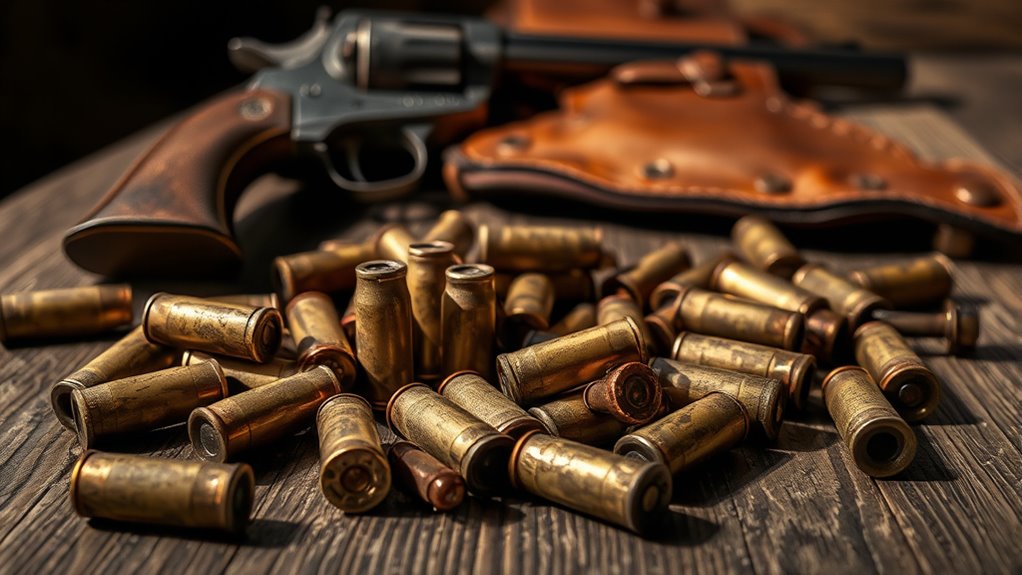
The .44-40 cartridge became really popular in the late 1800s because it was a reliable mix of power and versatility. It played a big role during the American frontier days and was a go-to for hunters and lawmen alike.
It also helped shape the development of lever-action rifles, making firearms more practical and easier to use. Its widespread use helped grow shooting sports and hunting culture, leaving a lasting mark on American traditions.
People saw the .44-40 as a symbol of frontier independence and resourcefulness. It became associated with the rugged spirit of the Old West, influencing movies, books, and folklore.
What Led to the Decline of Firearms Chambered in .44-40?
As advancements in firearm technology and ammunition manufacturing took hold, the dominance of .44-40 chambered firearms began to decline. Their fall is linked to the broader evolution of firearms, which introduced more powerful, reliable, and versatile options.
New calibers offered greater range, accuracy, and stopping power, making older .44-40 models less attractive for hunting and self-defense. Plus, manufacturing improvements led to standardized cartridges that were easier to produce and load.
The rise of smokeless powder also played a role by providing cleaner, more efficient combustion. This shift favored newer cartridges and further reduced the appeal of older designs.
The adoption of smokeless powder enhanced efficiency, shifting favor toward newer cartridges and diminishing the appeal of older designs.
As a result, firearms chambered in .44-40 gradually fell out of favor, replaced by calibers better suited to modern needs. This change reflects how technological progress influences firearm design and what consumers prefer.
Eventually, older, historically significant cartridges like .44-40 became less common as newer options took over.
How Has Ammunition Manufacturing Shifted Away From .44-40?
With advancements in manufacturing technology, ammunition producers shifted their focus away from .44-40 to more modern calibers that meet contemporary demands. Over time, trends evolved as companies prioritized efficiency, higher production volumes, and broader market appeal.
This shift was driven by several factors:
- Increased demand for high-capacity, modern calibers like 9mm and .45 ACP, which suit current shooting styles and self-defense needs.
- Technological innovations that made producing new calibers cheaper and faster, reducing interest in older designs like .44-40.
- Declining historical demand for the .44-40, as fewer firearms chambered for it remained in active use, making it less economically viable for manufacturers to produce large quantities.
These changes led to a natural decline in .44-40 ammunition production, making it harder to find today. The focus shifted toward calibers with higher sales and broader appeal in the modern firearm market.
Why Are Modern Firearms Less Compatible With .44-40 Ammo?
Modern firearms are less compatible with .44-40 ammo mainly because they are built around different chamber sizes and modern manufacturing standards. When guns evolved, manufacturers focused on safety, durability, and compatibility with newer cartridges.
The .44-40 was developed in the late 1800s with chamber dimensions and pressure levels suited for firearms of that time. Today’s guns, especially those made after the mid-20th century, have tighter tolerances and standardized chamber sizes.
Developed in the late 1800s, the .44-40’s chamber and pressure standards suit vintage firearms more than modern guns.
This means they don’t easily fit the older cartridge’s dimensions. Firing .44-40 in modern guns can cause feeding issues or safety concerns. Manufacturers mainly designed guns for newer cartridges, which limits compatibility with vintage-style ammo.
This shift is part of a larger trend in firearm design that emphasizes uniformity and safety. It makes adapting older cartridges like .44-40 increasingly tricky.
How Do Collector Trends Affect the Availability of .44-40 Ammo?
Collector trends greatly influence the availability of .44-40 ammo because demand largely depends on vintage firearm interest. When collector interest wanes, fewer enthusiasts seek out this cartridge, reducing market demand. Conversely, a surge in popularity can lead to increased scarcity. Here’s how collector trends impact the ammo supply:
- Decreased Collector Interest: Fewer enthusiasts restore or shoot vintage firearms, lowering demand for .44-40 ammo.
- Market Demand Fluctuations: As collector interest rises or falls, ammo production shifts accordingly, affecting availability.
- Limited Production Runs: When demand drops, manufacturers produce less, making existing supplies scarcer and more expensive.
Your interest as a collector influences how much ammo is available. When collector interest peaks, market demand pushes production. When it dips, ammo becomes harder to find. This cyclical pattern keeps .44-40 ammo scarce and highly sought after.
What Cost and Technology Barriers Make Producing .44-40 Ammo Difficult Today?
Producing .44-40 ammo today faces significant cost and technological hurdles that make it less straightforward than manufacturing more common cartridges. Cost factors play a major role, as sourcing specialized components like brass casings and specific bullets can be expensive and less readily available.
These components often require precise manufacturing processes, which drive up production costs. Technology limitations also hinder production because modern machinery isn’t always optimized for the unique dimensions and specifications of .44-40 cartridges.
Many manufacturers have shifted focus to high-demand calibers, leaving fewer resources for older cartridges. Plus, limited demand reduces economies of scale, making small-batch production less cost-effective.
All these factors together mean that producing .44-40 ammo today is both more costly and technically challenging. This scarcity makes it harder for enthusiasts to find reliable supplies.
How Do Supply Chain Issues Impact .44-40 Ammo Availability?
Supply chain issues greatly reduce the availability of .44-40 ammo by disrupting the flow of essential components like brass casings, bullets, and primers. These disruptions cause manufacturing delays that slow or halt production, making it harder for stores to restock.
Supply chain disruptions hinder the production and availability of .44-40 ammo.
When manufacturing slows, the overall supply shrinks, and demand far exceeds what’s available. This means fewer rounds in stores and longer waits for enthusiasts like you trying to find this vintage caliber.
Here’s how this impacts you:
- Component Shortages: Brass casings, primers, and bullets become scarce, limiting ammo production.
- Manufacturing Delays: Factory shutdowns or slowdowns extend lead times, preventing quick restocks.
- Logistical Challenges: Transportation disruptions delay shipments, leaving shelves empty longer.
These factors combine to make .44-40 ammo hard to find, especially as supply chain disruptions persist globally. The ripple effect means longer waits and less availability for everyone.
Can Reloading Help You Overcome the .44-40 Ammo Shortage?
Have you thought about reloading as a practical way to handle the .44-40 ammo shortage? Reloading lets you create your own rounds by carefully assembling cases, bullets, primers, and powder.
This gives you more control over your supply, especially when factory rounds are hard to find. Plus, you can customize your loads to match your firearm’s needs, helping ensure reliable performance.
Reloading also helps you stretch your existing brass cases, which can be reused many times with proper care. While it does require an initial investment in equipment and some safety knowledge, it can significantly cut down your reliance on commercial ammo.
And honestly, there’s a lot of satisfaction in making your own rounds. It’s a practical, rewarding way to get through the current .44-40 shortage.
What Are Your Options for Shooting or Collecting .44-40 Today?
If you’re into shooting or collecting .44-40 today, you’ve got a few options to explore. You can check out different types of ammunition, whether that’s modern loads or vintage rounds, to keep your shooting sessions lively. Plus, there are plenty of both vintage and modern firearms out there, so you can mix and match your collection or find something new to try.
If ammo is tricky to find, you might also want to consider looking into alternative cartridges that deliver similar performance and feel. It’s a great way to keep enjoying your firearms without too much hassle. No matter what your interest is—whether shooting or collecting—there are still plenty of ways to keep your .44-40 pursuits going strong, even with current availability challenges.
Alternative Ammunition Types
For those interested in shooting or collecting .44-40 ammunition today, several alternative options can help you stay active even if traditional loads are scarce.
First, consider switching to alternative calibers that offer similar ballistics, such as .45 Colt or .44 Special, which are more readily available.
Second, investigate vintage replicas designed specifically for .44-40 firearms, often made with modern materials but maintaining historical accuracy.
Third, look into handloading your own ammo, allowing you to customize loads using readily available components.
These options guarantee you can continue shooting and collecting without relying solely on hard-to-find .44-40 cartridges, keeping your firearms hobby alive and engaging.
Vintage and Modern Collecting
Exploring options for shooting or collecting .44-40 today opens up a range of vintage and modern avenues. You can seek out authentic vintage firearms, which carry significant historical importance and often hold high collector value. These firearms let you experience the era firsthand and preserve the legacy of the cartridge’s past.
If you prefer modern solutions, many manufacturers now produce replicas that mimic vintage designs. They offer reliable shooting with increased safety. While these modern replicas may not have the same collector value as original pieces, they provide an accessible way to enjoy shooting and collecting .44-40.
Whether you’re after authentic vintage firearms or modern reproductions, your options reflect the rich history and ongoing appeal of this classic cartridge.
Will .44-40 Ammo Become More Available in the Future?
Will .44-40 ammo become more available in the future? It’s uncertain, but understanding market trends can help. The future demand for this cartridge will influence how much is available. Here are three factors to consider:
- Collector and shooting interest – If enthusiasts demand more, manufacturers might produce more, which could boost supply.
- Manufacturing innovations – New advancements in production could lower costs and make .44-40 ammo easier to find.
- Market trends – Changes in firearm popularity and regulations can impact supply chains and overall availability.
Right now, finding .44-40 ammo is a challenge, but these factors suggest there’s potential for better availability. It really depends on future demand and how manufacturers respond.
If interest in vintage firearms grows or market conditions shift in your favor, you might see more options soon. For now, staying updated on market trends is your best bet for predicting availability.
Frequently Asked Questions
Are There Modern Equivalents or Substitutes for .44-40 Ammunition?
You can find modern alternatives or substitutes for .44-40 ammunition, especially if you’re into reloading. Reloading techniques let you use readily available components to recreate the original load or customize it for your firearm.
Many shooters turn to modern pistol or rifle cartridges with similar dimensions and ballistics. Reloading remains the best way to keep shooting with .44-40-style performance when factory ammo is scarce.
How Does the Age of .44-40 Firearms Affect Ammunition Compatibility?
The age of .44-40 firearms affects ammunition compatibility because older guns often have unique chamber sizes tied to their historical design and cartridge development.
You might notice that modern .44-40 ammo doesn’t always fit vintage firearms perfectly, which can cause safety issues or misfires.
As these guns get older, their chambers can wear down, making it really important to check compatibility.
It’s a good idea to consider using specialized or vintage ammunition to keep these guns in good shape and preserve their historical value.
What Are the Safety Considerations When Reloading .44-40 Cartridges?
When reloading .44-40 cartridges, always wear safety gear like glasses and gloves. It’s a simple step that can protect you from unexpected accidents.
Make sure to follow proper reloading techniques, such as using the correct powder charge and seating depth. This helps prevent overpressure or misfires.
Keep your workspace clean and organized. Double-check your measurements to avoid mistakes and never rush the process.
Staying vigilant and methodical is key. It ensures your reloading is safe, reliable, and enjoyable every time.
Which Manufacturers Still Produce .44-40 Ammo Today?
Like a rare gem, .44-40 ammo remains elusive. Currently, manufacturers like Winchester and Buffalo Bore still produce .44-40 cartridges, but availability varies widely.
You might find it at specialty stores or online, yet supply often struggles to meet demand. So, when seeking this historic caliber, expect some hunting and patience.
Staying connected with niche ammunition suppliers increases your chances of securing this vintage round, despite its limited production.
Can Historical Firearms Chambered in .44-40 Be Used With Other Calibers?
Historical firearms chambered in .44-40 generally can’t be used with other calibers without modifications. Since each caliber has specific dimensions, using different cartridges can cause damage or injury.
You might think about adapting the chamber to fit other calibers, but it’s not something you should do on your own. Always consult a gunsmith before trying any firearm modifications or chamber conversions.
This way, you can be sure everything fits properly and functions safely. It’s better to be cautious than risk an accident.
Conclusion
So, if you’re dreaming of shooting or collecting .44-40 ammo, remember this: like a rare gem, its availability is dwindling. But with reloading skills, you can keep the legacy alive.
Don’t let the scarcity turn your passion into a ghost town. Think of it as a treasure hunt where persistence truly pays off. The future might hold more surprises, but for now, your resourcefulness is the key.
Keeping .44-40 ammo in your hands is all about being creative and patient. With a little effort, you can continue to enjoy this classic caliber despite the current shortage.