5 Simple Steps to Mount a Sight on Your Shotgun
Many shotgun enthusiasts know the challenge of mounting a sight correctly—it’s a common hurdle that can feel frustrating and time-consuming. You’re not alone; getting that sight just right is crucial for accuracy and confidence in the field.
To mount a sight on your shotgun, start by choosing the right sight type and making sure you have all the necessary tools like screwdrivers and mounts.
Next, clean the mounting area and inspect your sight and hardware for damage.
Line up the sight with your shotgun’s base, then tighten screws gradually to ensure a secure fit.
Afterward, test your sight at the range and make small adjustments for accuracy.
Keep going to uncover more tips on guaranteeing a perfect installation.
Key Takeaways
- Choose the right sight type and gather all the needed mounting hardware and tools before you start.
- Clean the area on your shotgun where the sight will go, and check the sight for compatibility and any damage.
- Line up the sight with the mounting base, then slowly tighten the screws with the correct torque.
- Take some test shots and adjust the elevation or windage screws to get everything aligned properly.
- If you notice loose hardware or misalignment, troubleshoot the issue and use thread locker to secure the components if needed.
Gather Your Tools and Choose the Right Sight for Your Shotgun
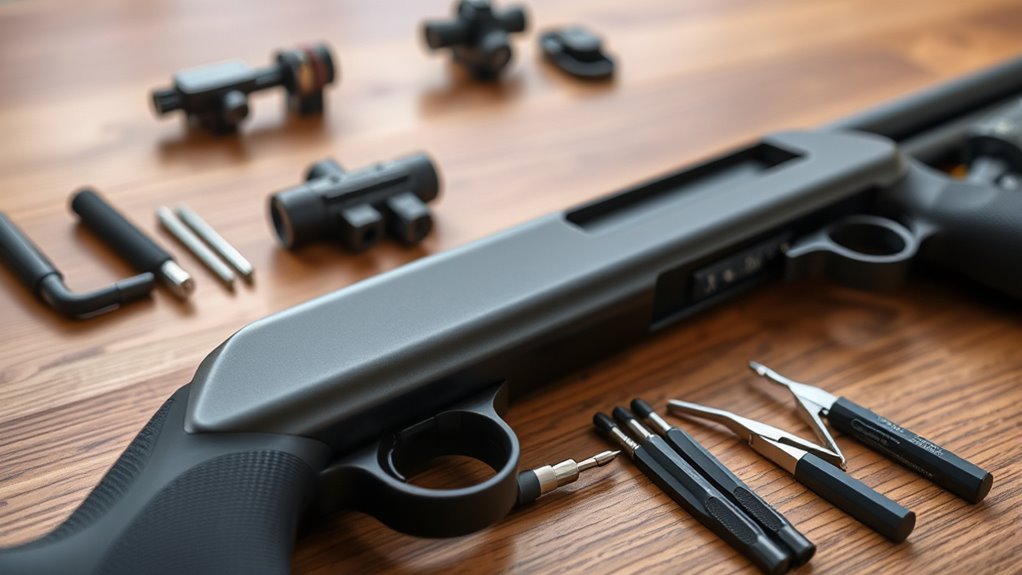
Before you start mounting a sight on your shotgun, gather all the necessary tools and pick the right sight for your needs.
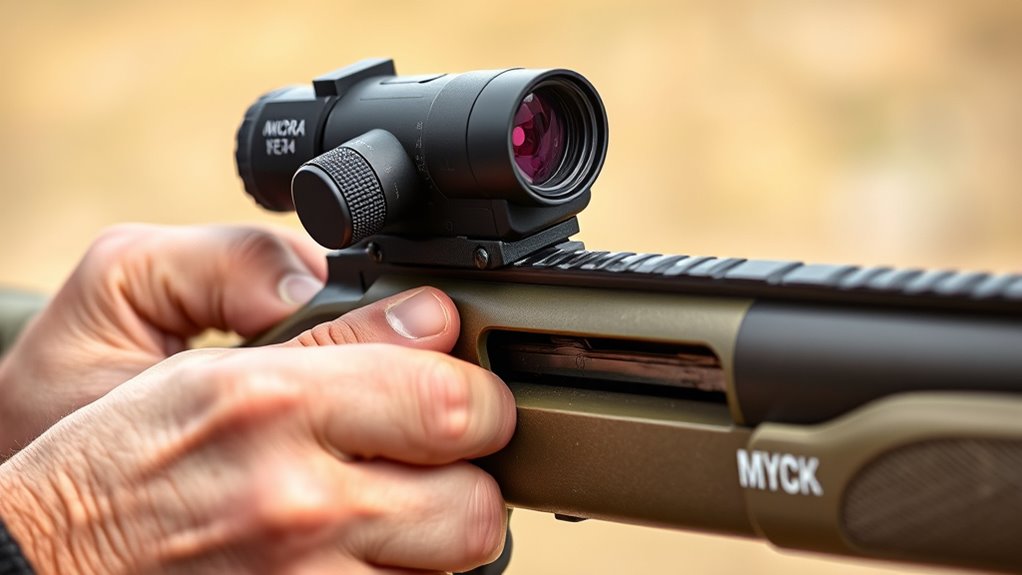
Get familiar with the different sight types like iron sights, optics, or red dot sights. Each has its own advantages depending on your shooting style and what you want to do.
Once you’ve figured out the best sight type, check that you have the correct mounting hardware. Proper hardware is key to securing the sight and keeping your accuracy.
Make sure your shotgun doesn’t need specific mounts or adapters, and that the hardware matches the sight you’ve chosen.
Having the right tools—like screwdrivers, wrenches, or Allen keys—will make the installation easier and smoother.
Taking the time to pick the right sight and gather your tools upfront helps prevent frustration later.
This preparation creates a solid foundation for a secure, accurate sight installation, ensuring your shotgun performs reliably when you need it most.
Prepare Your Shotgun and Sight for Mounting
Start by thoroughly cleaning your shotgun’s mounting area and the sight itself to remove dirt, oil, and debris. This helps ensure a solid surface for proper sight alignment and reduces the risk of slipping or misalignment later on.
Thoroughly clean your shotgun and sight to ensure proper alignment and prevent slipping during installation.
Use a clean cloth and a degreaser if needed. Check that your shotgun accessories, like mounting brackets or rings, are free of corrosion or damage. If you’re using a pre-mounted sight, inspect it for any defects before installation.
When preparing your sight, verify that all parts are present and compatible with your shotgun. This step helps prevent issues during mounting and makes sure your sight sits securely.
Proper preparation creates a stable foundation for accurate sight alignment, which is essential for precise shooting. Taking the time to clean and inspect your gear now saves headaches later and sets you up for a successful sight installation.
Step-by-Step Guide to Mounting Your Sight Securely
To securely mount your sight, gather all the necessary tools like a screwdriver, mounting screws, and a torque wrench if you have one. Proper mounting is key to keeping your sight in place and maintaining correct alignment.
Start by placing the sight on your shotgun and lining it up with the mounting base. Make sure it’s straight and level before tightening anything.
Next, tighten the mounting screws gradually, switching between them to spread the pressure evenly. This helps prevent any misalignment or damage.
If you have a torque wrench, use it to tighten the screws to the manufacturer’s recommended torque. This prevents over-tightening or under-tightening, which could cause issues.
Finally, double-check the sight’s alignment to ensure it’s centered and level for the best sight picture.
Test and Fine-Tune Your Sight for Accurate Shots
Once your sight is mounted securely, it’s time to test how accurate it is by shooting at a designated target. Use proper sighting techniques, like lining up your eye with the sight and keeping a steady stance, to ensure your shots are consistent.
Start with a few test shots to see where your shots land compared to the target’s center. If they’re off, make adjustments using the sight’s elevation or windage screws. Make small, gradual changes and shoot again to check your progress.
Keep track of your adjustments so you don’t overcorrect. Focus on maintaining a steady shooting position for the most accurate feedback. Remember, patience is key—fine-tuning your sight might take several rounds.
With each shot, keep refining your sight’s alignment until your shots reliably hit your intended mark. This process helps ensure your sight is properly calibrated for accurate, dependable shooting.
Troubleshooting Common Sight Mounting Issues
Even with careful installation, you might run into issues like a loose sight or misalignment that can affect your accuracy. Troubleshooting sight mounting problems means checking a few key areas.
First, inspect the mounting hardware. Make sure all screws and bolts are tight because loose hardware can cause misalignment and throw off your shots.
Next, verify the sight is properly aligned with the barrel. If it’s off, carefully adjust it according to the manufacturer’s instructions.
Check for damaged or worn components like stripped threads or broken mounting brackets. These can make your sight unstable.
Finally, confirm the sight fits securely on the rail or mounting surface. If it’s loose, consider using thread locker or replacing worn hardware.
Addressing these issues helps keep your sight aligned and stable during shooting. Proper hardware and attention to detail go a long way in preventing misalignment and improving accuracy.
Frequently Asked Questions
Can I Mount a Sight on Any Type of Shotgun?
You can mount a sight on most shotgun types, but compatibility can vary. Some shotguns, like pump-action and semi-automatic models, usually have rails or mounting points made for sights.
However, some traditional or vintage shotguns might not have these features, which makes mounting a sight a bit more challenging. Always check your shotgun’s design and whether it can support a sight before you buy.
Using the right mount or adapter is key to ensuring a secure fit, no matter what type of shotgun you have.
What Safety Precautions Should I Take During Mounting?
Think of mounting your sight like a surgeon performing a delicate operation—you need precision and care. During the process, make sure you follow proper mounting techniques and maintain proper sight alignment.
Wear safety goggles to protect your eyes from debris, and handle tools carefully to avoid slips. Double-check that all screws are tight and secure.
Taking these safety precautions helps prevent damage to your firearm and guarantees accurate, safe shooting.
How Often Should I Check and Re-Tighten the Sight?
You should check and re-tighten your sight after every few uses, especially if you notice it shifting or if you’ve fired a lot. Regular maintenance helps ensure accuracy and safety.
During installation, follow the tips carefully. Make sure to tighten screws properly but avoid overtightening. This helps prevent damage and keeps your sight secure.
Keep an eye on your sight’s position over time. Re-tighten as needed to maintain a secure, precise fit for consistent aiming.
Are There Specific Tools Recommended for Different Sight Types?
They say “a tool for every job,” and that’s true for sight mounting. For different sight types, you’ll need specific tools like screwdrivers, Allen wrenches, or torque wrenches to ensure proper sight alignment and secure mounting.
Always check your sight’s mounting options to pick the right tool. Be careful not to over-tighten — it can cause damage or affect accuracy.
Using the correct tools makes sure your sight stays accurate and aligned, so you’re ready for your next shot.
Can I Remove and Reinstall the Sight Easily?
Yes, you can remove and reinstall the sight easily if you follow proper installation techniques. Start by making sure the sight is properly aligned before removal, and keep track of all the mounting hardware.
When you’re ready to reinstall, double-check the alignment to keep your accuracy intact. Use the right tools to avoid damaging either the sight or your shotgun.
With patience and careful handling, you’ll be able to confidently remove and reattach the sight while maintaining peak shot accuracy.
Conclusion
Now, with your sight perfectly mounted, imagine the steady grip of your hands as you aim down the polished barrel. The sight gleams softly in the light, ready for action.
As you take that first shot, feel the precision and confidence flow through you like a well-honed instrument. Your effort has turned your shotgun into a sharper, more focused tool.
It’s now ready to meet the target with clarity and purpose. Trust in your work, and let your aim be true, knowing the sight is mounted correctly and ready to perform.