Locking an Ammo Can: A Step-by-Step Guide
Many people struggle to keep their ammo cans secure and airtight, especially when they want to protect their gear from the elements or theft. You’re not alone—finding the right way to lock an ammo can can feel confusing.
Locking an ammo can: A step-by-step guide
First, clean the ammo can inside and check the gasket for damage to guarantee it’s airtight.
Choose a tough, weather-resistant lock that fits well, then align the lid snugly and secure it with the lock.
Test the lock to make sure it functions smoothly and securely.
Regularly inspect and maintain the lock, replacing it if needed.
To find out more about making your ammo can extra secure, keep exploring the steps involved.
Key Takeaways
- Clean and inspect the ammo can, making sure the gasket is intact for a good airtight seal.
- Pick a weather-resistant padlock or combination lock that can handle outdoor conditions.
- Carefully align and close the lid tight before you lock it.
- Double-check that the lock is fully engaged and fits securely on the hasp, giving it a gentle test to see if it resists prying.
- Keep an eye on the lock regularly, and give it some maintenance to prevent rust and keep it secure.
How to Prepare Your Ammo Can for Locking
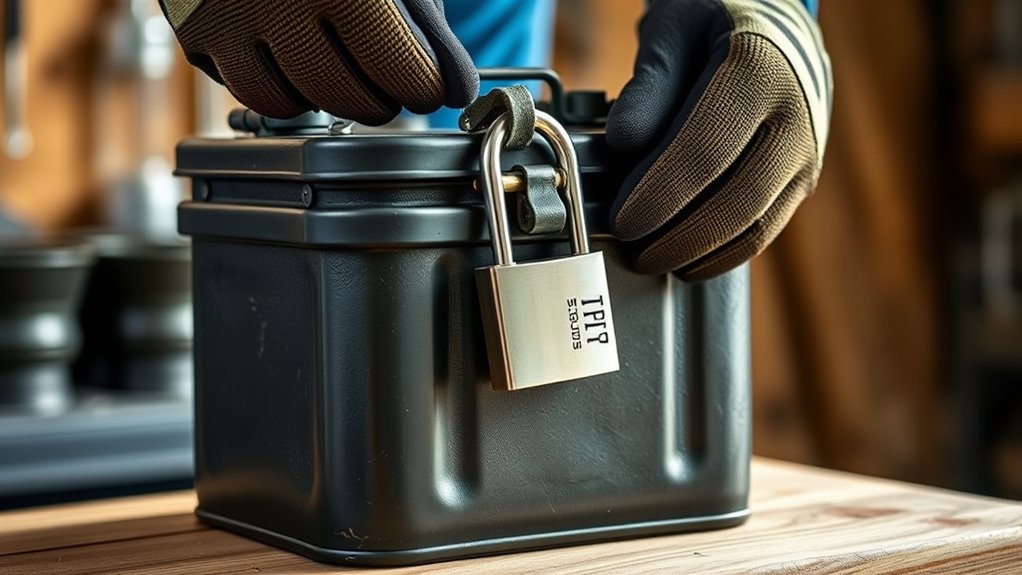
Before you lock your ammo can, it’s important to get it ready properly to keep everything secure. Start by cleaning the inside and making sure there’s no debris that could mess with the seal.
Check the gasket or rubber seal around the lid. If it’s cracked or damaged, replace it so you keep an airtight environment. Then, organize your items inside, making sure they fit well without putting pressure on the lid.
Inspect and replace damaged gaskets to ensure a secure, airtight seal before organizing your items inside.
This helps prevent damage to the seal and stops the lid from opening accidentally. When it’s time to lock the can, use the right tools like padlocks or built-in locks.
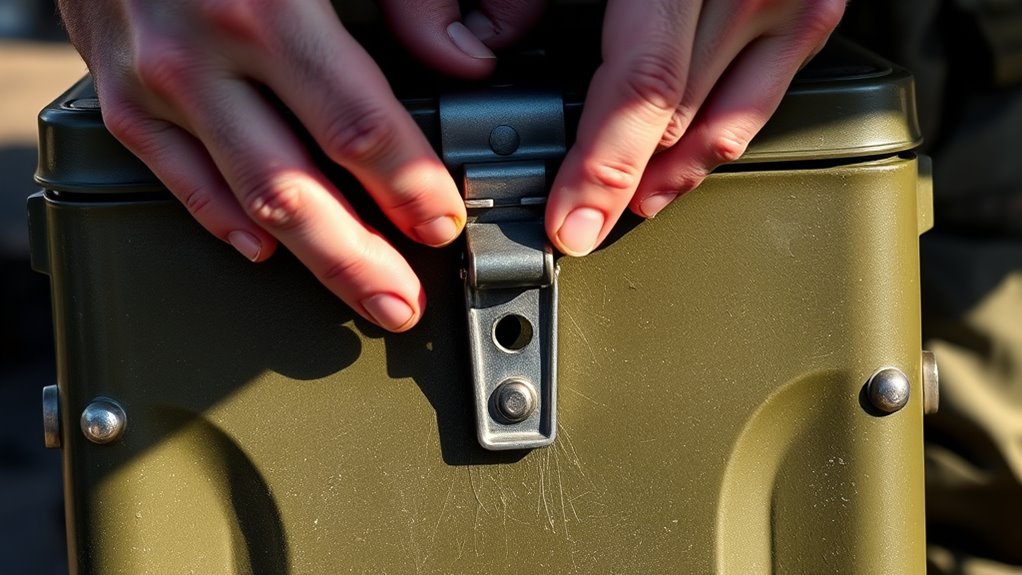
Make sure the lock is sturdy and hard to tamper with. Fit it through the designated holes or hasps, then double-check that it’s secure before you move on.
Getting your ammo can ready with the right prep and a reliable lock will keep your stored items safe and protected.
Choosing the Best Lock for Your Ammo Can
When you’re picking out a lock for your ammo can, it’s a good idea to think about the different types and what kind of security features they offer. You want something that keeps unwanted folks out but also suits your needs.
Also, it’s smart to go for a lock that’s tough and weather-resistant, especially if your ammo can will be sitting outside. You want it to hold up against the elements so your gear stays safe no matter what. Picking the right lock really makes a difference in keeping your stuff secure in any environment.
Lock Types and Security
Choosing the right lock for your ammo can is key to keeping your gear secure and easy to access when you need it. Think about different padlock options, especially those with security features like hardened shackles and weather-resistant materials.
Lock mechanisms vary in complexity, so pick one that balances security with ease of use, based on what you prefer. Safety standards are important—they verify the lock meets quality benchmarks.
Make sure the lock size fits your can’s hasp without blocking access. Consider theft prevention too; high-security locks with advanced features can cut down the risk of tampering.
Finally, think about key management. Some locks use keys, while others are combo-based. Choose a lock that’s convenient for you but tough for others to tamper with, giving your gear maximum protection.
Durability and Weather Resistance
Selecting a lock that withstands harsh conditions is essential for keeping your ammo can secure over time. You want a lock with excellent durability and weather resistance to handle environmental exposure.
Look for features like corrosion resistance and rust prevention, which protect against moisture and prevent deterioration. Material strength is key for impact protection, making sure the lock endures rough handling.
Also, choose a lock that maintains seal integrity to prevent water or dirt from compromising the contents. For the best storage longevity, consider these factors:
- Made from stainless steel or coated metals for corrosion resistance.
- Designed with impact-resistant materials to handle shocks.
- Ensuring tight seal compatibility to control moisture and prevent rust.
These elements help guarantee your lock offers lasting protection, even in tough conditions.
Step-by-Step Guide to Locking Your Ammo Can
Sure! Here’s a more conversational version of your instructions:
First, get your locking mechanism ready and make sure it’s working properly. You don’t want any surprises when you actually go to lock it. Once that’s good to go, carefully close the lid on your ammo can, making sure everything lines up just right before you lock it down. Finally, double-check that the lock is fully engaged and that the lid is nice and tight. That way, your ammo can stays secure and ready for whatever you need it for!
Preparing the Locking Mechanism
Before securing your ammo can, you need to prepare the locking mechanism properly. This guarantees a secure and reliable lock.
First, gather your locking tools and accessories, such as padlocks or combination locks, to fit your specific can. Next, inspect the locking holes or hasps for any debris or damage, which could compromise security.
Finally, adjust or align the locking accessories to guarantee smooth operation. Use locking tools to tighten or secure any loose components, making sure the mechanism functions seamlessly.
Properly preparing the locking mechanism helps prevent accidental release and ensures your ammo stays protected.
Taking these simple steps guarantees your locking accessories and tools are ready for a secure seal, giving you peace of mind.
Properly Securing the Lid
Once you’ve prepared the locking mechanism, it’s time to properly secure the lid of your ammo can. Start by making sure the lid is aligned correctly for a snug fit. Good alignment prevents gaps and helps the lock work smoothly, keeping everything looking neat.
Check the edges and corners, adjusting as needed before engaging the lock. Confirm the lid fits tightly and is fully closed. Then, engage the locking mechanism to keep it secure.
Next, verify that the lock sits flush and is firmly in place. Make sure the lid stays aligned and doesn’t shift. Properly securing the lid ensures your ammo can stays locked, protected, and looks good when sealed.
Verifying Lock Engagement
Step 1: After securing the lid, check that the lock is fully engaged by inspecting its position and function. Making sure your lock mechanisms are properly engaged ensures the security features are active.
Confirm that the lock lines up correctly with the latch, which indicates it’s fully engaged. Then, gently try to open it—if it resists, that shows the security features are working.
Finally, visually inspect the lock mechanism for any misalignment or damage that could weaken security. This helps ensure everything is in proper working order.
Tips to Make Your Lock Tamper-Proof and Secure
To guarantee your ammo can stays secure and tamper-proof, start by choosing a high-quality lock designed for rugged use. Look for locks with tamper-proof features, like reinforced shackles or hidden locking mechanisms, which make unauthorized access tough.
Pay attention to the lock materials—go for stainless steel or hardened metal for durability and resistance against cutting or prying. Avoid cheap plastic or lightweight locks that can be easily broken or tampered with.
Consider locks with anti-drill features or those that need specialized tools to open. Make sure the lock fits tightly to prevent manipulation or forced entry. Secure the lock firmly and double-check that it fully engages.
Using multiple locks or adding a security seal can give you extra peace of mind. By choosing strong materials and tamper-proof designs, you significantly reduce the risk of unauthorized access and keep your contents safe.
Common Mistakes to Avoid When Locking Your Ammo Can
Many people make the mistake of neglecting proper fit and tension when locking their ammo can, which can leave it vulnerable to forced entry. Poorly fitted locks or misaligned latches can compromise tamper prevention and weaken overall security. To avoid this, focus on lock maintenance and make sure your lock works smoothly and securely.
Here are common mistakes to watch out for:
- Ignoring lock selection – Choose a lock that matches your security needs. Cheap or incompatible locks can be easily bypassed.
- Improper key management – Losing control of keys or sharing them insecurely risks unauthorized access.
- Neglecting lock tension – Failing to tighten or secure the lock properly can create weak points, making forced entry easier.
How to Test If Your Lock Is Secure and Effective
Want to make sure your lock is actually secure and doing its job? First, give it a good look over. Check for any damage, rust, or signs of wear that might make it less reliable. Sometimes, a quick visual check can reveal a lot about whether it’s still in good shape or needs replacing.
Next, do a simple test by gently trying to open the lock. If it opens easily or feels loose, that’s a red flag. You want to make sure it’s holding firm when you apply light pressure—so give it a little push or turn to see if it stays locked.
Finally, it’s a good idea to see how tough it is by applying a bit of force. Try pulling or twisting it slightly to see if it can handle everyday bumps and handling without slipping or breaking. If it passes these checks, you can feel more confident that your lock is both secure and effective.
Visual Lock Inspection
A quick visual inspection can reveal whether your ammo can lock is secure and working properly. Start by looking at the lock for any damage or corrosion.
Next, check if the lock lines up correctly with the latch, which shows it’s engaged properly. Look closely at the locking mechanism to see if it moves smoothly without sticking or wobbling.
Make sure the locking pin or shackle is fully inserted and seated properly. Finally, inspect the area around the lock for cracks or deformities that could weaken security.
Doing these simple visual checks helps confirm your lock’s integrity before testing it more thoroughly. Remember, a secure lock depends on proper alignment and undamaged parts, so regular inspections are key to keeping your ammo can safe.
Conducting a Lock Test
Performing a lock test is essential to guarantee your ammo can’s security effectively. First, verify lock compatibility by ensuring the lock fits snugly into the designated lock placement without forcing or loosening.
Once in place, try to open the can by applying gentle pressure or prying around the lock area. If the lock holds firm and resists movement, it’s a good sign of effectiveness.
If it shifts or feels loose, consider repositioning or replacing the lock. Also, test the lock’s engagement by locking and releasing multiple times, checking for smooth operation and secure closure each time.
This process confirms that your lock placement is correct and that the lock functions properly, ensuring your ammo can stays securely fastened when needed.
Assessing Lock Durability
After confirming your lock fits properly and resists prying, it’s important to evaluate its durability over time. To do this, consider the following:
- Check lock ratings and security standards to make sure it meets industry benchmarks for strength and reliability.
- Review lock materials for corrosion resistance, especially if exposed to moisture. Also, verify compatibility with your preferred key types.
- Research user reviews and lock brands to see how they perform in the long run. Focus on how easy the lock is to install and how well it handles daily wear.
Best Practices for Storing Your Locked Ammo Can Safely
To keep your ammo can secure and effective, store it in a safe spot that reduces the risk of theft, damage, or unauthorized access. Pick a cool, dry place to prevent rust and corrosion, and avoid areas with temperature swings.
Organizing your ammo can makes it easier to find what you need quickly, which means less handling and less wear over time. Make sure the storage spot is out of reach of children and intruders, ideally in a locked cabinet or closet.
Think about factors like climate control, ease of access, and security. Use a lockable cabinet or shelf, and consider adding surveillance or alarms for extra protection. Keeping your ammo stored thoughtfully helps maintain safety and keeps it in good condition.
Maintaining and Replacing Locks on Your Ammo Can
Regularly maintaining and replacing the locks on your ammo can is key to keeping your stored items secure. Proper lock maintenance helps prevent corrosion and wear, so your lock continues to work smoothly.
When it’s time to replace the lock, choosing a durable, high-quality one ensures long-term security. This way, you won’t have to worry about your valuables being at risk.
Here are three essential steps:
- Check the lock regularly for rust, corrosion, or damage, and do any necessary maintenance.
- Use a silicone-based lubricant to keep the lock mechanism moving smoothly and prevent sticking.
- If the lock begins to fail, replace it promptly to maintain your security and peace of mind.
Legal Considerations When Locking Your Ammo Can
Locking your ammo can isn’t just about security; it also involves understanding legal requirements that vary by jurisdiction. You need to familiarize yourself with local regulations and storage rules specific to your area to be a responsible owner.
Many laws restrict how and where you can store ammunition, especially in residential zones or shared spaces. Proper safety measures, like using approved locks and secure containers, help prevent unauthorized access and reduce liability.
Failing to follow these laws could result in fines, confiscation, or legal trouble if an incident happens. It’s important to stay updated on any changes to local laws about ammo storage.
Troubleshooting Locking Issues and Fixes
When your ammo can’s lock isn’t engaging properly or has become difficult to operate, troubleshooting quickly can prevent security gaps. First, check for dirt or debris that might block the locking mechanism; clean it and apply a light oil to keep it working smoothly.
Next, look at your key management practices. If your key is bent or worn out, think about replacing it to avoid jams or failures. Also, inspect the lock parts for corrosion or damage, which might mean you need to repair or replace them.
Proper lock maintenance is key to keeping your ammo can secure and working well. Regularly test the lock and keep your keys organized to avoid unexpected issues. Addressing problems early ensures your lock stays reliable and your contents stay protected.
Frequently Asked Questions
Can I Use a Combination Lock on My Ammo Can?
Yes, you can use a combination lock on your ammo can. Just make sure it’s compatible with the lock type, like dial or push-button, which are common options.
Using a combination lock helps improve security by preventing unauthorized access. Just check that the lock fits snugly and is tough enough for outdoor conditions.
This way, you keep your ammo safe and secure with a reliable locking method.
How Do I Secure the Lock Against Corrosion?
To prevent corrosion, choose materials like stainless steel or anodized aluminum for your lock. These are resistant to rust and last longer.
Also, go for waterproof lock options that keep moisture out and protect against rust buildup. This helps your lock stay in good shape over time.
Apply a light coat of lubricant, like silicone spray, on moving parts. It creates a barrier that resists corrosion and keeps everything working smoothly.
Make sure to check and clean your lock regularly, especially after exposure to moisture. This way, it stays secure and functions properly for longer.
Are There Specific Lock Types Recommended for Outdoor Storage?
For outdoor storage, choose padlocks made from stainless steel or brass, as these materials resist corrosion better than standard steel.
Look for locks with weatherproof or sealed mechanisms to improve durability against rain, humidity, and temperature changes.
These specific lock types help keep your ammo can secure and functional even in tough outdoor conditions.
Prioritizing quality materials and weather-resistant features is key to protecting your gear effectively.
How Often Should I Replace the Lock on My Ammo Can?
You should replace your ammo can lock annually to keep it in good shape and secure. Regularly check for signs of wear, rust, or damage, as these can affect how well the lock works and your safety.
If you spot any issues, swap out the lock right away. Using high-quality, weather-resistant locks can help them last longer outdoors.
Staying on top of lock maintenance ensures your ammo can stays secure and protected over time, helping prevent any security issues.
What Is the Best Way to Hide My Locked Ammo Can?
To hide your locked ammo can effectively, use creative hiding and camouflage techniques. Place it behind false walls, inside large household containers, or within outdoor items like trash bins or garden pots.
You can also bury it partially underground or hide it under a pile of debris. The key is to blend it seamlessly into its surroundings, making it less obvious to anyone who might stumble upon it.
Conclusion
Locking your ammo can is like sealing a treasure chest—protecting what matters most.
By following these steps and tips, you’ll keep your ammunition safe, secure, and out of the wrong hands.
Remember to stay vigilant, maintain your locks, and avoid common pitfalls.
With a little effort, your ammo can becomes an unbreakable fortress, guarding your supplies as steadfastly as a loyal guardian.
Stay prepared, stay safe, and lock up with confidence using your ammo can.