How to Determine When to Start Seeds Indoors for Maximum Growth
Starting seeds indoors can feel like a tricky puzzle, especially if you want healthy, thriving plants by the time it’s transplanting season. You’re not alone—many gardeners struggle to find the perfect timing for seed starting and get frustrated with seedlings that aren’t strong enough.
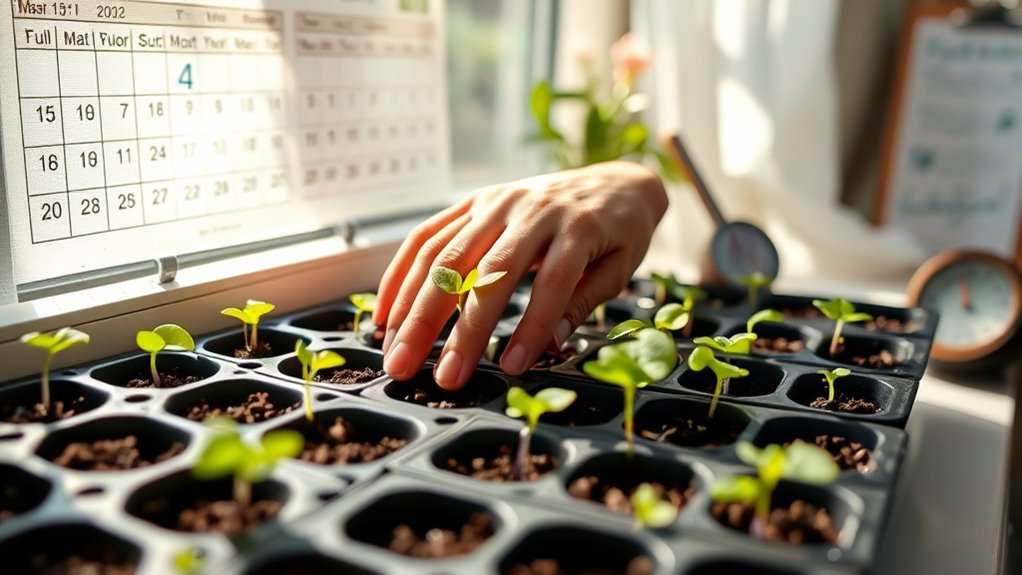
To determine when to start seeds indoors for maximum growth, first find your last frost date and note the ideal seed start time listed on your seed packets—typically 6-8 weeks before the last frost for warm-season plants and earlier for cool-weather crops.
Keep your indoor conditions ideal with bright light, consistent temperatures, and proper humidity. Monitoring these factors and understanding your climate helps guarantee healthy seedlings ready for transplant.
Want to know more about crafting a perfect planting schedule?
Key Takeaways
- Find your last spring frost date and count back 6 to 8 weeks for warm-season crops.
- Check seed packet instructions and compare them with your regional climate and frost dates.
- Make sure your indoor space gets 12 to 16 hours of bright light each day and stays between 65 and 75°F.
- Start cooler-weather crops earlier since they handle lower temperatures and can stay indoors longer.
- Keep an eye out for healthy seedlings with strong roots and multiple true leaves before moving them outside.
How to Determine the Best Time to Start Seeds Indoors
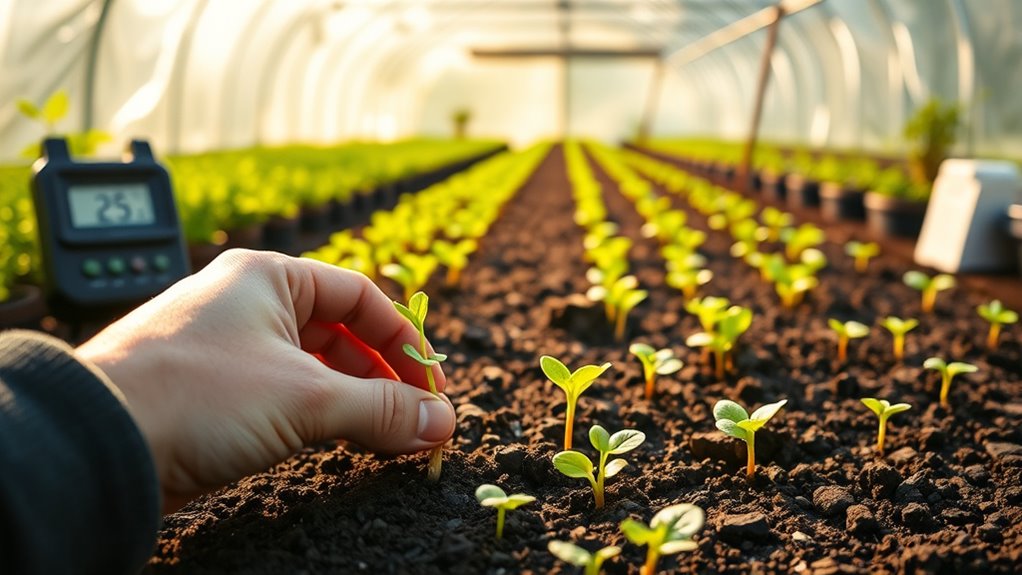
The best time to start seeds indoors depends on your plant’s growth cycle and your local climate. To get the best germination results, think about when outdoor conditions are still too cold for seedlings to grow well outside.
Starting seeds too early can lead to weak plants, while waiting too long might shorten your growing season. For indoor gardening, check the seed packet for recommended start dates based on your region.
Start seeds at the right time to ensure healthy plants and maximize your growing season.
Most warm-season vegetables and flowers should be started 6-8 weeks before the last frost date. Cooler-weather crops can be started earlier since they can handle lower temperatures.
Remember, the timing also depends on how long each plant takes to reach transplant size. By understanding your local climate and your plants’ needs, you can find the perfect window to start seeds indoors.
This way, you’ll set yourself up for a successful garden season.
Understanding Your Local Climate and Frost Dates
Getting to know your local frost dates is a great way to plan your garden. When you know when the last frost usually happens in spring and the first frost in fall, you can figure out the best time to start your seeds indoors. This way, your plants will be ready to go outside once the danger of frost has passed.
Every region has its own climate quirks, which means some plants will do better than others depending on where you live. Knowing your area’s weather patterns helps you decide which plants to grow and when to seed them indoors. When you understand these factors, you set yourself up for a healthier, more successful garden right from the start.
Local Frost Schedule
Understanding your local frost schedule is key for starting seeds indoors successfully. Knowing the frost dates in your area helps you plan when to start so your seedlings don’t get damaged by unexpected cold snaps.
Check your region’s average last frost date in spring and first frost date in fall, which can vary depending on your planting zone. These zones, based on climate conditions, help you time your seed starts just right.
Starting seeds too early can risk frost damage or stunted growth, while planting too late might shorten your growing season. Keep an eye on local weather forecasts and frost predictions.
Adjust your indoor seed-starting schedule as needed to make sure your seedlings are healthy and ready to thrive once outdoor conditions improve.
Regional Climate Patterns
Regional climate patterns really influence your frost dates and planting schedule. Knowing your climate zone helps you pick seed varieties that are sensitive to frost and have good germination rates.
Seasonal trends, microclimates, and temperature swings all affect when you should start seeds indoors. Humidity levels also matter for seed health and growth.
For example, a coastal microclimate might be more humid, so you’ll need to adjust your planting calendar accordingly. Use this table to see how different climate zones and local ecosystems shape your seed-starting choices:
| Climate Zone | Typical Seasonal Trends | Microclimate Factors | Impact on Seed Varieties |
|---|---|---|---|
| Zone 5 | Late frosts, short summers | Coastal, valley microclimates | Choose frost-tolerant seeds |
| Zone 7 | Mild winters, longer growing season | Urban heat islands | Start seeds earlier |
| Zone 9 | Minimal frost, warm climate | Coastal, inland microclimates | Favor heat-loving varieties |
| Zone 3 | Cold, short growing season | Mountain microclimates | Use hardy seed varieties |
When Is the Right Time to Start Seeds for Vegetables and Flowers?
The best time to start seeds for vegetables and flowers depends on your local climate and the specific plants you’re growing. To figure out the right timing, consider factors like last frost dates and what your plants need to grow.
Picking the right seed varieties is super important. Some plants need an earlier start, while others do better when sown closer to transplanting. Using indoor gardening techniques can give your seedlings a strong head start.
Choosing the right seed varieties ensures healthy growth and a successful garden start.
Keep these tips in mind:
- Check the seed packet for recommended indoor start times based on your region.
- Count backward from your expected last frost date to plan your seed starting schedule.
- Adjust your timing based on the specific growth needs of your chosen seed varieties.
Reading Seed Packets: How to Find the Ideal Starting Time
Reading seed packets carefully is really important because they tell you when to start your seeds indoors. The packets usually include the best planting times based on your region’s climate, helping you pick the right window for sowing.
Pay attention to details about seed viability, which shows how long the seeds stay capable of germinating effectively. Fresh seeds with high viability tend to germinate better, giving you a higher chance of success.
The packet also shows germination rate percentages, indicating how many seeds are likely to sprout under ideal conditions. Use this info to decide how many seeds to plant, accounting for some may not germinate.
Assessing Your Indoor Growing Conditions Before Planting
Before you start planting, take a good look at your indoor space. Make sure it gets enough light—plants need plenty of it to grow strong. Also, check that the temperature is just right—not too hot or cold—and that the humidity levels are suitable for your seeds.
It’s also important to have enough space for your plants to spread out and grow comfortably. Don’t forget about ventilation—good airflow helps prevent mold and diseases from taking hold. Thinking about these things beforehand will give your seeds the best chance to thrive right from the start.
Light Availability and Quality
Since light is essential for healthy seed growth, you need to evaluate the quality and availability of natural sunlight and artificial light in your indoor location before starting your seeds. Adequate light guarantees proper seedling growth and plant health.
Check how much direct or indirect sunlight your space receives daily and if it’s consistent. If natural light is limited, consider using full-spectrum grow lights to supplement and ensure the right light spectrum for seedlings.
Aim for 12-16 hours of light daily, with enough intensity to prevent leggy, weak seedlings. Carefully assess your space’s light conditions to optimize seedling development and maximize growth potential.
Temperature and Humidity Levels
Proper temperature and humidity levels are crucial for seed germination and healthy seedling development. Maintaining the right temperature guarantees seeds sprout effectively, usually between 65-75°F depending on the plant type. Use methods like space heaters or heating mats if needed.
Humidity control is just as important. Too much moisture can cause damping-off disease, while too little can hinder germination. Aim for humidity levels around 50-70% and adjust with a humidifier or by covering containers with plastic wrap.
Make sure to regularly monitor these conditions with a thermometer and hygrometer to keep them stable. Consistent temperature and humidity create the perfect environment, giving your seeds the best chance to grow strong and healthy from the start.
Space and Ventilation
Evaluating your indoor space and ventilation setup is the next step to guarantee your seeds thrive. Proper airflow and enough space help prevent mold, disease, and overcrowding.
Make sure your grow area has enough room for seed spacing, allowing plants to develop strong roots and healthy stems. Good air circulation keeps humidity levels balanced and reduces the risk of fungal issues.
Consider using fans to promote consistent airflow and avoid stagnant air pockets. Keep in mind that crowded seeds can hinder growth, so plan for enough space between seedlings.
Regularly monitor your environment to adjust ventilation as needed. Creating ideal conditions for germination and early growth is key.
Proper space and air circulation set the foundation for vigorous, healthy plants.
Calculating Your Indoor Seed Start Date Based on Frost Dates and Plant Maturity
To figure out the best time to start your seeds indoors, consider your area’s last frost date and how long each plant takes to mature. Knowing the growth stages of your seed varieties helps you plan accurately.
For example, some plants like tomatoes need about 6 to 8 weeks indoors before transplanting. Others, like peppers, require even more time.
Here’s a simple table to help you calculate your start date:
| Last Frost Date | Count Back (weeks) | Seed Start Date |
|---|---|---|
| April 15 | 6-8 weeks | Late February to early March |
Key Factors for Successful Seed Starting: Light, Temperature, and Humidity
Once you’ve figured out the right time to start your seeds indoors, creating a good environment is crucial for success. Proper light, temperature, and humidity levels are what you need for healthy seedlings. When choosing seeds, pick varieties that are suitable for starting indoors and match your climate. Also, use well-draining, nutrient-rich seed-starting mix for the best growth.
Creating the right environment with proper light, temperature, and humidity ensures healthy indoor seed growth.
To make sure everything goes smoothly, focus on these key factors:
- Light: Provide at least 12-16 hours of bright, direct light each day. Use grow lights if natural sunlight is limited.
- Temperature: Keep it around 65-75°F for most seedlings, and avoid drafts or sudden temperature changes.
- Humidity: Aim for 50-70% humidity. Use a humidity dome or plastic cover to keep moisture in without encouraging mold.
Getting these factors right helps seeds germinate and grow strong. It gives your plants a great start towards healthy development.
Creating a Seed Starting Schedule to Match Your Outdoor Garden
To put together a good seed starting schedule, first take some time to get familiar with your local climate and the length of your growing season. Knowing these details helps you plan when to start your seeds so they’re ready to go outside at just the right time.
Then, look at the maturity dates of the plants you want to grow and match them up with your outdoor planting schedule. This way, your seedlings will be strong and healthy when it’s time to transplant them outside, making the whole process smoother.
Lastly, keep an eye on the weather patterns in your area. Changes in temperature or unexpected cold snaps can throw off your schedule, so adjusting your indoor starting times accordingly will help you avoid starting too early or too late.
Assess Your Local Climate
Understanding your local climate is key to timing your seed starting just right. Knowing your area’s typical weather helps you decide when to start seeds indoors.
Pay attention to soil temperature because it affects seed viability. Most seeds germinate best when the soil warms to the right range.
Also, keep in mind the last frost date in your area. It tells you when it’s safe to transplant seedlings outdoors without the risk of frost damage.
To get a good handle on your climate, track your average last frost dates and seasonal temperature patterns. This gives you a clear picture of your growing season.
Monitor soil temperature with a thermometer to ensure it’s ideal for seed germination. This step helps you avoid starting too early or too late.
Be aware of local weather patterns that could lengthen or shorten your growing season. This knowledge helps you plan better.
All this info helps you create a schedule tailored to your area, so your seeds sprout at just the right time for strong growth.
Match Plant Maturity Dates
Matching your plant’s maturity dates with your outdoor garden schedule makes sure your seedlings are ready to transplant at the right time. To do this, learn the maturity timelines for your seed varieties, which can vary depending on the plant.
Some vegetables like tomatoes and peppers need longer growing periods, so start their seeds indoors earlier. Others, such as lettuce or radishes, grow quickly and can be started later.
Check the seed packet instructions for specific transplant dates based on your last frost date. Planning your seed starting around these timelines helps your seedlings develop fully before they go outside.
Track Outdoor Weather Patterns
Tracking outdoor weather patterns is key to creating a good seed starting schedule that matches your garden’s timeline. By keeping an eye on the weather, you can figure out the best time to move your seedlings outside.
Watch for temperature swings that tell you when it’s safe to transplant. Keep an eye on frost dates and the chances of late or early frosts. Also, note rainfall patterns, since they affect soil readiness and planting windows.
Knowing these weather trends helps you tweak your seed-starting plan so your plants are healthy and ready to go outside. Monitoring seasonal changes lets you anticipate shifts in temperature and moisture, giving your garden the best possible start.
Signs Your Seeds Are Ready to Transplant Outdoors
When your seedlings have developed strong, healthy roots and their stems have thickened, they’re usually ready to be transplanted outdoors. Look for good root growth, which shows they can handle the move outside without suffering transplant shock.
Your seedlings should also have several true leaves, indicating they’re mature enough to survive outside.
Here’s a quick visual to guide you:
| Root Development | Stem Thickness | Leaf Growth |
|---|---|---|
| Roots fill the container | Stems are sturdy and thick | Multiple true leaves present |
If these signs are clear, your plants are ready. Transplanting too early can cause shock, and waiting too long might slow their growth.
Make sure outdoor conditions match their needs, and handle seedlings gently to protect their roots.
Troubleshooting Common Timing Issues in Seed Starting
Even when your seedlings look healthy and are ready to be transplanted, timing issues can still cause problems. Starting seeds too early may lead to leggy plants or containers that are outgrown, which can reduce seed viability and increase transplant shock.
On the other hand, starting too late can mean your seedlings aren’t strong enough to handle outdoor conditions. This can result in stunted growth or even plant loss.
To troubleshoot these issues, keep an eye on your seedlings’ growth and adjust your start date accordingly. Using a calendar to track the ideal transplant window helps prevent premature or delayed starts.
Make sure to gradually harden off your seedlings before transplanting outdoors. This helps minimize shock and prepares them for the outdoor environment.
Being mindful of timing helps keep your seeds viable and ensures your plants are strong enough for transplanting. This reduces the risk of shock and promotes healthy, vigorous growth.
Frequently Asked Questions
How Can I Tell if My Indoor Environment Is Suitable for Seed Germination?
You can tell if your indoor environment is suitable for seed germination by checking humidity levels. They should be moderate to prevent mold growth.
Make sure you have enough light sources, like grow lights, to help your seeds grow healthy and strong. Proper lighting is key for good germination.
Keep the temperature between 65 and 75°F. Also, maintain consistent soil moisture but avoid waterlogging to keep your seeds happy.
If these conditions are met, your environment is just right for successful seed germination.
What Are the Best Indicators That Seeds Are Ready for Transplanting?
Think of your seedlings as young dancers ready for the stage; their roots are their foundation.
When roots poke out of the drainage holes or fill the container, it’s a clear sign they’re ready for transplanting.
You’ll notice strong, healthy foliage, and the plant feels firm. These are good indicators that the timing is right.
Having robust root development is key for successful growth once you move them outdoors.
How Do I Adjust Seed Starting Times for Unusual Weather Patterns?
To adjust seed starting times for unusual weather patterns, keep a close eye on the weather and stay flexible with your schedule. If you experience early cold spells or late frosts, consider delaying indoor planting or adding extra insulation.
On the other hand, if warm weather arrives sooner than expected, start your seeds earlier to make the most of the warmer climate. Adapting your timing based on seasonal changes helps protect your plants and promotes healthy growth despite climate fluctuations.
Can Seed Starting Times Vary for Different Plant Varieties Within the Same Species?
Did you know that seed variety differences can influence germination rates by up to 30%? Yes, seed starting times can vary even within the same species, depending on the specific variety.
Some cultivars need earlier or later indoor starts to reach their ideal growth stage. Check seed packets for variety-specific recommendations and keep an eye on germination progress.
Adjust your schedule as needed to give each plant the best start possible.
What Tools or Apps Can Help Me Track Optimal Seed Starting Dates?
You can use seed calendars and germination trackers to help identify ideal seed starting dates. Seed calendars give you tailored planting schedules based on your region and plant type, so you know exactly when to start.
Germination trackers let you record seed sprouting progress, which helps you adjust your future planting plans. These tools make tracking and planning easier, giving you confidence that your seeds will grow strong and healthy.
Conclusion
By understanding your local frost dates, reading seed packets carefully, and monitoring your indoor conditions, you can confidently determine the perfect time to start your seeds.
Don’t worry if it feels overwhelming at first—just take it step by step. With a little practice and patience, you’ll have healthy seedlings ready to thrive outdoors.
Remember, even if your timing isn’t perfect initially, you can always adjust your schedule next season.
Mastering when to start seeds indoors for maximum growth makes gardening more enjoyable and successful.
Happy gardening!