Step-by-Step Guide to Anchoring a Gun Safe
Many gun owners understand the importance of securing their firearms, but figuring out how to properly anchor a gun safe can be overwhelming. You’re not alone—this step often feels confusing or intimidating, especially if you’re new to safety setups.
Don’t worry, though; anchoring your safe is easier than it seems with a clear plan.
To anchor your gun safe, start by choosing a discreet, stable location that balances accessibility and security. Gather the necessary tools like a drill, anchors, and a level.
Prepare the surface by inspecting for damage and marking anchor points carefully.
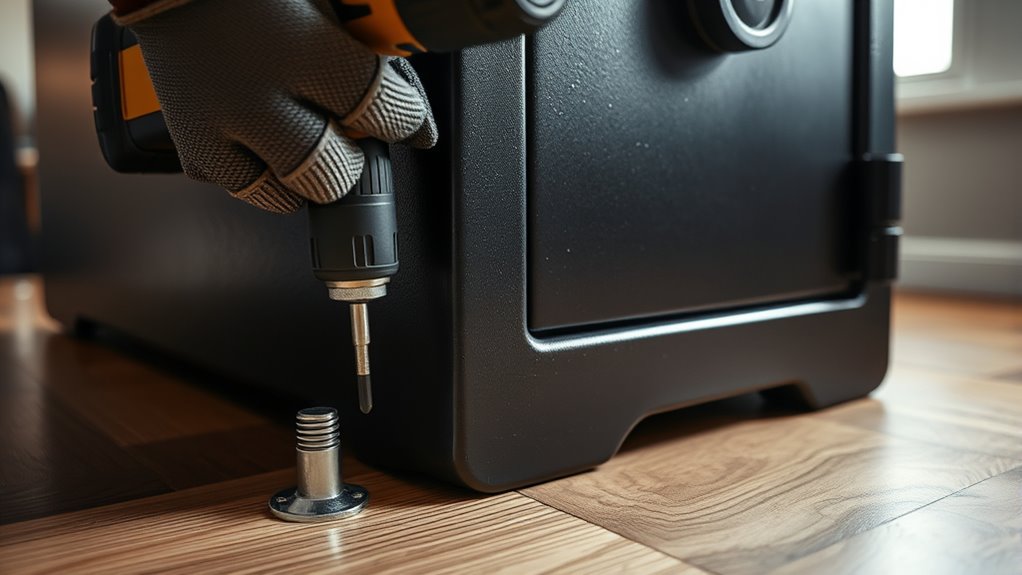
Drill holes, install the anchors securely, and attach the safe firmly to prevent movement. Regularly check and maintain the anchors to guarantee ongoing safety.
Keep going to uncover detailed steps to secure your safe properly.
Key Takeaways
- Find a secure, level surface and gather the right tools and fasteners before you start installing.
- Use the safe’s mounting holes and a tape measure to mark where you’ll drill.
- Drill holes according to the manufacturer’s instructions, making sure they’re the right size and depth for the anchors.
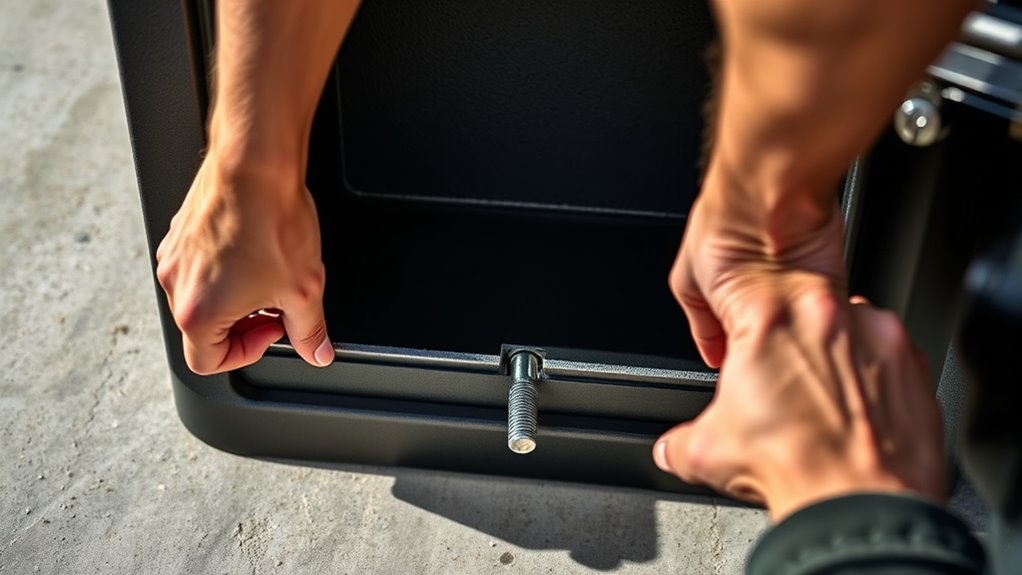
- Insert the anchors into the holes, then secure the safe with bolts. Tighten them firmly but don’t overdo it.
- Gently apply pressure to test the safe’s stability, and check regularly for looseness or damage.
Why Properly Anchoring Your Gun Safe Matters
Properly anchoring your gun safe is crucial to prevent theft and ensure safety. When your safe is securely fastened, it’s much harder for intruders to steal or tamper with it.
Many safety guidelines highlight the importance of anchoring firearms and safes to promote responsible storage. It’s a key step in deterring burglars, especially in areas with higher crime rates.
Anchoring safes is essential for responsible storage and deterring burglars, especially in high-crime areas.
A well-anchored safe discourages burglars from trying to remove or break into it, helping protect your firearms and valuables. Proper anchoring also reduces the risk of accidents or injuries if the safe is moved or tipped over.
Following these safety measures shows you’re committed to responsible firearm storage and helps you stay in line with legal standards. Overall, anchoring your safe is a simple but essential move that boosts security, keeps everyone safe, and helps you meet safety regulations.
Choosing the Best Location for Your Safe
When you’re picking a spot for your gun safe, think about how easy it is for you to get to it quickly if you ever need to. You want it to be convenient, but not so obvious that anyone else can easily find or access it.
At the same time, it’s super important to choose a location that’s secure and private. You don’t want unauthorized people stumbling across it or knowing where it’s hidden.
Finding that sweet spot between accessibility and security is key. That way, your safe remains both practical to use and well-protected.
Accessibility and Convenience
Have you thought about how easily you’ll need to access your gun safe in daily situations? Safe accessibility is important so you can get to your firearms quickly when needed.
Choose a location that fits your routine and is easy to reach. Avoid spots that are hard to access or require extra effort.
Think about places you often go, like a bedroom closet or a nearby laundry area, instead of hidden corners or hard-to-reach storage spaces.
The safe should be simple to open but not so visible that it compromises security. Find a spot that balances quick access with discreet placement.
This way, you can confidently reach your safe during emergencies or routine use without any hassle.
Security and Privacy
Choosing the right spot for your safe is key to ensuring both security and privacy. You want a location that minimizes privacy concerns and makes it harder for intruders to find or access your firearm. Think about hiding your safe in a discreet area, away from common sightlines, and avoid obvious spots like closets or basements.
Implement security measures such as anchoring the safe to the floor or wall. Pick a spot with limited access to keep your firearm secure. Also, consider the environment—stay away from damp or overly humid areas that could damage your safe or its contents.
Gather the Tools and Materials You Need
Gather all the tools and materials you need before you start anchoring your gun safe. Having everything ready will make the process smoother and quicker.
Prepare all tools and materials in advance for a faster, smoother safe anchoring process.
Your toolkit should include a drill, the right drill bits, a wrench, and a tape measure. Also, grab a level to ensure everything lines up properly.
For materials, choose the appropriate fasteners—usually bolts or anchors suited for your floor or wall type. The type of material matters a lot.
Concrete needs heavy-duty anchors, while wood might require lag bolts. If you’re working on concrete, you’ll need masonry anchors or expansion bolts.
For drywall or wooden surfaces, toggle bolts or lag screws work best. Don’t forget safety gear like gloves and eye protection.
Having everything prepared beforehand saves time and prevents interruptions. Check your list to make sure you have the correct sizes and types of tools and materials.
This way, your anchoring process will go smoothly and securely.
Preparing the Floor or Wall for Installation
Making sure the surface is properly prepared is key for a secure anchoring process. Checking the floor or wall helps you choose the best method and ensures stability.
Start by inspecting for any damage, moisture, or debris that could weaken the anchor points. Clear away dust, grease, or loose particles to keep the surface clean.
If you’re installing on a concrete floor, make sure it’s solid and free of cracks. For drywall or wood, confirm they can support the weight of the safe.
Use a level to check for uneven surfaces and make any necessary adjustments. Reinforcing weak spots or adding a backing plate can also help.
Doing this thorough prep guarantees your safe stays secure over time.
Marking Anchor Points for Secure Placement
Once you’ve confirmed the surface is prepared and ready, it’s time to mark the exact spots where you’ll drill the anchor holes. Use precise marking techniques to guarantee the safe’s stability.
Start by aligning the safe according to your measurements, then place it in the desired position. With a pencil or marker, mark the locations of the mounting holes through the safe’s pre-drilled holes or based on your template.
Make sure your marks are clear and accurate. Consider the type of anchor materials you’ll be using—whether concrete bolts, toggle anchors, or other fasteners—and verify your marks correspond to their recommended placement.
Use a level if necessary to keep the safe aligned properly. Proper marking is crucial for a secure fit and to prevent any shifting or instability once the safe is anchored.
Take your time to double-check your markings before proceeding to drilling.
Drilling Holes and Installing Anchors Correctly
When you’re drilling holes for your safe, it’s important to pick spots that are solid and level. You want to make sure these spots can really handle the weight of the safe without any issues.
When you’re ready to drill, double-check that you’re using the right tools and that you’re following the manufacturer’s instructions. This way, everything goes smoothly, and you avoid any mistakes.
And don’t forget, properly securing the anchors is key. It helps keep your safe steady and in place, so it won’t move or tip over later on.
Selecting Proper Drilling Locations
Have you carefully considered where to drill your holes before installing your gun safe? Choosing the right spot is important for security and stability. Look for solid, level surfaces that can handle the weight and won’t shift.
Avoid drilling into drywall alone because it doesn’t hold anchors well. Use the right drilling techniques to prevent damage and make sure your holes are precise. Think about the types of anchors you’ll use, as each needs specific hole sizes and depths.
Also, consider accessibility and concealment. Pick a location that’s both secure and discreet, so your safe stays protected and easy to access when needed.
Securing Anchors Effectively
To secure your gun safe effectively, precise drilling and proper installation of anchors are essential. Choose the right anchoring methods based on your floor type and weight distribution needs.
For concrete or masonry, use expansion anchors or sleeve anchors, making sure you drill holes that match the anchor size. When installing, keep the anchors flush with the surface to maintain stability.
If your safe is heavy, use multiple anchors to distribute the weight evenly. This helps prevent shifting or tipping over. Use a level to ensure the safe sits securely.
Avoid over-tightening, as it can damage the anchors or surface. Properly drilled holes and correct installation create a strong hold, making your safe tamper-proof and secure for the long term.
Securing the Safe to Anchors and Checking Stability
Securing the safe to anchors is an important step to prevent tipping or shifting during an emergency or accidental impact. Once you’ve attached the safe using the appropriate anchor materials, it’s essential to check its stability.
Make sure the safe doesn’t wobble or move when you apply gentle pressure. This confirms your safety precautions are effective and the safe is firmly in place.
To verify stability, consider the following:
- Test the safe by gently pushing from different angles
- Make certain all bolts or screws are tight and secure
- Confirm the safe remains steady on the surface
- Double-check that the anchor points are properly engaged and not loose
Using quality anchor materials and following proper procedures guarantees the safe stays put. Regularly inspecting your setup helps maintain safety and prevents accidents.
Proper anchoring and stability checks are crucial steps in protecting your valuables.
Testing the Anchoring and Addressing Looseness
Once you’ve got your safe secured, it’s a good idea to test how steady it is. Just gently apply some pressure to see if it moves around. If it does, don’t worry — just take a moment to check those bolts. Sometimes they can loosen over time, so tightening them up will help make sure your safe stays firmly anchored and secure.
Check for Stability
Before considering your safe secure, you should test its stability by giving it a firm shake or nudge. This helps identify any looseness or wobbling caused by poor weight distribution or inadequate anchoring.
Focus on stability factors like how evenly the weight is spread across the base and whether the safe resists movement. If it shifts or tilts easily, it might need additional support or adjustments.
Check for any side-to-side or front-to-back movement and verify the safe remains firmly in place under pressure. Properly anchored safes should feel solid and unmoving.
Addressing instability early prevents accidents or theft, giving you peace of mind. Remember, a stable safe is a secure safe, so don’t skip this critical step.
Tighten Loose Bolts
Once you’ve tested the safe’s stability and confirmed it resists movement, it’s time to check the bolts that hold it in place. Look for any loose or wobbly bolts, as these can weaken security.
Different bolt types, like lag bolts or anchor bolts, need specific tightening methods. Use a wrench or socket set to tighten each bolt securely, but don’t over-tighten, as that can damage the anchor or the safe.
Pay attention to the anchor materials, like concrete or masonry, to ensure they haven’t cracked or deteriorated. If you spot any stripped or damaged bolts, replace them with the right fasteners.
Proper tightening keeps the safe firmly anchored, preventing any movement that could compromise its security.
Tips for Maintaining Your Safe’s Security Over Time
To keep your gun safe secure over time, regular maintenance is key. Make sure to check the lock for dust, dirt, or signs of wear, and lubricate it if needed. This helps ensure the locking mechanism works properly and prevents potential breaches.
Consider upgrading your security features as threats evolve. Installing advanced locks or alarms can give you added peace of mind. Also, regularly inspect the safe’s anchoring points and overall condition to keep it sturdy.
Address any rust or damage right away to maintain the safe’s structural integrity. Keep the interior organized to avoid accidental damage, and update access codes or keys when necessary to stay in control of who can open it.
Perform routine lock maintenance and lubrication to keep everything functioning smoothly. Don’t forget to tighten anchoring points and look for rust or damage, fixing it promptly to preserve your safe’s strength.
Common Questions About Gun Safe Anchoring
Understanding how to properly anchor your gun safe is key to ensuring its security and stability. Common questions often focus on the best practices for installation, like choosing the right types of anchors and following proper techniques.
Many people forget about safety concerns, such as making sure the safe is securely fastened to prevent tipping or theft. Some make mistakes by using the wrong hardware or installing the safe in unstable locations.
It’s also important to be aware of legal requirements in your area. These might specify how and where your safe should be anchored. Regular maintenance tips include checking the anchors for wear and troubleshooting issues like loose bolts or shifting safes.
Frequently Asked Questions
Can I Anchor My Gun Safe Myself Without Professional Help?
Yes, you can anchor your gun safe yourself with DIY installation, but it depends on the safe’s weight and your skills. If your safe isn’t too heavy and you’re comfortable with basic tools, you can do it safely.
Just make sure to follow the manufacturer’s instructions carefully and use the right anchors. For very heavy safes, it’s best to consider professional help to ensure proper and secure anchoring.
This way, you can prevent theft or accidents without any hassle.
What Types of Anchors Are Best for Different Floor Materials?
Anchoring your gun safe is just as important as securing a treasure chest in a hurricane! For concrete floors, go for heavy-duty concrete anchors like expansion bolts. They’re tough and reliable.
Wooden floors do well with wooden anchors or lag bolts, giving you that extra stability. You want your safe to stay put, no matter what.
Tile floors need special tile anchors that won won’t crack the surface. They’re designed to hold strong without damaging your tiles.
If your floor is carpeted, opt for carpet anchors or heavy-duty fasteners. These will keep your safe secure and in place.
Pick the right anchors for your floor type to make sure your safe stays put no matter what comes your way.
How Can I Prevent Theft if My Safe Is Already Anchored?
To prevent theft if your safe is already anchored, consider getting safe insurance. It can give you peace of mind by providing compensation if it gets stolen.
You should also step up your security game by installing a security system and surveillance cameras. Keep the safe in a location that’s discreet and less obvious to potential thieves.
Make sure to regularly check that the safe stays securely anchored. For extra protection, think about adding additional locking mechanisms.
Is It Necessary to Bolt the Safe to a Wall or Just the Floor?
You should bolt your safe to both the wall and the floor for maximum security during installation. Wall mounting adds an extra layer of protection, making it harder for thieves to move or steal the safe.
Securing it in two ways helps distribute force and reduces the risk of removal. By anchoring to both, you greatly improve your safe’s resistance against theft and ensure your valuables stay protected.
How Often Should I Check the Safety and Stability of My Anchored Safe?
Think of your safe as a guardian watching over your valuables; you need to guarantee it’s always ready.
You should perform safety inspections and stability assessments at least once every six months.
Regular checks help you catch any shifts or looseness early, keeping your safe secure.
By staying vigilant, you reinforce the safe’s role as a steadfast protector, giving you peace of mind.
Knowing your valuables remain secure and dependable is what matters most.
Conclusion
Anchoring your gun safe is essential for security. Did you know that unanchored safes are over three times more likely to be stolen?
By following these steps, you can make sure your valuables stay protected and your safe remains sturdy. Regularly check and maintain your anchoring to keep it effective over time.
Taking the time to properly secure your safe gives you peace of mind. You’ll know your firearms and belongings are safe from theft or accidents.
Remember, anchoring your gun safe is a simple step that makes a big difference in keeping everything secure.