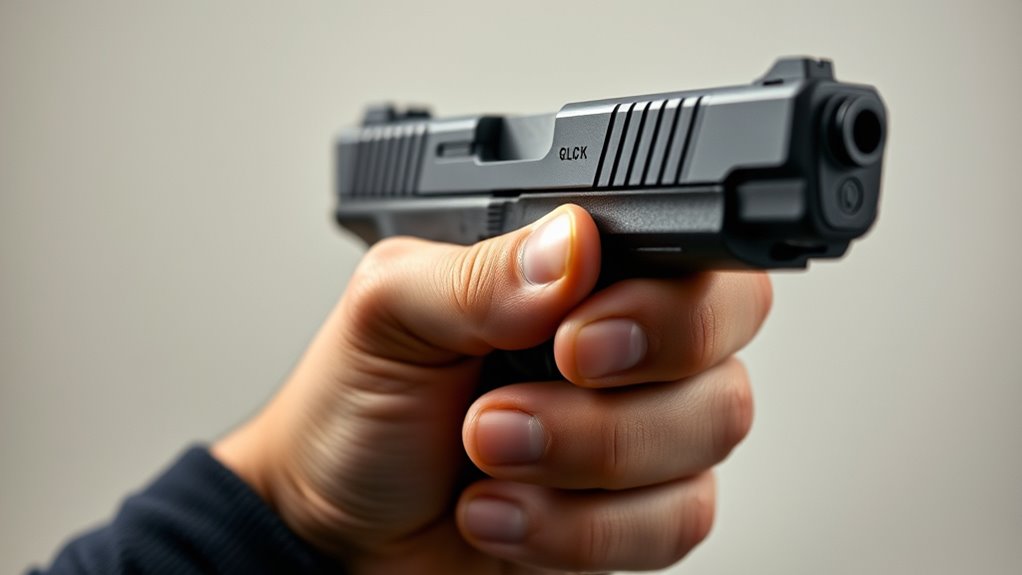
Aim a Glock: Essential Accuracy Techniques
Struggling to hit your target consistently with your Glock? You’re not alone—many shooters find aiming accurately to be one of the trickiest parts of firearm handling.
The good news is, with the right techniques, you can improve your accuracy and confidence.
To aim a Glock accurately, focus on proper stance, grip, and sight alignment. Keep your feet shoulder-width apart and hold the gun with a firm, comfortable grip.
Align the front and rear sights with your target, focusing on the front sight while keeping the target slightly blurry. Control your trigger smoothly and avoid jerking or rushing.
Consistent practice and maintenance are key to mastering your aim.
If you’re interested in mastering each step, there’s more to uncover here.
Key Takeaways
- Focus on proper sight alignment and target focus, keeping the front sight clear and level with the rear sights. This helps improve accuracy and ensures you’re on target.
- Maintain a stable stance with your feet shoulder-width apart and distribute your weight evenly. It gives you better control and balance while shooting.
- Practice smooth, consistent trigger control with deliberate pressure. This prevents jerks and helps improve your shot accuracy over time.
- Apply proper grip pressure and placement to manage recoil better and make your shots more consistent. A good grip makes a big difference.
- Incorporate dry fire and live fire drills regularly. Track your progress, and remember to perform routine maintenance on your firearm. Continuous practice leads to steady improvement.
What Common Mistakes Hurt Glock Accuracy?
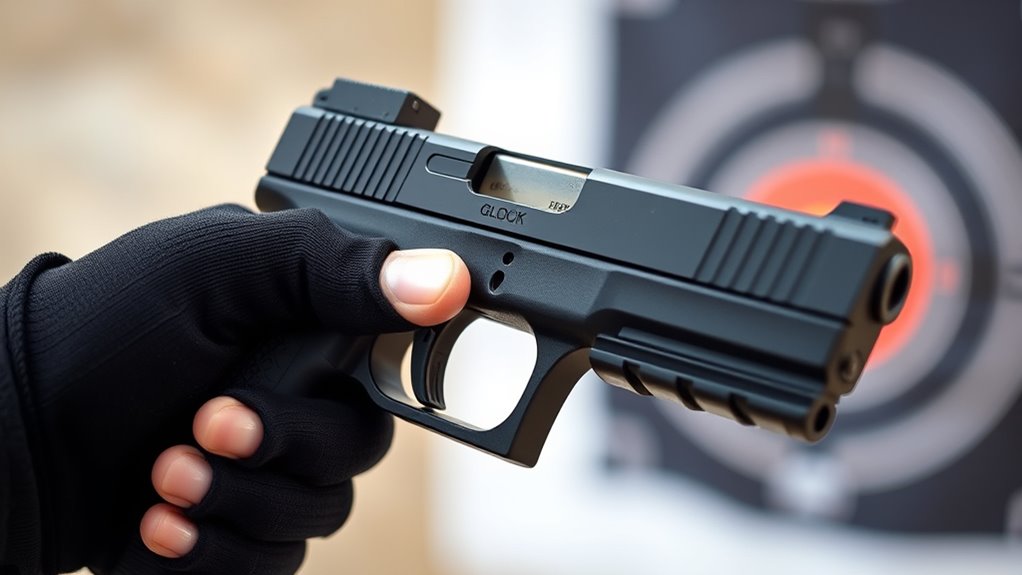
Many shooters unknowingly sabotage their Glock’s accuracy by making simple mistakes. Poor trigger control often causes jerks or uneven shots, throwing off sight alignment. You might also neglect proper sight alignment, which can lead to missed targets.
Simple mistakes like poor trigger control and neglecting sight alignment can significantly reduce Glock accuracy.
Inconsistent breathing techniques can cause unnecessary movement, while flinch management issues lead to anticipation that throws off your shot. Applying too much grip pressure can tense your hands and reduce stability, whereas too little grip can cause the gun to shift during recoil.
Stance adjustment is essential; an unstable stance hampers shot accuracy. Recoil absorption and shot timing are critical, so rushing or delaying your shot impacts precision. Maintaining mental focus helps prevent distractions that cause flinching or poor follow-through techniques.
Always practice smooth trigger control, steady sight alignment, and proper shot timing. Good follow-through guarantees you don’t anticipate the shot or jerk the trigger. Avoid these common mistakes, and you’ll greatly improve your Glock’s accuracy.
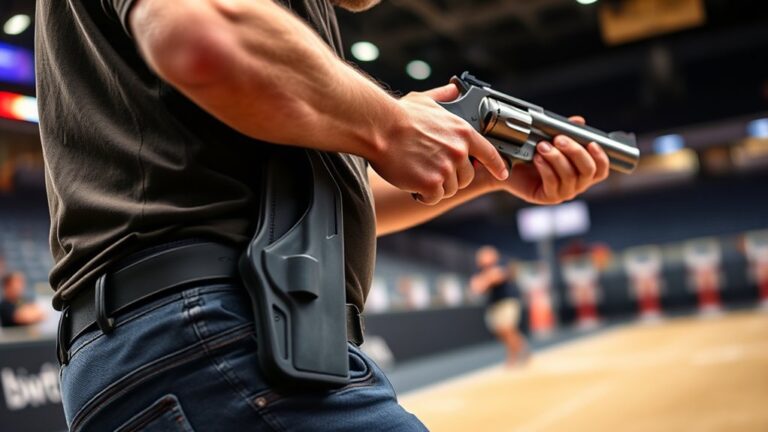
How to Find the Right Stance and Grip for Your Glock
To get better at shooting your Glock, the first thing you want to do is find the right stance. It’s all about staying stable and balanced so you can shoot accurately. Think of it like planting your feet firmly on the ground—this helps you stay steady even when the gun kicks back.
Next, let’s talk about your grip. You want to hold your Glock firmly but comfortably, making sure your grip is just right. A good grip helps you control the recoil and keeps your shots consistent. When your stance and grip feel natural and steady, you’ll notice your accuracy improves and you can shoot more confidently, shot after shot.
Proper Stance Fundamentals
Finding the right stance and grip is essential for accurate and controlled shooting with your Glock. Start by exploring stance variations to find what feels natural and stable.
Focus on proper body alignment, keeping your shoulders, hips, and feet in a straight line. Your foot positioning should provide a solid base, with feet shoulder-width apart for balance.
Use balance techniques and proper weight distribution to stay steady, avoiding unnecessary muscle tension. Practice breathing control to maintain calmness and focus.
Adjust your posture as needed, ensuring a relaxed yet firm stance. Keep your target focus sharp, aligning your sights naturally with your line of sight.
These posture adjustments and stance fundamentals create a stable foundation for precise shot placement.
Optimal Grip Techniques
Achieving an ideal grip on your Glock is key for accuracy and control. Focus on applying firm, even grip pressure that balances comfort and control. Proper grip placement ensures your hands work together smoothly, while wrist alignment helps prevent torque during recoil.
Your finger should be firmly on the trigger and supported by the other hand. This promotes a consistent grip and better shooting accuracy. A stable support hand improves recoil management and reduces muzzle rise.
To feel confident and in control, keep this table in mind:
| Emotion | Focus Area | Impact |
|---|---|---|
| Confidence | Grip placement | Steady shots, less anxiety |
| Control | Wrist alignment | Better recoil control |
| Comfort | Grip pressure | Longer shooting sessions |
| Power | Support hand and recoil | More accurate shots |
Mastering these tips will lead to more comfortable and precise shooting.
Consistent Shooting Posture
A consistent shooting posture starts with finding a stance and grip that feel natural and stable for you. Focus on keeping good balance by lining up your body properly—feet shoulder-width apart and slightly leaning forward.
Identify your eye dominance to help you aim better, and mentally focus on your shot. Practice breathing techniques, like exhaling slowly, to stay calm and help relax your muscles.
Relax your muscles to prevent tremors and keep your aim steady. Make sure your shoulders and hips are aligned to improve your accuracy.
Developing a reliable posture takes practice, but once you master it, it becomes second nature. This allows you to focus on your shot with clarity and confidence.
How to Properly Align Your Sight Picture
Sure! Here’s a more conversational version of your text:
—
When you’re trying to get your sight picture right, start by focusing on the front sight. Make sure it’s nice and clear, and that it’s centered within the rear sight. It’s all about keeping those sights level and steady each time you shoot—that’s how you build your accuracy.
Just remember, keeping proper sight alignment is really the key to hitting your target just where you want it. With a little practice, it’ll become second nature!
Focus on Front Sight
Focusing on the front sight is key for accuracy and consistency when shooting a Glock. Keep your sight focus solely on the front sight, not the target, to improve how quickly you can acquire your target and place your shots.
When aiming, make sure the front sight is sharp and clear. The rear sight should be slightly blurry, and the target may be a little blurry too. This helps you align everything precisely and engage your target faster.
To visualize this, follow these steps:
| Step | Focus Area | Result |
|---|---|---|
| 1 | Front sight | Sharp and clear |
| 2 | Rear sight | Slightly blurry |
| 3 | Target | Slightly blurry |
| 4 | Sight alignment | Ensures accuracy |
| 5 | Trigger control | Keeps shots consistent |
Concentrate on your front sight for better focus and quicker target engagement.
Maintain Proper Sight Alignment
Proper sight alignment is key to shooting accurately with your Glock. Focus on lining up the front and rear sights exactly.
Make sure the top of the front sight is level with the rear sight, and the edges are flush on both sides. Practicing consistent alignment helps build muscle memory, so your shots become more precise.
Remember to keep the front sight centered within the rear sight notch. Maintain a steady, smooth trigger pull to avoid disrupting your alignment.
Regular practice strengthens your sight picture and alignment skills, making you a more confident shooter.
How to Control the Trigger for Accurate Shots
Controlling the trigger smoothly is key to hitting your target accurately. Good trigger control means applying steady, consistent pressure without jerking or rushing the shot.
Focus on maintaining a slow, deliberate pull, which improves shot timing and accuracy. As you press the trigger, feel the slight movement and resist the urge to squeeze too hard or too fast.
This helps prevent disturbances to your sight alignment. Practice a smooth, continuous press that gradually takes up slack until the shot breaks.
Remember, the goal isn’t to yank the trigger but to control it with precision. Developing proper trigger control also means being mindful of your breathing and stance, which contribute to consistent shot timing.
With regular practice, you’ll develop a feel for the trigger that allows for more accurate, controlled shots under different conditions. Ultimately, mastering trigger control makes your Glock shooting more precise and reliable.
Why Follow-Through Matters in Glock Shooting
Follow-through is key for consistent accuracy when shooting with a Glock because it helps keep your shot stable and deliberate until the bullet leaves the barrel. It prevents unnecessary muscle movement that can throw off your aim.
Focusing on your follow-through also boosts your mental control and precision. It’s about staying relaxed and keeping your sights aligned even after pulling the trigger, so your shot isn’t rushed or shaky.
This mental and physical discipline builds confidence and improves your overall accuracy. To get better at follow-through, remember to keep your sights fixed on the target until the shot is complete.
Maintain a steady grip and posture for stability, and focus on smooth, controlled trigger pressure. Resist the urge to anticipate the shot and stay present in the moment.
Consistent follow-through develops muscle memory and sharpens your skills, making accuracy second nature.
Dry Fire Drills to Boost Your Glock Shooting Skills
Incorporating dry fire drills into your training routine is one of the best ways to improve your Glock shooting skills without using live ammo. These drills help sharpen your muscle memory, boost mental focus, and improve timing—all without wasting any cartridges.
Practicing dry fire helps you develop better trigger control and shot placement, which directly translates to real-world accuracy. Timing drills are especially useful because they allow you to refine your shot sequence and smooth out your release.
Dry fire practice enhances trigger control and shot placement for improved real-world accuracy.
The best part is, dry fire saves you money. You don’t need to buy cartridges or visit the range as often. Consistent practice builds confidence and helps you spot flaws in your technique that might go unnoticed during live fire.
Make dry fire drills a regular part of your training. Focus on maintaining a proper grip, sight alignment, and trigger discipline. Over time, these small improvements will lead to big gains in your Glock shooting accuracy and overall proficiency.
Effective Shooting Drills to Improve Accuracy
Building on your dry fire practice, focusing on specific shooting drills can really boost your accuracy. These drills mimic real-life shooting scenarios, helping you refine your skills under pressure.
Incorporate drills that emphasize target shifts, where you move quickly and smoothly between targets. This sharpens your speed and precision, making you more confident in dynamic situations.
Practicing from different distances ensures you can adjust your aim for varying ranges. Incorporate timed drills to challenge your consistency and help develop muscle memory.
Start with slow, controlled shots, then gradually increase your speed while maintaining accuracy. This approach builds a solid foundation for reliable shooting.
Some effective drills include target shift drills to improve movement between targets, elimination drills for multiple shot scenarios, distance shooting for long-range precision, and react drills to sharpen quick draw and target acquisition.
These drills simulate real-world conditions, making your Glock shooting more accurate and confident.
Top Mistakes to Avoid When Shooting Your Glock
Even experienced shooters can make common mistakes that compromise accuracy and safety when shooting their Glock. One major error is neglecting proper trigger discipline; jerking or slapping the trigger can cause unpredictable shots and reduce accuracy. Focus on a smooth, controlled trigger pull to stay precise.
Another mistake is poor recoil management. Not controlling recoil can throw off your aim, especially during rapid fire. Keep a firm grip, stay relaxed, and absorb the recoil naturally to stay on target.
Rushing your shots or not aiming carefully can also lead to missed targets and unsafe handling. Avoid the temptation to hurry and instead focus on steady, deliberate shots. Remember, good trigger discipline and recoil control are key for both accuracy and safety.
How to Maintain Your Glock for Best Performance
Keeping your Glock in top shape requires regular maintenance to ensure reliable performance and safety. Proper care includes routine cleaning, inspecting parts, and making sure everything moves smoothly.
Start with barrel care—clean it regularly to prevent residue buildup. Use the right lubricants to keep all moving parts functioning without excess. Check the recoil spring and internal parts for wear or damage, and replace them if needed.
Trigger maintenance is key for consistent accuracy. Make sure the trigger mechanism is free of debris and properly lubricated. Don’t forget to clean and inspect magazines for cracks or dirt to prevent feeding issues.
Choose a holster that fits well and offers easy access. This helps reduce wear on your Glock and makes it more reliable when you need it most. Regular maintenance not only extends your firearm’s life but also keeps it ready for critical moments.
Tracking Your Progress: How to Test Your Shooting Accuracy
Regularly maintaining your Glock guarantees it performs reliably, but to truly understand your shooting capabilities, you need to track your progress. Setting accuracy benchmarks helps you measure improvement over time.
Keep detailed shooting journals to record your scores, group sizes, and conditions during each session. Note factors like distance, stance, and lighting, which influence your results.
Regularly reviewing your journals reveals patterns, strengths, and areas needing work. Use your benchmarks to set achievable goals and motivate yourself.
Testing your accuracy consistently enables you to see tangible progress, adjust techniques, and build confidence. Be disciplined in recording every session, and compare results periodically.
This process makes your training more intentional and focused. Ultimately, tracking your progress isn’t just about numbers; it’s about understanding how your skills evolve and ensuring your shooting stays precise under various conditions.
Frequently Asked Questions
What Accessories Can Enhance My Glock’s Accuracy?
You can improve your Glock’s accuracy with sight upgrades like fiber optic or red dot sights for quicker targeting.
Trigger modifications, such as a smoother trigger or reduced pull weight, help make your shots more consistent.
Choosing high-quality ammunition guarantees better precision, so you get the most out of each shot.
Recoil management tools like compensators or grips help control muzzle rise and keep your shots on target.
Putting these accessories together can really boost your shooting accuracy and overall performance.
How Does Grip Strength Affect Glock Shooting Precision?
Like a knight wielding a trusty sword, your grip strength directly impacts your Glock’s shooting precision. If your grip is firm yet relaxed, you’ll improve trigger control and stance stability, leading to better accuracy.
A weak grip causes wobbling, making it harder to stay on target. On the other hand, gripping too tightly tenses your muscles, which can hamper your shot.
Focus on maintaining consistent, controlled grip pressure. This helps elevate your overall shooting performance and hit your target with confidence.
What Role Does Breath Control Play in Glock Accuracy?
Breath control plays an essential role in Glock accuracy because it helps you stabilize your shot. By focusing on breath timing, you can time your shot during a natural pause in your breathing cycle, which minimizes movement.
Diaphragm control allows you to steady your core and reduce sway. When you master breath control, your shots become more consistent, improving your overall precision with the Glock.
How Often Should I Practice to Improve Glock Shooting Skills?
You should practice regularly, like tending a garden to guarantee steady growth. Dedicate at least 3-4 times a week to dry fire exercises and shooting drills.
Consistent practice sharpens your skills, helping your aim become second nature. Even short, focused sessions build muscle memory and confidence.
Over time, these habits transform your shooting into a smooth, instinctive action—making you a more accurate and confident Glock shooter.
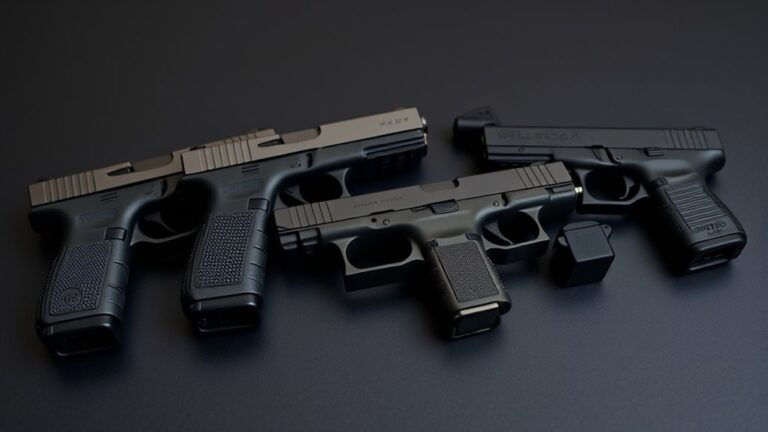
Can Different Glock Models Impact Shooting Accuracy?
Different Glock models can impact your shooting accuracy because of variations in Glock ergonomics and trigger pull.
Some models have a more comfortable grip, which helps you stay stable, while others might have a different trigger pull weight that affects your control.
These differences influence your precision and comfort when shooting. To get better, try out different models to find the one that fits your hand best and has a trigger pull that matches your skill level.
Conclusion
Mastering your marksmanship isn’t just about aiming; it’s about consistent control, conscious correction, and dedicated practice.
Avoid common mistakes, fine-tune your stance, sight, and trigger, and always follow through with focus.
With time and effort, you’ll develop formidable firearm finesse. Keep practicing, stay patient, and prioritize precision over speed.
Remember, perfecting your pistol skills is a journey paved with patience, persistence, and a passion for improvement.
Aim accurately, achieve consistently, and unlock your ultimate shooting potential!