7 Steps to Get a Gun Safe Upstairs Safely
Moving a gun safe upstairs can feel like a daunting task. Many people struggle with how to do it safely without damaging their home or risking injury. If you’re worried about the process, you’re not alone — it’s a common challenge for homeowners.
To safely move your gun safe upstairs, start by clearing and measuring the path, removing obstacles and guaranteeing proper lighting. Gather the right equipment like dollies, straps, and protective padding.
Coordinate with helpers, assigning roles and using clear signals. Use proper lifting techniques, keeping the safe close to your body, and protect floors and walls with blankets or mats.
Once in position, verify the safe is level and secure. Learn more tips for a smooth move ahead.
Key Takeaways
- Measure doorways and hallways to make sure the safe can pass through without any issues.
- Use a sturdy dolly and secure straps to support the safe’s weight as you move it.
- Coordinate team roles and communicate clearly to lift and maneuver safely.
- Protect floors and walls with padding and moving mats to prevent any damage.
- Carefully position and level the safe once upstairs, and secure it if needed.
Prepare Your Space for Moving the Gun Safe Upstairs
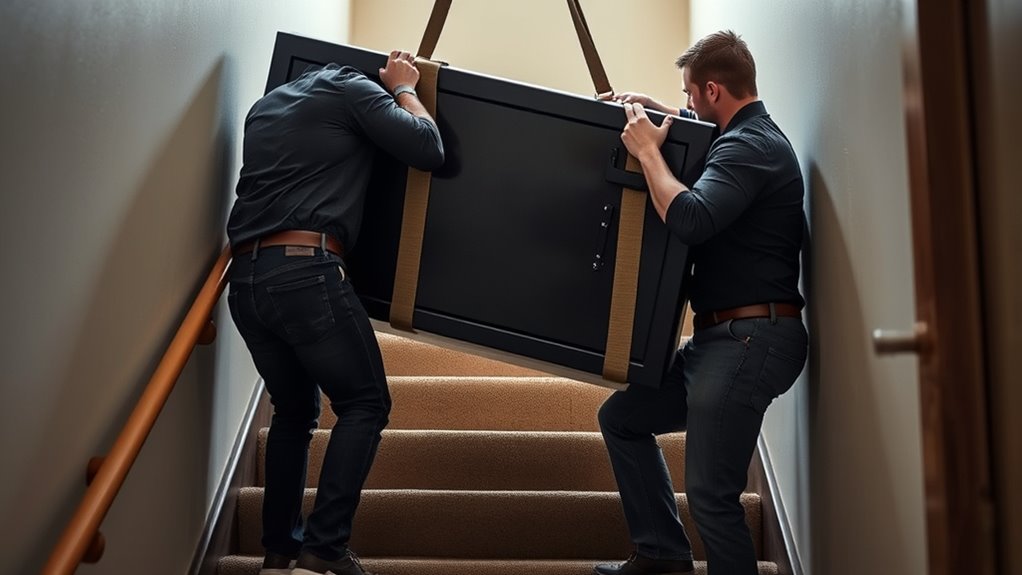
Before you start moving the gun safe upstairs, clear the path and prepare the space around it. Proper organization helps prevent accidents and makes everything easier.
Clear the path and organize the space before moving your gun safe to prevent accidents and ease the process.
Remove obstacles like furniture, rugs, or loose items that could cause tripping or slipping. Make sure the area is well-lit so you can see clearly and avoid mishaps.
Check for narrow doorways or tight corners that might block your way. If needed, consider temporarily removing doors to create more space.
Think about safety — wear gloves for a better grip and protective footwear in case the safe shifts unexpectedly. Mark the route with tape or cones to keep others from entering during the move.
Creating a clear, organized space reduces risks and gives you room to maneuver the safe safely and efficiently. Taking these steps now helps prevent damage to your home or injury to yourself later.
Choose the Right Equipment and Moving Tools
Choosing the right equipment and tools is really important if you want to move your gun safe safely and without a hassle. First, take a good look at how heavy and big your safe is. That way, you can pick the right moving aids and equipment that can actually handle the load.
Using the right tools correctly will make the whole process much smoother. Plus, it helps reduce the chances of hurting yourself or damaging your safe or your home. So, take your time to choose the proper gear — it’ll make a big difference!
Proper Moving Equipment Selection
Selecting the right moving equipment is key to safely and easily getting your gun safe upstairs. Use sturdy dollies designed for heavy loads, and secure the safe with strong moving straps to prevent shifting.
Wear safety gear like gloves and steel-toed boots to protect yourself during the move. Focus on proper lifting techniques to avoid injury and make sure the weight is evenly distributed.
Protect your floors with moving blankets, and think about using ramps to lessen the strain. A hand trolley can help you maneuver the safe smoothly, especially on flat surfaces.
Always coordinate with your team to sync your efforts and prevent accidents. Clear the path and use floor protection to avoid damage.
With the right equipment and teamwork, your move will be safer and much easier.
Assessing Weight and Size
Understanding the weight and size of your gun safe is key to choosing the right equipment and moving tools. Knowing how it’s distributed helps you decide if you need extra help or specialized gear.
Think about the safe’s materials—heavier, solid steel safes will need more robust equipment. To get an accurate assessment, start by measuring its dimensions to know the overall size.
Next, weigh the safe either with a scale or by checking manufacturer specs. It’s also important to check how the weight is distributed, especially if the safe is top-heavy or unevenly balanced.
This info helps you pick suitable dollies, straps, and padding, which can prevent damage to your property and avoid injuries. Properly assessing your safe makes the move smoother and safer.
Using Moving Aids Effectively
When moving a heavy gun safe upstairs, using the right equipment and tools can make a big difference in keeping things safe and efficient. Choose moving aids like dollies, hand trucks, or straps to help spread out the weight and reduce strain.
Furniture sliders are great for smooth movement over floors, helping to minimize damage and make the job easier. Always make sure your path is clear of obstacles and secure the safe with straps for safety.
Rent or buy moving equipment designed for heavy loads. This helps prevent injuries or accidents and keeps everything protected. Proper tools not only keep you safe but also reduce the risk of damaging your safe or property.
Using these moving aids effectively makes the whole process safer, faster, and less stressful.
Plan the Path: Measure Doorways and Clear Obstacles
Before moving your gun safe upstairs, you should carefully plan the path it will take. Start by measuring the doorway dimensions to ensure the safe can pass through easily. Don’t forget to check for any obstacles along the way that could block or damage the safe.
To make your plan effective, follow these steps:
Follow these steps to create an effective, safe moving plan for your gun safe.
- Measure all doorways, hallways, and stairwell openings where the safe will go, noting their heights, widths, and any tight corners.
- Identify obstacles like light fixtures, banisters, or furniture that could interfere with the safe’s movement.
- Clear the pathway of anything that might cause snagging or damage, including rugs or loose cords.
Taking these precautions helps you avoid surprises during the move and ensures a smoother, safer process. Proper planning saves time and reduces the risk of injury or damage.
Get Help and Coordinate Your Team Effectively
Getting help and coordinating your team effectively is crucial to moving your gun safe upstairs safely and efficiently. Clear communication ensures everyone is on the same page, which helps reduce accidents.
Before you start, assign specific roles to each person—like guiding, lifting, or steadying the safe—so everyone knows their responsibility. Make sure everyone understands the plan and the signals you’ll use, whether hand gestures or verbal cues.
Set up a chain of command so instructions flow smoothly and decision-making is quick. Keep the team small but enough to handle the weight, and make sure everyone knows safety precautions.
Check in with each other regularly during the move, encouraging feedback and making adjustments if needed. Proper role assignment and good communication help prevent confusion and keep everyone safe throughout the process.
Use Proper Lifting Techniques for Heavy Safes
When you’re lifting a heavy safe, it’s really important to keep your back straight. Instead of bending over, bend at your hips and knees—this helps protect your back from injury.
If the safe is really heavy, don’t try to do it alone. Team lifting is a great idea because it spreads out the weight, making it safer and a lot easier to handle. Just make sure everyone is on the same page—talk to your helpers so you can coordinate your movements smoothly.
Maintain Proper Posture
Proper posture is essential when lifting a heavy safe to prevent injury and ensure safety. Using ergonomic techniques helps keep your spine aligned and reduces strain.
To do this effectively, keep your back straight by engaging your core muscles and avoiding rounding your shoulders. Bend at your hips and knees, not your waist, so you’re lifting with your legs rather than your back.
Hold the safe close to your body, keeping your elbows tucked in. This minimizes support needs and helps you stay balanced.
These steps help distribute the weight evenly and keep your spine aligned, making the lift safer. Always focus on your posture to prevent injuries and make moving heavy objects, especially upstairs, more manageable.
Use Team Lifting
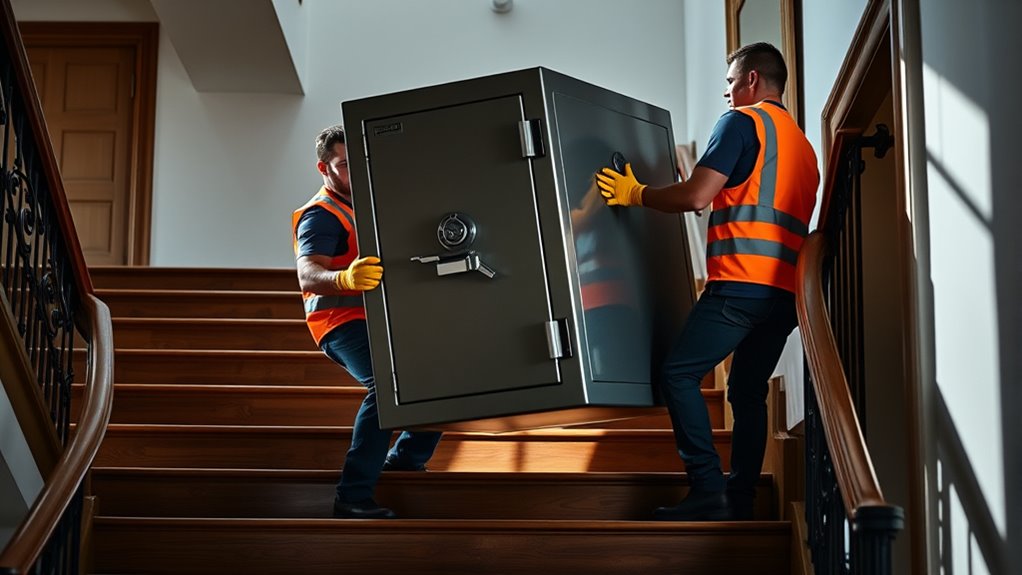
Using team lifting is essential when moving heavy safes upstairs because it spreads out the weight and lowers the chance of injury. Clear communication and good coordination are key to doing this safely.
Assign roles so everyone knows what to do, like lifting, guiding, or stabilizing. Use proper lifting techniques—bend your knees, keep your back straight, and lift with your legs.
Check in with your team regularly to make sure everyone moves together smoothly and avoid sudden shifts.
| Step | Tip |
|---|---|
| Communicate clearly | Use commands like “lifting” and “lowering” |
| Coordinate moves | Plan each step before lifting |
| Keep a steady pace | Avoid rushing to prevent mishaps |
| Use proper grip | Secure handles for better stability |
Protect Walls, Floors, and the Safe During the Move
Before you start moving the safe, take time to protect your walls and floors from potential damage. Proper surface reinforcement and damage prevention are essential to avoid costly repairs.
Use floor coverings like moving mats or thick cardboard to distribute weight evenly and prevent scratches or dents. Place protective barriers such as corner guards or padding on walls to avoid scuffs during the move.
Secure the safe with padding to cushion impacts and reduce surface stress. Make sure to position moving mats beneath the safe to minimize friction and help it glide smoothly.
Consider using foam or blankets for extra wall protection, especially around tight corners. These steps help keep your walls and floors intact, even with a heavy, bulky safe.
Secure and Position Your Gun Safe in Its New Spot
Once you’ve moved the safe into its new spot, carefully position it in its final location. Make sure it’s level and stable for safety and security.
Check that the safe sits flat on the floor or surface, avoiding any wobbling. Proper placement helps prevent accidents and keeps your valuables secure.
For added security, consider using bolts or brackets to anchor the safe to the wall or floor. This prevents shifting during earthquakes or if bumped accidentally.
Use the table below as a quick guide for placement:
| Step | Tip | Why it matters |
|---|---|---|
| Level the safe | Use a bubble level | Ensures stability and security |
| Secure attachments | Bolt to floor or wall | Stops movement or theft |
| Check for stability | Gently shake to test | Confirms it won’t wobble |
Getting the position right and securing it properly makes your safe safer and more tamper-proof.
Frequently Asked Questions
How Do I Prevent Damage to My Walls During the Move?
To prevent wall damage during your move, make sure to protect the walls by wrapping sharp edges of the safe with moving blankets or padding. This helps avoid scratches and dents while moving.
Use moving tools like dollies and straps to control the safe’s movement. This reduces the chances of accidental bumps or scrapes.
Having a helper guide you can make a big difference. Take your time around corners and doorways to prevent sudden impacts.
Clear the path beforehand so you’re not rushing and can move carefully. Be cautious with your pace to avoid unnecessary scrapes or dents.
What Are the Best Ways to Lift a Heavy Gun Safe Safely?
To lift a heavy gun safe safely, use proper lifting techniques like bending your knees and keeping your back straight. This helps prevent strain and injury.
Always wear safety equipment such as gloves and sturdy shoes to protect yourself while moving the safe. It’s better to be safe than sorry.
Get help from others to distribute the weight evenly. Having enough people makes the job safer and easier.
Consider using a dolly or hand truck for easier movement. These tools can make the process much smoother and less risky.
Communicate clearly throughout the process to avoid accidents. Make sure everyone stays aware and works together.
How Do I Choose the Safest Route for Moving the Safe Upstairs?
Coincidences often reveal the best routes, so start by measuring your safe’s dimensions to make sure it fits through doorways and turns.
When choosing the safest route, focus on stair safety. Look for wide, well-lit stairs that are free of clutter.
Plan your path carefully, considering handrails and clearances. Use a spotter if you can, and double-check your route before lifting.
This way, you’ll minimize risks and ensure a smooth, safe move upstairs.
What Should I Do if the Safe Gets Stuck or Won’T Fit?
If your safe gets stuck or won’t fit, don’t force it. Try gentle techniques like tilting or adjusting its position to help it move more easily.
Check the safe’s weight distribution. If it’s uneven, that can cause it to jam, so make sure it’s balanced.
If it’s still stuck, it’s a good idea to call professional movers who know how to handle heavy, tricky items safely.
Never force the safe, as that can cause damage to the safe or your property. Be patient and proceed carefully.
Are There Legal Considerations for Moving a Gun Safe?
Yes, there are legal considerations for moving a gun safe. You need to follow the laws about firearm storage and transportation.
Be sure to check local, state, and federal regulations. Some areas might require permits or special handling procedures.
During transport, make sure the safe is secure and moved responsibly. This helps you avoid legal issues and makes the move smoother.
Being aware of these rules is important so you don’t run into legal trouble. It helps ensure everything goes smoothly during your move.
Conclusion
With patience and careful planning, you’ll navigate the climb like a seasoned sailor steering through treacherous waters. Each step, from clearing the path to securing your safe in its new home, guarantees your prized possession arrives unscathed and ready for duty.
Remember, the journey may seem daunting, but with the right tools and teamwork, you’ll turn a challenging mountain into a smooth ascent. Your safe will stand tall, a silent guardian in its new domain.
Getting a gun safe upstairs safely isn’t easy, but with the right approach, it’s definitely doable.