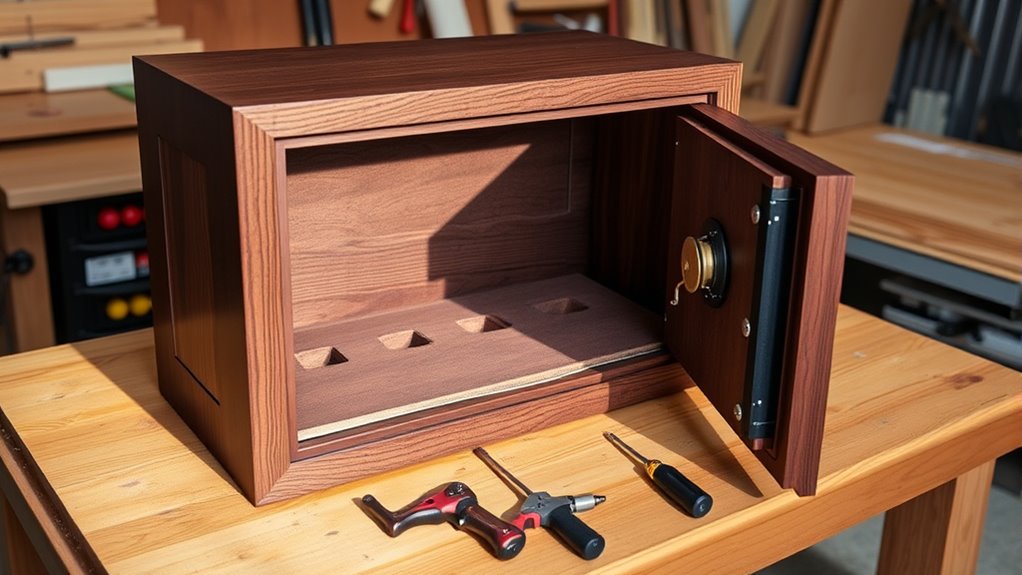
7 Simple Steps to Build a Wooden Gun Safe
Many gun owners worry about keeping their firearms safe and secure at home. You’re not alone—finding a reliable way to protect your guns while keeping them accessible can be tricky.
To build a wooden gun safe in 7 simple steps, start by gathering sturdy materials like plywood and essential tools. Plan your size, security features, and design details to match your needs.
Cut and assemble the frame and panels carefully for strength. Install reliable locks and secure the doors properly.
Add interior storage with padding for safety. Finish with sealants for durability, and personalize your safe for style.
If you keep going, you’ll uncover expert tips to make your safe more secure and lasting.
Key Takeaways
- Plan the safe’s size, security features, and placement to meet your storage needs.
- Select durable wood and precise tools, and prioritize safety during construction.
- Cut and assemble the frame and panels carefully, making sure joints are strong and measurements are accurate.
- Install secure locks, reinforce hinges, and check that the door lines up properly for added security.
- Finish with protective sealants, add personal touches with hardware or engravings, and perform regular maintenance.
Gather Materials and Tools for Your Wooden Gun Safe
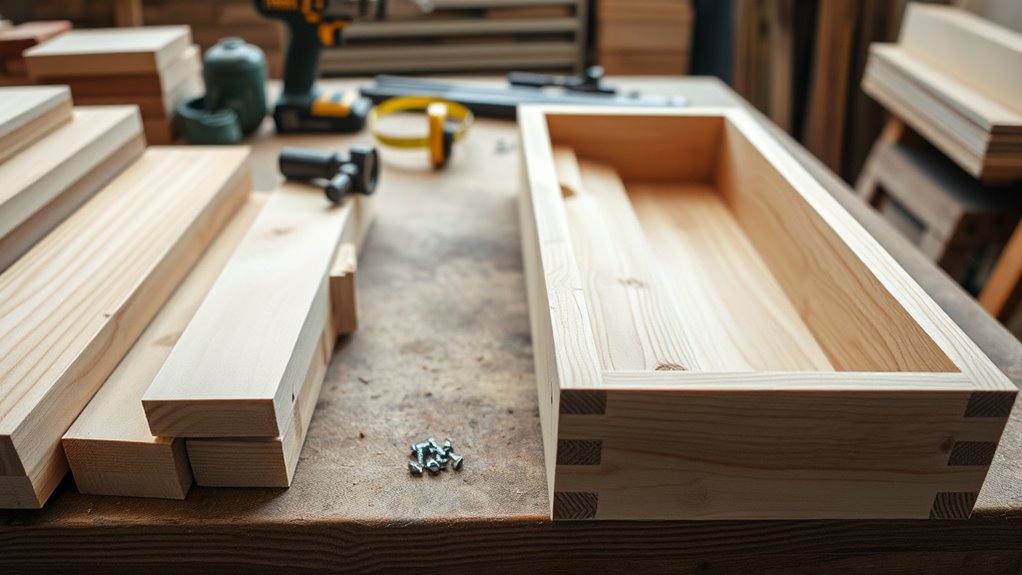
To build your wooden gun safe, you’ll need to gather all the necessary materials and tools first. Paying attention to safety regulations guarantees your project remains safe and legal.
Start by sourcing quality materials like sturdy plywood or hardwood, which provide durability and security. You can find these at local hardware stores or specialty suppliers, making material sourcing straightforward.
Make sure to choose materials that meet safety standards, especially if you plan to store firearms securely. For tools, gather a saw, drill, screws, hinges, and a measuring tape.
Safety gear like goggles and gloves is essential to protect yourself during the building process. Having all materials and tools ready before you start helps streamline your work and prevents interruptions.
Plan Your Gun Safe Size, Security, and Design
Before you start building, it’s important to carefully plan your gun safe’s size, security features, and overall design.
Figure out the dimensions based on how many firearms and accessories you want to store. Think about whether you need extra space for rifles, handguns, or ammo, and plan accordingly.
Security features are key—consider adding a sturdy lock, reinforced panels, or even a combination lock for extra protection.
Your design should also match where you plan to place the safe. Compact models work well for small spaces, while larger safes offer more storage and security.
Keep accessibility in mind, making sure you can reach your firearms quickly if needed.
Cut and Assemble the Frame and Panels
First off, pick out some solid, good-quality wood pieces that match the design you have in mind. It’s important to choose the right type of wood to make sure everything stays sturdy and looks good.
When it’s time to cut, make sure to use precise techniques so all the parts fit together just right. Taking your time here really pays off! Once you’ve got everything cut, carefully assemble the frame and panels. This way, you’ll end up with a strong, secure structure for your gun safe that’s built to last.
Selecting Suitable Wood Pieces
Choosing the right wood pieces is essential for building a sturdy and durable gun safe. You should select wood types that offer strength and stability, like oak, pine, or plywood, which can handle the weight and regular use.
Moisture resistance is also important to prevent warping or damage over time, especially if your safe will be in a humid environment. Look for treated or naturally resistant woods to ensure it lasts longer.
Avoid soft or inexpensive woods that might crack or bow easily. When choosing panels and framing materials, prioritize quality and consistency. This makes assembly easier and keeps your safe secure.
Properly selected wood pieces will give you a solid foundation, protecting your firearms for years to come.
Precise Cutting Techniques
Accurate cutting of your wood pieces is key to guaranteeing your gun safe fits together properly and remains sturdy over time. To achieve this, focus on cutting accuracy by using precise measuring techniques.
Double-check your measurements before making cuts, and mark your pieces clearly. Use a sharp saw and steady your hand to follow your lines accurately.
Take your time to align your cuts properly, especially at corners and joints. Consistent measurements guarantee panels and frames fit together seamlessly, reducing gaps or misalignments.
Keep your work surface stable and use clamps if necessary. Remember, careful measuring and precise cutting are essential for a strong, durable gun safe that looks professional and functions reliably.
Install Locks and Secure the Doors
Once you’ve assembled the main structure of your wooden gun safe, the next step is to install the locks and secure the doors properly. Think carefully about where to place the locks so they’re easy to access but still keep your safe secure.
Reinforcing the door frame helps prevent prying or forced entry, so focus on strengthening this area. Use sturdy hinges and make sure they’re tightly secured to avoid wobbling.
When installing locks, double-check that they line up perfectly with the door and frame, so there are no gaps. Adding metal brackets or plates can also improve the door’s durability.
Make sure the locking mechanism works smoothly without sticking. Finally, test the entire setup by opening and closing the door several times to confirm the lock engages securely every time.
This process helps ensure your gun safe stays both secure and functional, giving you peace of mind that your firearms are protected.
Add Interior Storage and Padding for Firearms
To protect your firearms from scratches and movement during transport or storage, adding interior storage and padding is essential. You can create compartments tailored to your firearm sizes, keeping everything organized and secure. Use padding materials like foam, felt, or rubber to cushion each firearm, preventing damage from bumps or vibrations.
Consider dividing the safe with custom dividers or shelves to maximize space and accessibility. These compartments help keep guns separate, reducing the risk of scratching each other. Padding materials can be glued or fitted into the compartments for extra protection.
| Interior Compartments | Padding Materials | Purpose |
|---|---|---|
| Custom foam inserts | Foam sheets | Absorbs shock and prevents scratches |
| Felt-lined shelves | Felt fabric | Protects finishes and reduces noise |
| Adjustable dividers | Rubber strips | Keeps firearms stable and organized |
Adding these features improves your safe’s functionality and keeps your firearms in top condition.
Finish and Seal Your Wooden Gun Safe for Durability
After adding interior storage and padding, protecting your wooden gun safe from moisture, scratches, and everyday wear becomes the next important step. Finishing and sealing your safe guarantees durability and longevity.
Start by choosing a suitable wood treatment to improve the wood’s resistance to moisture and pests. Then, pick from various sealant options like polyurethane, tung oil, or a penetrating wood finish to create a protective barrier.
Applying a high-quality sealant not only preserves the wood’s appearance but also helps prevent warping and damage over time. Proper application involves sanding the surface smoothly before coating and allowing enough drying time between layers.
This process results in a sturdy, weather-resistant exterior that keeps your firearms secure and in excellent condition. Remember, a well-finished gun safe combines good looks with resilience, making it a reliable storage solution for years to come.
Use high-quality wood treatment products, choose sealants suited for indoor use, and sand the wood surface before sealing. Applying multiple thin coats ensures even coverage, and be sure to allow enough drying time between coats.
Tips for Customizing and Maintaining Your DIY Gun Safe
Want to give your DIY gun safe a personal touch? Feel free to add some decorative elements that match your style—whether it’s a fresh coat of paint, unique hardware, or even some artwork. It’s a great way to make your safe truly yours.
And don’t forget, keeping it in good shape is just as important as making it look good. Regularly check inside and give it a good cleaning to prevent dust and debris from building up. Staying on top of maintenance helps ensure your safe stays functional and reliable for years to come.
Personalize With Decorative Touches
Adding decorative touches to your wooden gun safe not only makes it look better but also shows off your personal style. You can enhance its appearance with carefully chosen decorative hardware, like ornate hinges or handles, to give it a unique flair. Personalized engravings add an extra special touch, making your safe truly one-of-a-kind.
To make it even more sophisticated, consider these options:
- Incorporate decorative hardware with intricate designs
- Add engraved initials or meaningful symbols
- Use contrasting paint or wood stain for accents
- Attach decorative corner protectors or trims
- Apply a clear varnish or wax for a polished finish
These details help your safe stand out, blending functionality with style. Just make sure any decorative elements don’t compromise the safe’s security or easy access.
Regular Maintenance Practices
To keep your wooden gun safe in top condition, regular maintenance is key, especially if you’ve customized its look. Set up a cleaning routine to remove dust and dirt that can damage the wood over time.
Use a soft cloth and gentle wood cleaner to avoid scratches or stains. It’s also a good idea to check your safe regularly for any signs of wear, loose hinges, or warping.
Make sure to inspect the locking mechanism and hinges so they work smoothly. If you spot any problems, fix them right away to prevent further damage.
Taking care of your safe’s finish and structure helps keep its appearance and security intact. Regular upkeep not only extends its lifespan but also keeps your firearms protected and easy to access.
Frequently Asked Questions
What Type of Wood Is Best for a Durable Gun Safe?
You should choose hardwood options like oak, maple, or walnut for a durable gun safe because they offer strength and resistance to damage. Plywood, especially high-grade multi-layered plywood, also works well since it provides stability and durability.
Avoid softwoods like pine, which aren’t as sturdy. By selecting quality hardwood or sturdy plywood, you can ensure your safe withstands impacts and keeps your firearms secure over time.
How Can I Ensure My Safe Is Fireproof?
To guarantee your safe is fireproof, focus on using fireproof materials like intumescent paints and specialized fire-resistant drywall. These materials help protect your safe from high temperatures.
You should also incorporate advanced insulation techniques, such as mineral wool or ceramic fiber insulation, which resist heat and slow heat transfer. This adds an extra layer of protection.
Are There Any Legal Restrictions on Building a Gun Safe?
Yes, there are legal restrictions on building a gun safe. You should check your local regulations because some areas have specific laws about firearm storage and safe standards.
For example, certain sizes, lock types, or security features might be required by law. Make sure your homemade safe meets these rules to avoid any legal issues.
It’s important to research the regulations thoroughly before starting your project. This way, you’ll ensure your safe is both legal and secure.
How Do I Prevent Theft or Unauthorized Access?
Think of your safe as a fortress guarding your treasures. To prevent theft or unauthorized access, install high-quality security features and reliable lock mechanisms.
Use combination or biometric locks for added security, and anchor your safe securely to the floor or wall. Regularly update your lock systems and keep keys or codes hidden.
These steps turn your wooden safe into an impenetrable stronghold, keeping your firearms secure and out of reach.
What Safety Precautions Should I Follow During Construction?
During construction, prioritize tool safety by wearing protective gear and handling tools carefully to prevent injuries.
Make sure your workspace has proper ventilation to avoid inhaling dust and fumes, especially when cutting or sanding wood.
Keep your area clean and organized to reduce the risk of accidents.
Always follow manufacturer instructions for all tools and take regular breaks to stay alert.
These precautions help you work safely and efficiently while building your wooden gun safe.
Conclusion
Building your wooden gun safe is like crafting a sturdy ship to protect your treasured cargo. With patience and care, you create a vessel that guards your firearms against the storms of time and tampering.
Each step is a plank, each detail a sail catching the wind of your craftsmanship. When finished, your safe becomes a fortress—strong, reliable, and distinctly yours.
It’s ready to weather any challenge, ensuring your valuables stay secure on your personal voyage. Building a wooden gun safe is a rewarding project that results in a durable, custom storage solution you can trust.