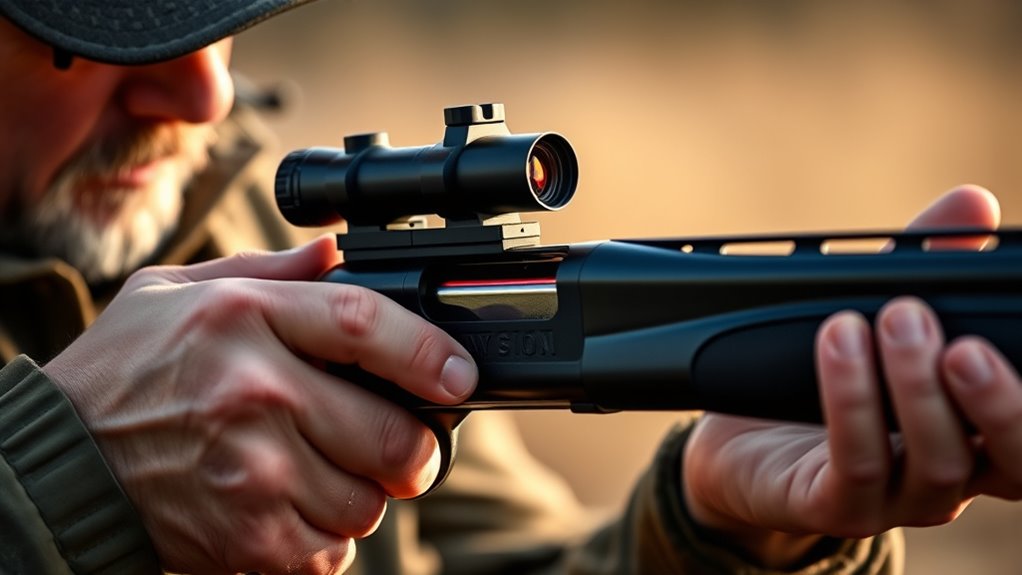
5 Simple Steps to Sight a Red Dot on Your Shotgun
Many shotgun enthusiasts know the challenge of getting that perfect red dot sight just right. If you’ve struggled with aligning your sight or fine-tuning it for accurate shots, you’re not alone.
Luckily, sighting a red dot on your shotgun can be straightforward with a few simple steps.
To sight a red dot on your shotgun, start by checking compatibility and cleaning the receiver. Mount the sight securely using the correct adapter, making sure it’s level and centered.
Adjust the windage and elevation for precise zeroing, then test fire and fine-tune your settings.
Regular maintenance, like tightening screws and checking the zero, keeps it accurate.
If you want to master the process, you’re about to learn the detailed steps to get it just right.
Key Takeaways
- Make sure your shotgun and red dot sight work well together and are mounted correctly using the right rails or adapters.
- Clean the top surface of the receiver so you have a stable, secure spot to mount your sight.
- During installation, level and center the sight, then tighten the screws firmly but not so tight that you risk damaging anything.
- Zero the sight by adjusting the windage and elevation to ensure your shots hit where you want at your chosen distance.
- Take some shots to test how it’s shooting, then make small tweaks to get everything perfectly dialed in for accurate shooting.
Preparing Your Shotgun for Red Dot Sight Installation
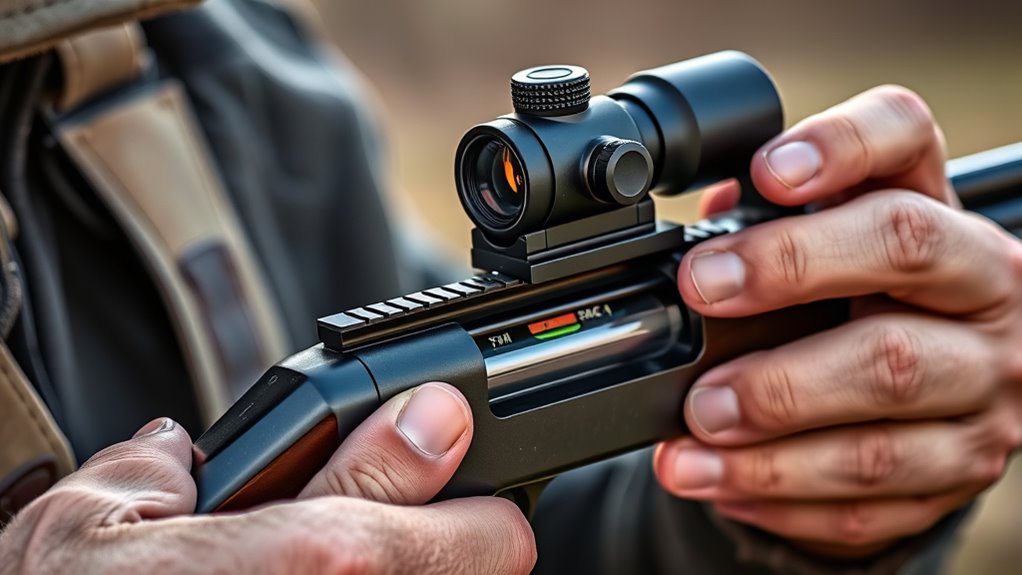
Before installing a red dot sight on your shotgun, you need to prepare the firearm properly. Start by checking if your shotgun is compatible because not all models work with the same sighting options.
Consider the type of rail or mounting system your shotgun has. Some models have Picatinny or Weaver rails, while others may need adapters. Make sure your firearm can securely fit the sight’s mounting hardware.
Check your shotgun’s rail type—Picatinny, Weaver, or adapters—to ensure secure mounting of your red dot sight.
Next, clean the top of the receiver thoroughly. Remove dirt and oil that could interfere with the mounting process. Verify that your chosen sight fits your shotgun’s size and weight, as this affects stability and accuracy.
If you plan to use the sight for hunting or defense, pick options like adjustable brightness or different reticle types that suit your needs. Proper preparation ensures your red dot sight mounts securely, giving you a reliable aiming tool for better shooting performance.
Mounting the Red Dot Sight Correctly on Your Shotgun
Use the correct mount for your specific shotgun and sight.
Make sure the sight is level and centered when you’re mounting it.
Tighten the screws securely, but don’t overtighten.
Finally, double-check that the sight stays stable during recoil.
Adjusting Your Red Dot for Precise Zeroing
To achieve precise zeroing, start by positioning your red dot sight at a comfortable eye level and confirming it’s securely mounted. Begin with the reticle alignment, making sure the red dot is centered and clear in your sight picture.
Once aligned, adjust the windage setting to correct for horizontal drift. Turn the windage knob clockwise or counterclockwise depending on whether the point of impact is to the right or left of your target.
After addressing windage, shift to elevation adjustments if needed. But focus first on getting the reticle aligned horizontally. Small, incremental turns are best—test after each adjustment by shooting at your target and observing where the shot hits.
Repeat these steps until your red dot’s point of impact matches your aiming point. Precision in these adjustments guarantees your shotgun is accurately zeroed, making future shots more reliable and consistent.
Testing and Fine-Tuning Your Sight for Accuracy
Once you’ve made initial adjustments to your red dot sight, it’s time to test its accuracy by firing a series of shots at your target. Focus on seeing if the sight alignment is correct and if your red dot hits where you aim. This helps confirm that your sight is properly zeroed and that aiming feels natural.
To fine-tune your setup, keep these points in mind:
- Check if your shot placement is consistent relative to the red dot.
- Adjust windage and elevation if your shots are off-center regularly.
- Use a stable stance to prevent movement from affecting your accuracy.
- Record your results so you can track your progress and make precise tweaks.
Maintaining and Rechecking Your Red Dot Zero Over Time
Regularly maintaining and rechecking your red dot zero guarantees your shotgun stays accurate over time, especially after heavy use or in tough conditions.
Proper sight maintenance is key to maximizing red dot longevity, making sure your sight remains reliable when you need it most.
Periodically verify that your red dot stays on point by re-zeroing it at your preferred distance, especially after rough handling or exposure to weather.
Tighten any loose screws and clean the lens to prevent dirt and debris from affecting visibility.
Keep an eye on the battery life and replace batteries promptly to avoid losing zero during critical moments.
Consistent checks help catch shifts caused by recoil, impacts, or environmental factors.
By dedicating a few moments to sight maintenance, you keep your shot accuracy and confidence high.
Maintaining your red dot isn’t just about making it last longer; it’s about ensuring your shot remains precise when it counts.
Frequently Asked Questions
What Types of Shotguns Are Compatible With Red Dot Sights?
You can mount red dot sights on various shotguns, including pump action, semi-automatic, tactical, and hunting models. Most of these firearms have rail systems or mounting points designed for optics.
Tactical shotguns often come with Picatinny rails, making it easy to install red dots. Hunting shotguns might need extra mounting accessories to fit the sights properly.
Make sure your shotgun has the right rail or compatibility for the red dot sight you choose. Doing this will help improve your accuracy and overall shooting experience.
How Do I Choose the Best Red Dot Sight for My Shotgun?
To choose the best red dot sight for your shotgun, look at features like brightness settings, reticle size, and battery life. These help ensure you get a clear sight picture and a durable optic.
Check the mounting options to make sure it fits your firearm’s rail system. You want a sight that’s compatible and easy to install.
Opt for a lightweight, rugged sight that’s simple to operate, even under stress. It should feel reliable when you need it most.
Can I Install a Red Dot Sight Myself or Do I Need a Professional?
Yes, you can install a red dot sight yourself if you have some DIY skills, but make sure to follow the manufacturer’s instructions carefully.
If you’re unsure or want to make sure everything lines up perfectly, it’s a good idea to seek professional advice or get it installed by a pro.
Doing it yourself can save you time and money, but a professional can give you peace of mind and ensure your sight is mounted correctly and works perfectly on your shotgun.
What Is the Typical Lifespan of a Red Dot Sight on a Shotgun?
A red dot sight on your shotgun usually lasts between 5,000 to 50,000 hours of use, depending on battery life and how well you take care of it.
While the sight itself is pretty durable, regular maintenance like changing batteries and cleaning lenses helps keep it working smoothly.
With proper care, your sight can stay reliable for years, giving you consistent accuracy during your shooting sessions.
Are Red Dot Sights Suitable for All Shooting Environments?
Red dot sights are suitable for most shooting environments, but your choice depends on hunting conditions and your need for shooting accuracy. They’re great for quick target acquisition, especially in low-light or dense cover, making them very versatile.
However, in extreme weather or harsh conditions, make sure your sight is weatherproof and durable. Overall, red dots can improve shooting accuracy across various environments, but choosing a model designed for your specific hunting conditions will give you the best results.
Conclusion
Now that you’ve mastered the art of sighting your red dot, it’s almost funny how simple it all seemed.
Until you realize that even the tiniest misalignment can turn your shot into a game of chance.
But hey, if you enjoy the thrill of constant adjustment and never quite trusting your aim, you’re all set.
After all, who needs perfect accuracy when you can have endless fun chasing those tiny dot adjustments?