What Does NATO Mean for Ammo Specifications?
Are you tired of sorting through countless ammo options, unsure if they’ll work with your firearm? You’re not alone—many shooters struggle with compatibility, safety, and performance issues.
NATO standards for ammo specifications mean that your ammunition follows uniform dimensions, safety rules, and performance criteria agreed upon by member countries. This guarantees compatibility across different weapons and reduces logistical issues during joint operations.
You can quickly identify NATO-compliant ammo by markings like NATO Stock Numbers or STANAG labels.
Understanding these standards helps improve safety, reliability, and interoperability.
If you keep exploring, you’ll uncover more about how these standards shape ammunition design and use.
Key Takeaways
- NATO standards make sure ammunition works well and fits with the gear of all member countries’ armed forces.
- They set common sizes, performance standards, and safety rules for ammunition.
- When you see NATO markings on packaging, it shows the ammo meets these standardized specs.
- Standardization makes manufacturing, logistics, and supply chains easier for allied forces.
- It also helps prevent mistakes, improves safety, and makes joint military operations smoother worldwide.
What Are NATO Ammunition Standards and Why Do They Matter?
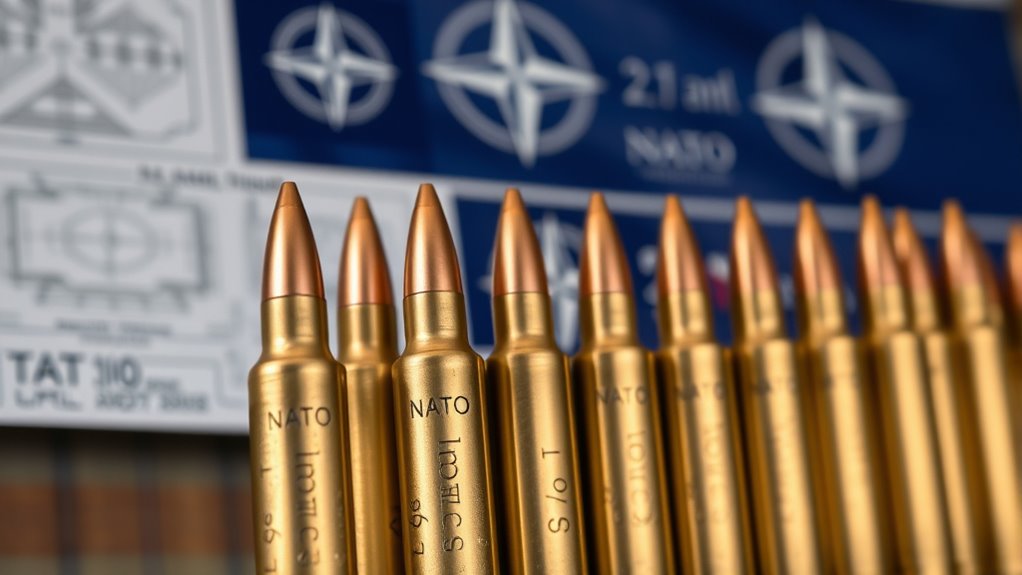
NATO ammunition standards are a set of technical specifications that ensure compatibility and interoperability among member countries’ armed forces. These standards have a rich ammunition history, evolving to confirm that different nations can share and use ammunition seamlessly.
Before NATO, each country developed its own ammunition, which often caused compatibility issues during joint operations. Recognizing this, NATO introduced global standardization efforts to make logistics easier and improve efficiency.
By establishing uniform dimensions, performance criteria, and safety protocols, these standards make sure that weapons and ammunition from different countries work together smoothly. This consistency helps reduce costs, simplifies supply chains, and boosts coalition effectiveness.
Uniform standards ensure compatibility, lower costs, and strengthen coalition efforts across NATO member nations.
In the end, NATO ammunition standards serve as a foundation for reliable military cooperation, ensuring that allied forces can operate seamlessly across borders. Understanding this history shows just how important they are for maintaining interoperability and strengthening collective security.
How NATO Defines Ammo Specifications and Types
You should get familiar with how NATO classifies and marks ammunition because it’s key to making sure your gear works smoothly with others. These standardized labels and classifications make it easier to quickly spot the right ammo for your equipment. When everyone sticks to these standards, it helps ensure that different forces can work together seamlessly and that the ammunition performs reliably during joint operations.
Standardized Ammunition Classifications
Standardized ammunition classifications are a key framework that ensures interoperability and consistency among allied forces. They define specific categories and designations, making logistics smoother across NATO.
This system helps manage and distribute ammunition globally, confirming that different nations’ equipment can reliably use the same types. It reduces confusion and delays during joint operations.
You can quickly identify the purpose, caliber, and type of ammo based on NATO standards, which cuts down errors and boosts operational efficiency. It also makes procurement and storage simpler since everyone follows the same guidelines.
NATO Ammunition Markings
To guarantee consistency and quick identification across diverse forces, NATO uses specific markings on ammunition that share detailed info about each round. This system, rooted in NATO ammo history, ensures interoperability and safety.
Ammunition labeling includes codes that specify caliber, type, lot number, and manufacturing details. These markings make it easy to identify and trace rounds. They follow standardized formats agreed upon by member nations.
This allows different armies to work seamlessly together. The tradition of NATO ammunition markings has evolved to improve clarity and reduce errors in combat and logistics. By reading these markings, you can quickly find essential details about any ammunition.
This helps ensure proper use and compatibility within NATO operations. The standardized approach simplifies logistics and boosts operational efficiency worldwide.
Compliance and Interoperability
NATO’s strict guidelines for ammo specifications ensure that different forces can operate smoothly together, no matter their country of origin. This focus on compliance and interoperability helps reduce issues during joint operations.
However, challenges still pop up, especially when adapting older stockpiles or non-standard equipment. To keep ammunition interoperable, NATO uses standardized types and testing protocols to make sure every round meets safety and performance standards.
Here’s a table highlighting key aspects:
| Aspect | Description | Impact |
|---|---|---|
| Standardization | Uniform ammo specifications | Easier joint logistics |
| Testing Protocols | Rigorous quality checks | Guarantees reliability |
| Compatibility | Interoperable weapon systems | Seamless operation |
| Compliance Challenges | Adapting legacy equipment | Potential delays |
What Makes NATO-Standard Ammunition Reliable and Effective?
You can really count on NATO-standard ammunition because it’s made following strict manufacturing standards that make sure everything stays consistent. It’s not just about how it’s made, but also about the quality control that ensures each batch meets high standards.
Plus, they put it through tough testing procedures to see how it performs under all sorts of conditions. This means you can trust that it’ll work reliably when it really matters. All these factors together make NATO-standard ammunition both dependable and effective, especially in critical situations.
Consistent Manufacturing Standards
Consistent manufacturing standards are the backbone of NATO-standard ammunition’s reliability and effectiveness. They ensure every round meets strict specifications, keeping manufacturing consistent across batches.
This consistency minimizes variability, so you can trust each cartridge to perform as expected. Quality assurance plays a key role here, with rigorous checks during production to catch defects and deviations.
By sticking to these standards, manufacturers produce ammunition that is uniform in size, weight, and performance. This is critical for reliable operation in the field.
Focusing on precision and control reduces malfunctions and boosts safety. You can have confidence in every shot, knowing the ammunition is dependable.
Ultimately, these standards make NATO ammunition reliable, giving you consistent performance no matter where or when you use it.
Rigorous Testing Procedures
Rigorous testing procedures are essential to guarantee that NATO-standard ammunition performs reliably under various conditions. These protocols evaluate factors like durability, accuracy, and safety, ensuring the ammo meets strict quality standards.
During testing, ammunition faces extreme temperatures, humidity, and vibration to mimic real-world environments. Each batch undergoes precise measurements to assess consistency and performance.
This process helps identify defects or deviations from specifications, maintaining uniformity across production. By following these strict protocols, NATO ensures ammunition is dependable in combat situations, reducing malfunctions.
The focus on thorough testing not only boosts reliability but also builds confidence among users. They can trust that their ammunition has passed extensive quality checks before deployment.
How NATO Standards Influence Ammo Manufacturing and Quality
NATO standards are crucial in shaping how ammunition is made and maintained to ensure interoperability among member countries. These standards influence manufacturing processes to guarantee consistent quality and performance across the alliance.
When ammo meets NATO specifications, it makes military logistics much easier by allowing seamless supply and distribution. This means reduced costs and better readiness because standardized ammo works with various weapons systems without any compatibility issues.
Key impacts include consistent cartridge dimensions and pressure levels, reliable performance in different conditions, and improved safety during handling and use. It also simplifies quality control and testing procedures and helps achieve global standardization across allied forces.
Ensuring Compatibility: NATO Ammo Standards for Different Weapons
So, basically, understanding how standardized cartridge sizes work is key to making sure your weapon works smoothly with NATO-approved ammo. When everything sticks to the same standards, it’s easier for different countries to share and supply ammunition without running into compatibility problems. That way, you don’t have to worry about whether your gun will jam or miss when switching between different military systems. Sticking to these standards really helps keep things reliable and consistent, no matter where you are or which military you’re dealing with.
Standardized Cartridge Dimensions
Standardized cartridge dimensions are essential for guaranteeing compatibility across a wide range of weapons within NATO forces. When cartridge sizes and shapes align, you get seamless cartridge compatibility, which helps reduce logistical issues and boosts operational efficiency.
Consistent dimensions also improve ammunition performance, since weapons are calibrated for specific standards. This uniformity makes it easier to switch between weapons without worrying about mismatched cartridges.
It guarantees reliable feeding and extraction, ensuring your weapons work smoothly every time. Plus, it maintains consistent accuracy, so your shooting remains precise.
Standardized cartridges also simplify logistics and supply chains, making it easier to manage and distribute ammo. They support a variety of weapon platforms, giving you flexibility in the field.
Finally, having compatible cartridges makes joint training exercises more straightforward, helping teams work together more effectively.
Compatibility Across Nations
Ensuring compatibility across different nations’ weapon systems is essential for effective joint operations. NATO’s standardized ammo specs help tackle interoperability issues by making sure ammunition fits and works reliably in various military hardware.
During multinational exercises, soldiers from different countries can share resources and ammo without compatibility problems. This streamlines logistics and cuts down on delays.
Consistent standards also mean weapons made in one country can safely chamber NATO rounds used by allies. This helps minimize malfunctions and safety risks.
Plus, this uniformity makes training, supply chains, and maintenance much simpler. Overall, NATO’s focus on compatibility helps member nations work together smoothly.
It ensures ammunition interoperability doesn’t stand in the way of successful joint missions or deployments.
How NATO Ammo Standards Shape Military Procurement and Supply Chains
NATO ammo standards are key to shaping military procurement and supply chains by setting uniform specs that member countries must follow. This consistency makes logistics simpler, so managing inventory, transportation, and storage becomes easier.
It also helps streamline procurement strategies, cutting costs and boosting efficiency. When ammunition quality standards are aligned, you can trust that supplies across allies are reliable and perform well.
These standards help optimize supply chains by reducing delays caused by incompatible or substandard ammo. Plus, NATO standards promote interoperability, so different nations can share and exchange ammo smoothly.
This coordination allows you to respond quickly during crises and keep operational readiness high. Overall, NATO ammo standards form a backbone for efficient military logistics, supporting a resilient supply chain that meets both national and alliance needs.
Common Types of NATO Ammunition and Their Uses
Different types of NATO ammunition are designed for specific combat roles, making sure military forces have the right firepower for different situations. For example, 5.56x45mm NATO rounds are common for rifles, lightweight and perfect for mobility and accuracy in tactical scenarios.
7.62x51mm NATO rounds offer more stopping power and are often used in machine guns and sniper rifles, giving you an advantage in longer-range fights. The 9mm NATO pistol cartridge balances recoil and fire rate, making it ideal for close-quarters combat.
Understanding the history behind these types helps explain why they became standardized—so allied forces can work together more smoothly. Each type supports particular military tasks, from suppressive fire to precise strikes.
Standardized ammunition history enhances NATO forces’ coordination and effectiveness across diverse military tasks.
Choosing the right NATO ammunition boosts your unit’s operational effectiveness and readiness for different combat environments. These common types also make logistics easier and improve compatibility, which is a core goal of NATO’s unified military approach.
Challenges and Controversies in NATO Ammo Standardization
Standardizing ammunition across multiple nations presents significant challenges, especially when countries have deeply rooted military traditions and differing technological capabilities. These differences complicate military logistics, making inventory management and supply chains more complex.
Controversies often arise over which standards to adopt, risking disagreements that can delay joint operations. Countries may resist changing their preferred calibers or specifications, citing national security or technological advantages.
The process also has geopolitical implications, as aligning standards might threaten to undermine national sovereignty or favor specific allies. Additionally, technological disparities can hinder interoperability, reducing the effectiveness of NATO forces.
Resistance from member nations with established calibers is a common issue. Balancing technological advancement with legacy systems adds another layer of complexity.
Managing logistical challenges during change phases can be tricky, and political disagreements over standards are inevitable. Ensuring compatibility without compromising national security remains a key concern.
Future Trends in NATO Ammunition Standards for Modern Warfare
As modern warfare evolves with rapid technological advancements, future trends in ammunition standards are set to focus on better interoperability, precision, and flexibility. NATO will develop standards that enable different platforms and weapons systems to work smoothly together, so soldiers can operate effectively with allies’ equipment.
We’ll see more intelligent ammunition with embedded sensors and guidance systems, which will increase accuracy against new threats. These threats, like drones, unmanned systems, and cyber warfare, require adaptable solutions to counter changing tactics.
NATO standards will also prioritize lightweight, energy-efficient rounds that perform reliably in various climates and combat situations. There will be a push for standardized calibers to support new weapon designs and emerging technologies, making production and deployment faster.
How to Identify and Choose NATO-Standard Ammunition
When selecting NATO-standard ammunition, it’s important to understand the markings, packaging, and specifications that set these rounds apart from others. Recognizing different calibers and labels helps ensure compatibility with your firearm.
Look closely at the headstamps on the casing. They often include NATO markings and country codes, which can tell you a lot about the origin and standard compliance. Packaging usually indicates NATO standards with clear labels showing the standard designation.
Pay attention to the packaging for NATO compliance indicators. It should be uniform and clearly marked, making it easier to identify officially recognized rounds. Reviewing the headstamp for country and standard markings can also confirm authenticity.
Understanding the historical context behind these specifications helps you appreciate why case dimensions and powder loads stay consistent. This consistency is key to reliable performance across different military applications.
Historical standards ensure consistent case dimensions and powder loads for reliable military performance.
To choose NATO-standard ammo confidently, check for NATO markings like “NATO Stock Number” or “STANAG” labels. Make sure the caliber matches your firearm’s specifications.
Always inspect the packaging for clear NATO compliance indicators. Review the headstamp for country and standard markings, and be aware of different caliber variations designed for specific military uses.
Following these steps guarantees you select reliable, compatible NATO ammunition with confidence and peace of mind.
Frequently Asked Questions
How Does NATO Ensure Compliance Among Member Countries?
NATO guarantees compliance among member countries through strict mechanisms and ongoing coordination. You’re expected to follow standardized ammunition specifications, which are checked through regular audits and inspections.
NATO promotes communication and cooperation, making sure all countries stick to shared protocols. If issues come up, member coordination helps resolve them quickly.
This system keeps interoperability and safety high, ensuring everyone meets NATO’s strict standards for ammunition. Ultimately, it strengthens the alliance’s reliability.
Are NATO Ammunition Standards Applicable to Non-Member Nations?
Ever wonder if NATO ammunition standards apply beyond its member nations? Generally, they don’t, but many non-member countries aim for non-member compliance to access high-quality, standardized ammunition, aligning with global ammunition standards.
This compatibility guarantees interoperability and efficiency during joint operations. While NATO standards aren’t mandatory for non-members, adopting them can boost international cooperation and streamline logistics.
Making military collaborations smoother across borders is a big plus. So, even if not required, following NATO standards can be a strategic move for many countries looking to enhance their military readiness.
What Are the Differences Between NATO and Commercial Ammunition Standards?
NATO and commercial ammunition standards mainly differ in ballistic performance and precision accuracy. NATO standards focus on interoperability, making sure everything works reliably across different allied forces. This often results in more consistent ballistic performance.
Commercial ammunition, on the other hand, varies a lot and might not meet NATO’s strict specs. Sometimes, it offers better accuracy tailored for specific firearms. As a user, you’ll notice NATO rounds emphasize standardization, while commercial ammo gives you a wider range of options for different shooting needs.
How Often Are NATO Ammunition Standards Updated or Revised?
NATO ammunition standards are updated periodically, much like the steady ticking of a clock, to guarantee ammunition reliability and compatibility. These revisions typically happen every few years, driven by advances in technology and military procurement needs.
Staying current is essential for operational success, as it ensures that military forces receive reliable, standardized ammunition. Regular updates show NATO’s commitment to maintaining effective, interoperable defense systems worldwide.
Do NATO Standards Cover Specialized or Unconventional Weaponry?
NATO standards mainly focus on conventional ammunition, but they do cover some specialized weaponry and unconventional munitions. You’ll find guidelines for certain advanced or specialized rounds, especially those used in NATO member countries’ military operations.
However, for highly specialized or unconventional weaponry, standards may be less thorough. Often, this requires individual agreements or additional specifications to ensure compatibility and safety across different nations’ forces.
Conclusion
Understanding NATO ammunition standards helps you see why certain ammo performs reliably across allied forces.
Some people think these standards limit innovation, but actually, they boost safety, compatibility, and global supply chains.
By following NATO specs, manufacturers make sure your weapons work smoothly in different situations.
So, next time you notice NATO markings, remember they stand for quality, interoperability, and the ongoing evolution of modern warfare.
This shows that NATO standards don’t hinder progress—they help it.