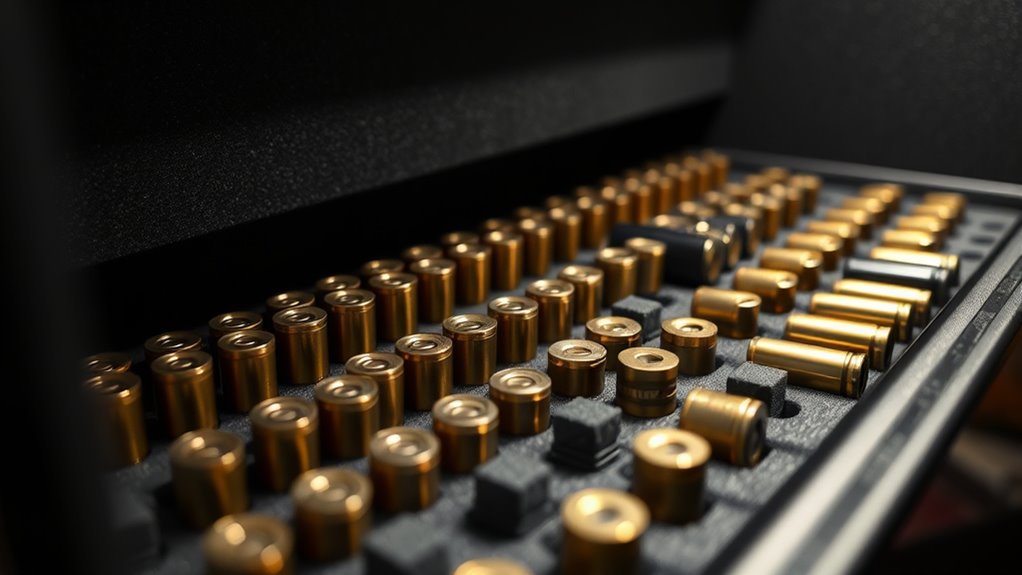
What Rules Do You Follow to Keep Ammo in a Gun Safe?
Many gun owners struggle with keeping their ammunition safe and properly stored. It’s a common concern to ensure your ammo stays in good condition and out of the wrong hands. You’re not alone — finding the right storage setup can feel overwhelming.
To keep ammo in a gun safe safely, always treat firearms as if they’re loaded and keep your finger off the trigger. Store ammunition separately from guns in a secure, locked container, ideally in airtight, moisture-proof containers with desiccants.
Choose a sturdy safe with reliable locks, and verify it meets your current and future storage needs. Keep an eye on humidity and inspect your ammo regularly to prevent corrosion.
For more detailed tips, find out what else you should do to stay safe.
Key Takeaways
- Store ammunition separately from firearms in a locked, secure container or safe.
- Use labeled, airtight containers to prevent moisture and make it easy to identify the ammo.
- Keep ammo out of reach of children and unauthorized individuals at all times.
- Follow legal storage regulations and transport rules to stay safe and compliant.
- Regularly check your stored ammo for corrosion, moisture, or damage, and replace it if needed.
What Are the Firearm and Ammo Safety Rules You Need to Know?
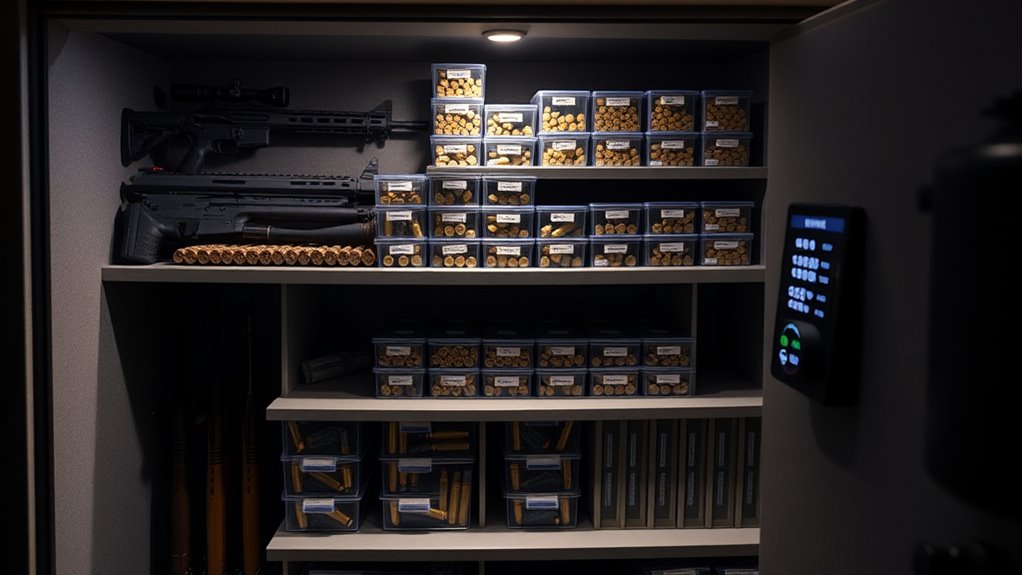
Understanding and following essential firearm and ammo safety rules is crucial for preventing accidents and responsible gun ownership. First, always treat every firearm as if it’s loaded. Keep your finger off the trigger until you’re ready to shoot, and never point the gun at anything you don’t intend to shoot.
In terms of ammo storage, keep your ammunition in a secure, designated area, away from children and unauthorized users. Use a locked safe or container designed for this purpose to prevent accidental access.
Be sure to store firearms and ammo separately, with clear labels to avoid confusion. Regularly inspect your firearms and ammo for signs of damage or corrosion.
Never handle them when you’re tired or under the influence of substances. Following these safety and storage rules helps prevent mishaps and encourages responsible ownership.
How to Choose the Right Gun Safe for Ammo Storage
When you’re picking out a gun safe for storing your ammo, it’s important to think about the size and capacity. You want something that can comfortably fit your collection without feeling cramped. After all, you don’t want to struggle to find what you need or risk damaging your ammo by squeezing it into a tiny space.
Security features are just as crucial. Look for safes with sturdy locks and reinforced walls—that way, you know your ammo is well-protected from theft or accidents. Choosing the right safe isn’t just about storage; it’s about making sure your ammo stays safe and easy to access whenever you need it.
Size and Capacity
Choosing the right size and capacity for your gun safe is key to making sure you have enough room for your ammo without wasting space or money.
Think about your current needs and future plans, including different calibers and types of ammunition. A larger safe gives you more storage, especially if your collection grows.
To help visualize, check out this table:
| Ammo Type | Capacity Needed |
|---|---|
| Handgun (.9mm, .45) | 50-100 rounds |
| Rifle (.223, .308) | 200-300 rounds |
| Shotgun (12 gauge) | 50-75 rounds |
| Specialty calibers | 20-40 rounds |
| Future expansion | Extra space |
Choosing wisely means you won’t outgrow your safe or compromise safety.
Security Features
Securing your ammo effectively starts with choosing a safe that has strong security features. Look for safes with advanced options like biometric locks or keypad entry to stop unauthorized access.
Think about safes made from tough, fire-resistant materials that can handle tampering or environmental hazards. Visualize a safe with reinforced steel walls for extra strength, tamper-proof locking mechanisms, and multiple locking bolts securing the door.
Features like fire and water resistance add extra layers of protection. These elements work together to keep your ammo safe and out of reach.
Pick security protocols that are simple to use but hard for intruders to bypass. With the right mix of materials and security features, you’ll effectively keep your ammo protected.
Legal Requirements for Storing Ammunition in Your State
It’s really important to understand your state’s rules about storing ammunition before you do it. Different states have their own laws, so what’s okay in one place might not be in another. Some states have pretty strict guidelines about how and where you can keep ammo, while others might have specific rules about transporting it as well.
State Storage Regulations
Before storing ammunition at home, it’s important to know your state’s specific legal requirements because these rules can vary a lot from place to place.
State laws typically specify how and where you can store ammo, focusing on safety and security. You might need to keep ammunition:
- In a locked container or safe
- Away from living areas or children
- In a designated, tamper-proof storage area
- Separate from firearms
Not following these storage rules can lead to legal problems or safety risks. Make sure to review your state’s laws carefully, since some states have strict rules, while others are more relaxed. Understanding and following these regulations helps ensure your ammo stays secure and compliant.
Permit Requirements
Understanding your state’s permit requirements is really important because they directly affect how you can legally store ammunition. Some states have strict guidelines, so you might need to get storage permits before keeping certain types of ammo.
These regulations are designed to prevent unauthorized access and ensure responsible storage. Be sure to check if your state requires specific permits for storing ammo in a gun safe, especially if you have large quantities or specialized rounds.
Not following permit rules could lead to legal trouble or fines. Even if permits aren’t required, it’s still a good idea to follow recommended storage practices. Stay informed about your local laws because they can change and might add new restrictions or permit requirements.
Being proactive helps you stay compliant and keeps your ammunition secure.
Transportation Restrictions
Transporting ammunition safely and legally is just as important as storing it properly. Knowing your state’s transportation rules helps you avoid legal trouble. When hauling ammo, keep these tips in mind:
- Store it in a secure, locked container to prevent unauthorized access.
- Keep it separate from firearms during transit.
- Don’t transport large quantities unless you’re allowed to.
- Never leave ammunition unattended in a vehicle, especially in hot or public areas.
Following these rules helps you stay within the law. Ignoring transportation restrictions can result in fines or even criminal charges. Always check your state’s specific laws before moving ammo, especially across state lines.
Being informed and careful keeps you legal and helps keep everyone safe during transportation.
Best Practices for Loading and Organizing Ammo in Your Safe
Organizing your ammo properly in your gun safe guarantees quick access and keeps everything safe. Keep different calibers separate by using labeled containers or dividers.
Store your most-used rounds toward the front so you can grab them easily. Less-used ammo can go toward the back to keep things tidy.
Avoid stacking loose rounds randomly, as that can cause jams or accidents. Using clear containers helps you see what’s inside instantly, saving time during emergencies.
| Ammo Type | Storage Method |
|---|---|
| Handgun | Small labeled containers |
| Rifle | Larger bins or shelves |
| Specialty | Secured compartments |
Why Store Firearms and Ammo Separately?
Keeping ammunition organized in your safe is important, but storing firearms and ammo separately adds an extra layer of safety. Separating these items reduces the risk of accidental discharge during safety checks or when accessing your firearms.
It also helps prevent ammunition from being exposed to hazards like heat or moisture that could damage it. When firearms and ammo are stored apart, you lessen the chance of mishandling or misuse, especially if others access the safe.
Visualize the safe with firearms stored securely on one side and ammunition kept in a separate, clearly marked compartment. Use locking mechanisms to restrict access and proper shelving to prevent accidental contact.
This separation ensures you stay in control and maintain safety at all times. It also promotes responsible firearm habits, reduces clutter, and helps preserve your ammunition over time.
How to Store Ammo to Prevent Moisture and Corrosion
To keep your ammo safe from moisture and corrosion, it’s a good idea to store it in airtight containers. That way, you’re blocking out humidity and keeping the environment dry.
It’s also helpful to add desiccants inside the containers—they’ll absorb any moisture that might get in and help keep everything dry. And don’t forget, your storage area itself should be a dry, low-humidity space. That way, your ammunition stays in good shape for the long run.
Use Airtight Containers
Moisture is one of the biggest threats to stored ammo because it can cause rust and corrosion, which degrade the quality and safety of your rounds. To keep moisture at bay, use airtight containers that create a sealed environment.
These containers prevent humidity from reaching your ammo. When choosing the right type, consider options like heavy-duty plastic bins with tight-fitting lids, metal ammo cans with rubber gaskets, vacuum-sealed bags for individual rounds, or silicone-lined storage boxes for extra protection.
Picture your ammo safely stored in these moisture-proof containers, reducing the risk of corrosion. Picking the right containers helps maintain your ammo’s reliability and extends its lifespan, so it stays ready when you need it.
Add Desiccants Regularly
Adding desiccants regularly is a simple yet effective way to keep moisture out of your stored ammo. Desiccants like silica gel, clay, or activated charcoal absorb excess humidity and help control moisture.
Place desiccants in small breathable pouches or containers inside your gun safe, making sure they don’t touch your ammo directly. Replenish or replace them when they become saturated or lose their effectiveness.
This is especially important to prevent rust and corrosion, which can damage your ammo over time. Regularly checking and replacing desiccants keeps moisture levels low and your safe dry.
Doing this simple step helps preserve your ammo’s quality and reliability, so it lasts longer and performs better when you need it.
Store in Dry Environment
Storing your ammo in a dry environment is key to preventing moisture buildup and corrosion. Keeping it dry helps maintain the integrity and reliability of your ammunition.
To do this, try to keep your ammo away from humid areas like basements or bathrooms. Using airtight containers or sealed ammo boxes can also block out moisture.
It’s a good idea to store your ammo in a climate-controlled room with a consistent temperature. Adding desiccants or silica gel packs inside storage containers can help absorb any excess humidity.
How to Lock Your Ammo Safely and Control Access
To keep your ammunition secure, it’s important to lock it away properly and control access. Start by choosing a high-quality safe with reliable locking mechanisms.
Use a combination lock, keypad, or biometric system to prevent unauthorized access. Keep the key or code hidden and only share it with trusted people.
Consider adding a secondary lock or using a lockbox inside the safe for extra security. Regularly check that the locking system works correctly and change codes periodically.
Limit access to your safe only to those who need it. Keep a record of who has entry to prevent accidental or intentional misuse.
Handling and Transporting Ammo Safely in Your Safe Environment
Handling and transporting ammo safely within your safe environment requires careful attention to prevent accidents or damage. When moving different ammo types, always make sure they’re secure and stable to avoid spills or misfires.
Proper storage conditions are essential. Keep ammo in a cool, dry place away from heat sources and moisture to maintain its quality.
Store ammo in a cool, dry area to preserve its quality and ensure safety.
To visualize safe handling, imagine placing ammo in sturdy, labeled containers to prevent mixing. Keep rounds upright to avoid damage to primers or casings.
Avoid dropping or jostling during transport to reduce the risk of misfires. Also, make sure your environment is free of clutter, which could cause accidental bumps or spills.
How Often Should You Inspect and Maintain Your Stored Ammo?
Regularly inspecting and maintaining your stored ammo is key to keeping it safe and effective over time. Proper upkeep helps you track the ammo’s lifespan, which can change depending on how you store it.
You should check your stored ammo at least once a year. During each inspection, look for signs of corrosion, moisture, or damage. Also, make sure the containers are still sealed and in good condition.
Pay close attention to the storage environment. High humidity or temperature swings can shorten the ammo’s lifespan. Keeping a consistent inspection schedule helps catch issues early.
If you notice corrosion or any deterioration, replace those rounds right away. Keeping your ammo in good shape not only extends its usability but also ensures it will work properly when you need it.
Regular checks are a simple but vital part of responsible firearm and ammunition care. They help prevent safety hazards and keep your ammo reliable.
Tips for Safely Storing Specialty and High-Caliber Ammo
Specialty and high-caliber ammo need extra care because they often have different storage needs to ensure safety and longevity. Proper storage helps prevent accidents and keeps your ammo performing well over time.
Store these types of ammo in a cool, dry place, away from direct sunlight and moisture. Use airtight containers or specialized ammo cans to protect against humidity and temperature changes.
Keep specialty ammo in cool, dry, airtight containers away from sunlight and moisture for optimal safety and performance.
Label each container clearly so you can avoid confusion or mishandling. Keep specialty ammo separate from standard rounds to reduce the risk of accidental discharge.
Adding desiccant packs inside storage containers helps control moisture. Make sure your safe is sturdy and secure, with a lock to restrict access.
Regularly check your storage setup for signs of corrosion or damage. Following these tips will keep your specialty ammo safe, functional, and ready when you need it.
Frequently Asked Questions
Can I Store Different Types of Ammunition Together Safely?
Yes, you can store different types of ammunition together if you make sure the calibers are compatible and you use the right containers.
Keep similar calibers together to avoid any accidental loading mistakes. Use non-reactive, durable containers like plastic or metal boxes to prevent corrosion and damage.
Store your ammunition in a cool, dry place, away from heat and moisture. Proper organization and safe storage habits help prevent accidents and keep your ammo in good shape.
What Are the Best Temperature Conditions for Storing Ammo?
You should store ammo in a cool, dry environment, ideally between 50-70°F, to prevent degradation. Keep humidity levels low, around 50% or less, to avoid rust and corrosion.
Use airtight storage containers to maintain stable conditions and protect your ammunition. Avoid extreme temperature fluctuations, which can damage the primers and powder.
This helps ensure your ammo stays safe and reliable for future use.
How Do I Prevent Accidental Discharges From Stored Ammo?
To prevent accidental discharges from stored ammo, you should follow strict safety protocols and use secure storage containers.
Always keep ammunition away from heat sources, sparks, or open flames. Store your ammo in a locked, sturdy container designed for safety, and make certain it’s clearly labeled.
Moreover, handle and transport your ammo carefully, avoiding rough handling or dropping, to maintain its integrity and prevent accidental ignition.
Is It Necessary to Use Desiccants in My Ammo Storage?
Yes, using desiccants is a smart step for safe ammo storage. They help with humidity control, preventing moisture from damaging your ammunition.
Place desiccants inside secure, airtight storage containers to keep moisture out. Without proper humidity control, rust and corrosion can develop, which can compromise your ammo’s reliability.
Regularly check and replace desiccants to keep your storage environment dry. Properly maintained storage containers combined with desiccants keep your ammo safe and ready.
How Do I Safely Dispose of Unused or Damaged Ammunition?
To safely dispose of unused or damaged ammunition, contact your local ammunition recycling options or hazardous waste disposal facilities. Never throw it in the trash or flush it down the drain.
Instead, call your local authorities or waste management services to find authorized disposal sites. Proper disposal helps prevent accidents and protects the environment.
Always follow the specific instructions provided by disposal facilities to handle ammunition safely. This way, you keep yourself and others safe while doing the right thing.
Conclusion
Storing ammo safely is essential to keep everyone protected and avoid potential accidents. Follow the rules, choose the right safe, and keep ammo and firearms separate.
Lock up your ammo securely and check on it regularly. Don’t let it become a ticking time bomb. When you stay vigilant and organized, you’re playing it safe and avoiding trouble down the line.
Remember, an ounce of prevention is worth a pound of cure. Proper storage of ammo is key to keeping everyone safe.