How Far Can a Glock Shoot Accurately?
Many Glock owners wonder just how far they can shoot accurately. If you’re new to the game, you’re not alone—many people struggle with understanding the true range of their firearm.
Getting the most out of your Glock’s accuracy can feel like a mystery, but it’s easier than you think.
You can generally expect a Glock to shoot accurately up to about 25 yards, especially when you use proper technique, a stable stance, and good quality ammunition.
Beyond that, accuracy can decrease due to bullet drop, recoil, and environmental factors.
Your skill, sights, and gun upgrades also play a role in improving precision.
If you want to understand how to make the most of your Glock’s range and accuracy, keep exploring these important tips.
Key Takeaways
- Most shooters get their best accuracy within 25 yards, and it tends to get less precise beyond that distance.
- To keep accuracy at longer ranges, proper sight alignment and a steady stance are really important.
- When shooting up to 25 yards, a Glock can usually group shots within 3-7 inches if you use good technique.
- Upgrades like better sights and barrel improvements can help you shoot accurately at longer distances.
- Your skill as a shooter, including trigger control and consistency, plays a big role in how far a Glock can shoot accurately.
How Does Glock Design Influence Shooting Range and Accuracy?
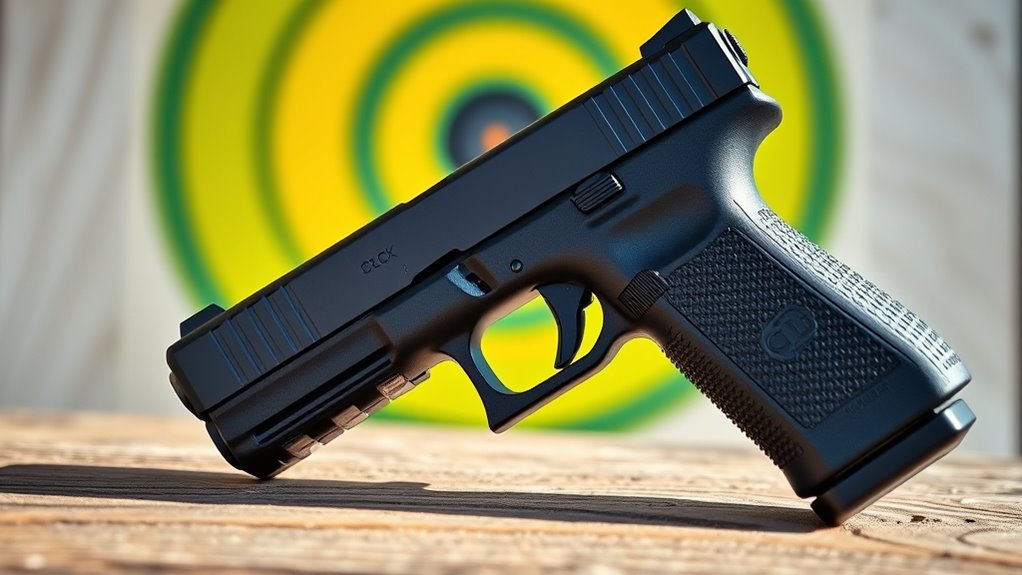
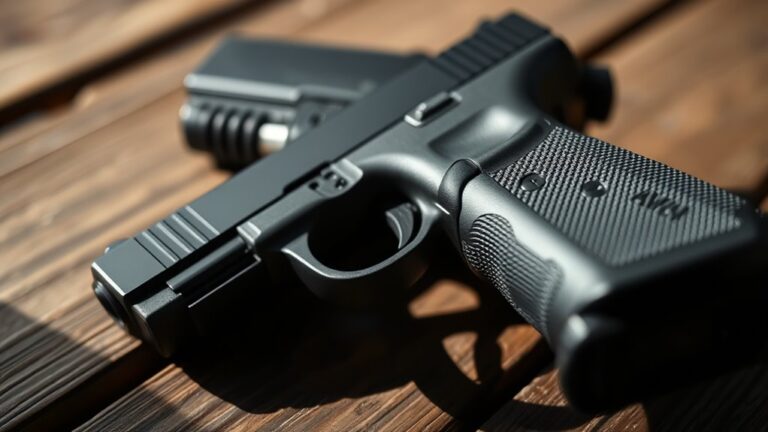
Glock pistols are known for their simple yet effective design, which plays a big role in their shooting range and accuracy. Your experience with a Glock is shaped by its ergonomic design, allowing you to handle the firearm comfortably and naturally.
The grip’s shape and texture help you keep a secure hold, reducing fatigue during long shooting sessions. Recoil management is another key feature; Glock’s design minimizes felt recoil, helping you stay on target with each shot.
The grip’s shape and texture ensure a secure hold, reducing fatigue and enhancing comfort during extended shooting sessions.
The low bore axis keeps the barrel aligned with your hand, improving control and follow-up shot accuracy. This combination of ergonomic features and recoil control means you can shoot more precisely and confidently.
A well-designed Glock encourages steady aim, making it easier to hit your target at various distances. Basically, Glock’s design elements directly influence your shooting range and accuracy, giving you a reliable platform whether you’re a beginner or an experienced shooter.
What Factors Affect Your Glock’s Shooting Precision?
Several factors can influence your Glock’s shooting precision, and understanding these can help you improve your accuracy. One key element is trigger pull. A smooth, consistent trigger pull helps you fire accurately without disturbing the gun’s aim. If your trigger is too stiff or unpredictable, it can cause unintended movement, reducing precision.
Another vital factor is ammunition quality. High-quality, consistent ammo guarantees reliable firing and predictable ballistics, which directly impacts accuracy. Poor or inconsistent ammo can cause misfires, flyers, or unpredictable trajectories.
Moreover, your grip, stance, and sight alignment play significant roles, but these are influenced by the gun’s mechanical factors. Regular maintenance, such as cleaning and inspecting your Glock, also helps prevent malfunctions that could affect precision.
How Far Can a Glock Hit a Target Accurately?
Understanding the factors that influence your Glock’s accuracy helps you figure out how far you can shoot effectively. For most shooters, the gun remains most accurate within 25 yards. Beyond that, accuracy drops because of bullet drop and recoil.
Shooting conditions are also important. Calm weather, good lighting, and a stable stance help improve your precision. Wind, rain, and uneven surfaces can make long-distance shots less accurate.
Your skill level and familiarity with your Glock matter too. Practice makes it easier to hit targets more consistently at greater distances. Keep in mind, while a Glock can technically shoot past 50 yards, hitting accurately depends on your ability to control the firearm and adapt to the environment.
To get precise hits, focus on the target distance and shooting conditions. This helps you understand your effective shooting range.
How Do Bullet Type and Caliber Impact Shooting Distance?
The type of bullet and caliber you choose directly influence how far your shot can travel effectively. Bullet selection is key in determining range; lighter bullets tend to go farther but might lack stopping power, while heavier bullets deliver more impact at closer distances.
Looking at calibers, larger ones like 9mm or .40 S&W generally shoot farther and keep their velocity longer than smaller calibers like .22 LR. But the design of the bullet also matters—full metal jacket rounds usually have better aerodynamics, helping them reach longer distances.
Cartridge power and bullet shape also affect how well your shot stays accurate over distance. Knowing these factors helps you pick the best combo for your intended range. Remember, choosing the right bullet type and caliber can extend your effective shooting distance, but accuracy and safety are always the most important.
How Can Shooter Skills Improve Glock Accuracy?
If you want to get better at hitting your target with your Glock, the first thing to work on is your grip. A solid, steady hold on the firearm makes a huge difference in accuracy. Don’t forget to also pay attention to your breathing—keeping it steady helps reduce any shaky movement when you’re shooting.
And of course, the more you practice, the better you’ll become. Regular shooting sessions help you build good habits and improve your skills over time. When you combine a good grip, controlled breathing, and consistent practice, you’ll start to see a real boost in your shooting accuracy.
Proper Grip Technique
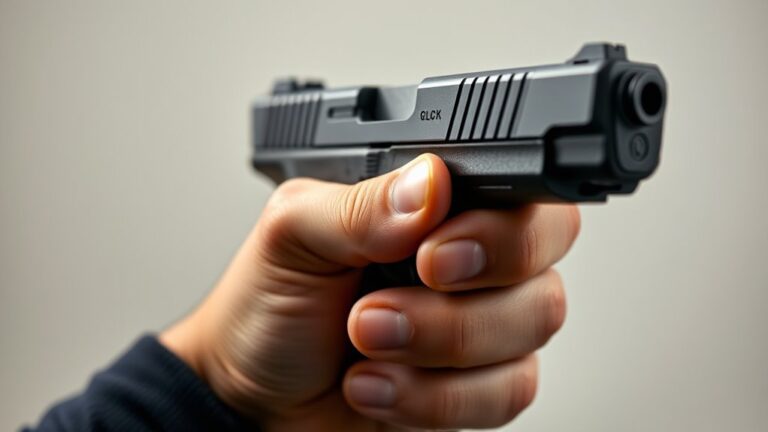
A secure and consistent grip is the foundation of accurate shooting with a Glock. Your grip should be firm yet relaxed, giving you control without causing tension.
Position your dominant hand high on the grip, wrapping your fingers tightly around it. Your support hand should press against the front of the grip to help with stability.
Maintain appropriate grip pressure—firm enough to control recoil but not so tight that it causes shakiness. Being consistent in how you hold your Glock helps you shoot predictably.
Focus on a natural, balanced hold that minimizes movement and maximizes control. Practicing this proper grip technique builds muscle memory, which improves your accuracy and shot consistency over time.
Breath Control Mastery
Controlling your breath is key to improving Glock accuracy because it helps you keep a steady aim and reduces involuntary movement. When you’re aware of your breathing, you can notice your natural patterns and see when you’re tense or holding your breath.
Using simple techniques like slow, deep inhales and controlled exhalations can help calm nerves and steady your hands. Before shooting, take a moment to focus on your breath—exhale fully, then gently inhale to a count of three.
This practice helps minimize muscle tremors and keeps your stance stable. Consistent breath control boosts shot precision, especially during longer aiming periods.
Mastering these techniques makes your shooting more deliberate and improves accuracy no matter the distance.
Consistent Shooting Practice
Consistent shooting practice is the best way to improve your Glock’s accuracy because it helps build muscle memory and sharpens your focus. Regular practice makes it easier to develop proper trigger control, so you won’t jerk or flinch, which can throw off your shots.
Focus on smooth, deliberate trigger pulls to keep your shots accurate. Adjusting your stance is also important; find a stable, comfortable position that helps you stay steady with each shot.
Repetition of these fundamental skills builds consistency, making your shots more precise over time. By dedicating regular time to practice, you’ll see improvements in how well you control your Glock and aim at different distances.
This disciplined approach ultimately boosts your shooting skills and confidence.
How Does Environment Change Glock Shooting Performance?
Environmental conditions can greatly impact your Glock’s shooting performance. Weather, shooting surfaces, and lighting all directly influence your accuracy.
For example, wind can push your shots off target, especially over longer distances. Poor lighting makes it harder to aim precisely, reducing your shot accuracy.
Temperature changes also matter. Extreme cold might cause your gun to malfunction or slow your reflexes, while heat can lead to overheating. Humidity can cause moisture buildup, affecting your grip or internal components.
Noise distractions can break your concentration, making it tougher to focus on your shot. Uneven or slippery surfaces can compromise your stance, reducing stability and accuracy.
Being aware of these environmental factors helps you adapt your technique. This way, you can perform better regardless of outside conditions.
Can Upgrades and Modifications Increase Glock’s Effective Range?
Thinking about upgrading your Glock? Well, swapping out the barrel or enhancing the sights can actually help you shoot more accurately and faster, especially when you’re trying to hit targets at a bit of a distance. These kinds of modifications make it easier to line up your shots and stay on target.
Enhanced Barrel Accuracy
Improving a Glock’s barrel can greatly boost its accuracy, which can help extend its effective range. One way to do this is by choosing the right barrel length; longer barrels generally offer better stability and accuracy at longer distances.
Upgrading to precision-machined barrels with tighter tolerances can also make a difference. The rifling type is important—cut rifling can increase accuracy and provide consistent bullet spin, while polygonal rifling may give a better gas seal and higher velocity.
These modifications help reduce bullet wobble and improve shot precision. By selecting a quality barrel with the right length and rifling, you can significantly enhance your Glock’s accuracy, making it more effective at longer ranges without sacrificing reliability or ease of use.
Improved Sighting Systems
Have you thought about how a precise sighting system can boost your Glock’s effective range? Making small sight adjustments helps you dial in your aim, which leads to better accuracy at longer distances.
Upgrading to sights like fiber-optic or night sights can really improve visibility in different lighting conditions. Plus, options like red dot or reflex sights let you acquire targets quickly and shoot more accurately.
These upgrades help you stay aligned and reduce aiming mistakes, making your Glock more accurate at greater ranges. Properly mounted optics and well-calibrated sights give you more confidence and control, especially in fast-paced situations.
All in all, investing in sighting system improvements can significantly improve your Glock’s performance and make it more effective for shooting at longer distances.
What Is a Realistic Shooting Accuracy Expectation for Glocks?
What kind of shooting accuracy can you realistically expect from a Glock? Generally, your expectations depend on your skill level and conditions, but Glock performance is reliable for most shooters.
Typically, you can aim for a practical 3- to 7-inch group at 25 yards with proper technique. Keep in mind, grip, stance, and trigger control all influence your results.
Here’s what you might see with consistent shooting:
- Accurate hits within 15 yards for self-defense.
- Groupings around 2-4 inches at 10 yards.
- Slight spread at longer ranges, around 6-8 inches at 25 yards.
- Better accuracy with regular practice.
- Results vary based on shooter experience and environmental conditions.
While Glocks are built for reliability and speed, your realistic expectations should acknowledge that precision improves with training.
How Can You Improve Your Glock Shooting Skills?
Improving your Glock shooting skills comes down to consistent practice and refining your fundamentals. Focus on trigger control by squeezing smoothly and steadily, rather than jerking or slapping the trigger. This reduces unnecessary movement and helps you stay on target.
Similarly, maintaining proper follow through is important—keeping your sight picture steady after firing. This reinforces good habits and guarantees accuracy, especially during rapid fire or stressful situations.
Practice dry firing regularly to build muscle memory for smooth trigger pulls and steady follow through. Use drills that emphasize controlled shots, and record your progress to see where you can improve.
What Safety Tips Help You Shoot Accurately and Responsibly?
Safety is the foundation of accurate and responsible shooting, and following proper safety protocols helps you stay in control and avoid accidents. Always wear the right safety gear like eye and ear protection, and stand in a stable shooting stance to keep control.
Stay mentally sharp—avoid distractions and be aware of your surroundings. Practice trigger discipline by keeping your finger off the trigger until you’re ready to shoot, which boosts your accuracy. Follow range etiquette by waiting your turn and keeping your firearm pointed downrange.
Properly storing your firearm when not in use keeps it out of reach of others and ensures safety. Regular maintenance of your firearm makes sure it functions reliably and reduces malfunctions. Always know your target and what’s beyond it to maintain situational awareness.
Frequently Asked Questions
What Is the Maximum Effective Range of a Standard Glock?
The maximum effective range of a standard Glock is about 50 yards for accurate shooting. You can hit your target accurately within this distance, where the bullet’s trajectory stays predictable.
Beyond 50 yards, your shot accuracy drops because of bullet drop and wind. To stay precise, aim within this range. Remember, your skill and proper grip are key to keeping your shots on target over the bullet’s flight.
How Does Barrel Length Affect Glock Shooting Distance?
Increasing your Glock’s barrel length can boost your shooting distance and accuracy. Longer barrels give you a higher velocity, helping your shots stay on course over longer ranges.
When you compare accuracy, a Glock with a longer barrel usually outperforms shorter models, especially at greater distances. So, if you’re aiming for better accuracy and longer shooting range, a longer barrel can really make a difference.
Are Glock Pistols Suitable for Long-Range Shooting Competitions?
Think of a Glock as a dependable race car. While it’s great on city streets, it’s not built for long-distance tracks. Glock ergonomics and competition modifications can help improve accuracy, but the pistol’s design isn’t meant for long-range shooting competitions.
You’ll find better success with specialized rifles or long-range handguns. Glocks really shine in self-defense and target practice, not in extended shooting contests.
How Does Weather Impact Glock Accuracy at Different Distances?
Weather greatly impacts your Glock’s accuracy at various distances. Humidity effects can cause slight shifts in bullet trajectory, especially in high humidity, reducing precision.
Wind resistance plays an essential role as gusts can push your shots off target, particularly at longer ranges. You’ll notice more deviation in windy conditions, making it harder to shoot accurately.
Always consider weather factors and adjust your aim accordingly for better accuracy in different environments.
What Are Common Misconceptions About Glock Shooting Range Capabilities?
Many Glock myths suggest they can shoot perfectly at any distance, but the reality is different.
Accuracy depends more on shooter skill, grip, and trigger control than on the firearm itself.
A common misconception is that Glocks have unlimited range.
Most shooters find their effective accuracy drops beyond 25 meters.
Remember, no firearm guarantees precision without proper technique.
Conclusion
To get the most accuracy from your Glock, it’s important to understand its design, consider your shooting skills, and select the right ammunition. Practicing regularly and upgrading parts thoughtfully can also make a big difference.
Remember, shooting precision isn’t just about how far you can shoot. It’s about having control, confidence, and responsibility with your firearm. Focus on these areas, and you’ll improve your shooting skills and stay safer.
Mastering your Glock means mastering your own safety, skills, and potential. The key to accurate shooting depends on consistent practice and understanding your firearm. With time, you’ll be able to shoot accurately at greater distances.