What Makes a Glock California Compliant?
Finding the right Glock that’s California compliant can be confusing and frustrating. Many gun owners struggle with understanding the strict laws and what makes a firearm legal to carry in the state. You’re not alone in this challenge, and we’re here to help you navigate it.
A Glock is California compliant when it meets strict laws by limiting magazine capacity to 10 rounds or fewer, often achieved through internal modifications or specialized magazines.
It also needs specific safety features like trigger safeties, loaded chamber indicators, and magazine disconnects. Proper markings, serial numbers, and verification with licensed dealers guarantee legal compliance.
If you want to understand the detailed requirements and how to verify compliance, there’s more to investigate.
Key Takeaways
- Must have a magazine capacity of 10 rounds or fewer to comply with California regulations.
- Incorporate safety features such as trigger safety, loaded chamber indicator, and magazine disconnect safety.
- May require internal modifications or hardware adjustments to meet legal standards.
- Serial numbers should be clearly marked, tamper-resistant, and verified against official compliance records.
- Purchased through licensed dealers who verify features, serial numbers, and ensure compliance with state laws.
What Are the Main California Laws That Affect Glock Compliance?
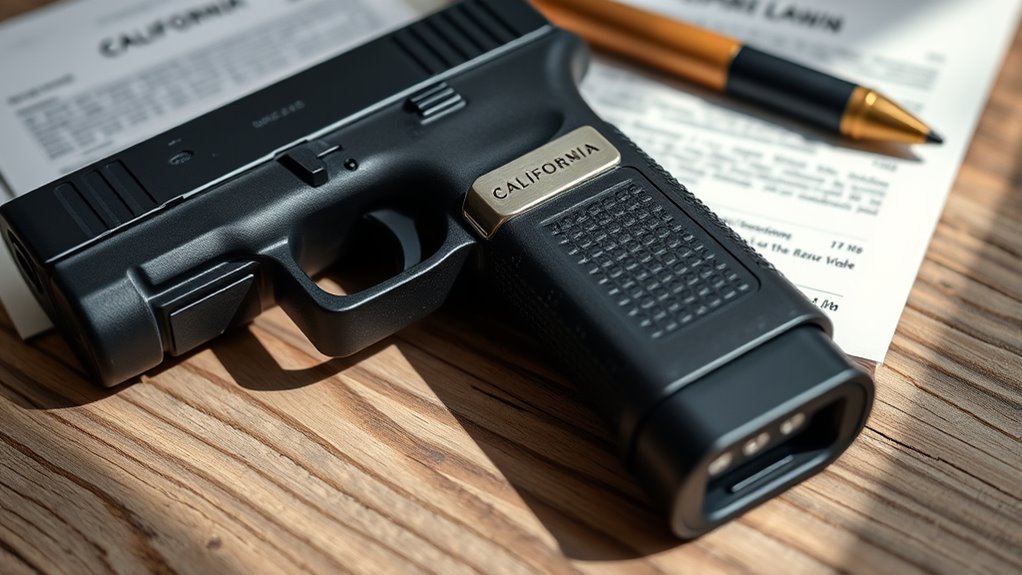
What are the main California laws that impact Glock compliance? State laws impose significant restrictions, directly affecting which models are legal for civilian use. These laws often limit features like magazine capacity and require specific safety standards.
You face compliance challenges when choosing a Glock because models must meet California’s strict guidelines to avoid legal issues. For example, a Glock with a high-capacity magazine might be considered illegal, which could lead to fines or confiscation.
California’s assault weapon laws also influence Glock models. Some may need modifications or specific design features to be legal. Staying compliant means understanding these laws thoroughly and selecting Glock models that meet local safety standards.
California’s assault weapon laws may require Glock modifications to ensure compliance with safety standards.
Ignoring these regulations can lead to costly legal consequences. Knowing the legal landscape helps you navigate Glock restrictions more confidently. It ensures you stay within California’s firearm laws.
How Do Magazine Capacity Limits Impact Glock Models in California?
Magazine capacity limits in California greatly influence which Glock models you can legally own and carry. Due to strict magazine restrictions, many Glock models with high-capacity magazines aren’t compliant.
You’ll need to choose models with capacity limits of 10 rounds or fewer to stay within the law.
Here’s a quick comparison:
| Glock Model | Magazine Capacity Limit |
|---|---|
| Glock 17 | Restricted (17+ rounds) |
| Glock 19 | Restricted (15+ rounds) |
| Glock 43 | Compliant (10 rounds max) |
| Glock 26 | Restricted (10+ rounds) |
| Glock 43X | Compliant (10 rounds max) |
These restrictions directly impact your choices. To stay legal, you must pick models that meet California’s capacity limits.
This means you can’t own or carry high-capacity Glock magazines if they exceed the 10-round limit.
What Safety Features Make a Glock California Compliant?
To guarantee a Glock is California compliant, manufacturers add specific safety features designed to prevent accidental discharges and unauthorized use. These safety mechanisms are crucial for meeting state regulations.
One key safety feature is the integrated trigger safety, which requires a deliberate pull of the trigger to fire the weapon. Some models also include a loaded chamber indicator, so you can check if the gun is ready to fire without handling it too much.
Additionally, certain Glock models have a magazine disconnect safety, which prevents the gun from firing when the magazine is removed. These safety features work together to keep the firearm from discharging accidentally or by unauthorized users.
How Are Glock Pistols Modified to Meet California Regulations?
Glock pistols are modified through a mix of internal changes and hardware tweaks to meet California regulations. These modifications help ensure the firearm stays compliant while still working well.
Manufacturers often remove or adjust certain parts, like the magazine disconnect or features that aren’t allowed under state law, to make the gun legal.
Key modifications include installing a fixed magazine so it can’t be removed easily, removing or disabling the magazine disconnect safety, and adding internal parts to limit magazine capacity.
Specialized parts are also used to meet compliance standards, and serial numbers are properly marked for legal tracking.
These changes create a Glock that’s both legal and reliable, giving you peace of mind while following California’s firearm laws.
Are There Specific Markings or Serial Number Requirements for Compliance?
When it comes to your Glock, it’s really important to pay attention to where the serial numbers and markings are placed. California has specific rules about this, so making sure your firearm has the correct markings in the right spots is a must.
Proper serial number placement, clear markings, and proofing aren’t just formalities – they’re essential to ensure your firearm complies with state regulations. Getting these details right helps you avoid any legal hiccups and makes sure your Glock is up to standard according to California law.
Serial Number Placement
California law requires specific placement of serial numbers on firearms, including Glocks, to guarantee proper identification and traceability. Ensuring serial number visibility is essential for compliance, so placement regulations must be followed precisely. Failure to do so can lead to legal issues or rejection during registration.
Consider these factors to meet requirements:
- Serial numbers must be stamped in a conspicuous, accessible location.
- Placement should resist tampering and alteration.
- Numbers must be clear and legible.
- Serial numbers should be on the frame or receiver.
- Avoid covering or obscuring markings with grips or accessories.
Following these guidelines guarantees your Glock’s serial number is properly placed, ensuring compliance and peace of mind. Proper serial number placement helps authorities quickly identify your firearm in any situation, reinforcing safety and accountability.
Markings and Proofing
Firearms need to have specific markings to meet legal standards, making sure they can be accurately identified and verified.
For California compliance, marking requirements are strict. They include clear serial numbers and manufacturer details. These markings must be permanently affixed and visible.
They also need to conform to proofing standards that verify the firearm’s safety and authenticity. Proof marks show the gun has been tested and passed quality checks.
This is important for legal sale and ownership. Confirming your Glock meets these marking and proofing standards helps you avoid legal issues and confirms your firearm’s legitimacy.
Proper markings also help law enforcement identify the firearm if needed.
What Are the Differences Between Standard and California-Compliant Glock Models?
While standard Glock models are designed for versatility and ease of use, California-compliant versions feature specific modifications to meet state regulations. These Glock variations address compliance challenges by removing or altering features popular elsewhere.
You’ll notice the absence of a magazine disconnect, ensuring it meets California’s safety laws. The models also have a loaded chamber indicator for added safety. Many models come with a fixed magazine capacity of 10 rounds to adhere to state restrictions.
The trigger mechanisms are often modified to prevent certain firing modes, like the “safe action” in some variations. Feel the frustration of limited customization options and experience the confidence of meeting legal standards.
Recognize the effort to keep you compliant and understand the importance of safety features. Accept the challenge of choosing the right Glock variation while knowing these models are designed with safety and legality in mind.
How Can You Verify If a Glock Is California Compliant Before Buying?
Want to make sure a Glock is California compliant before you buy? First off, check if the model is officially listed as an authorized California-compliant firearm. You can usually find this info on the manufacturer’s website or through authorized dealers.
Next, it’s a good idea to verify the serial number details with the manufacturer or a trusted dealer. This way, you can confirm that the specific firearm meets all the state’s requirements. Doing these simple steps can give you peace of mind that you’re getting a legal and compliant gun.
Check California Compliant Models
Verifying if a Glock is California compliant is essential before making a purchase, especially given the state’s strict firearm regulations. To check if a Glock model meets compliance, examine its features and confirm it has passed compliance testing.
Look for labels or markings indicating California compliance, often found on the firearm or packaging. You can also consult Glock’s official website or authorized dealers for a list of approved models.
Be wary of unmarked or suspicious firearms, as they may not be compliant. Confirming these details gives you peace of mind and guarantees your firearm adheres to California’s legal standards.
Feel confident knowing your firearm is fully legal. Avoid costly legal troubles by verifying compliance before buying. Trust in Glock’s testing process and verify your safety and peace of mind.
Protect your rights with verified models and always stay informed about California’s firearm regulations.
Verify Serial Number Details
Are you unsure if a Glock is California compliant just by looking at it? The best way to confirm is through serial number verification. Check the serial number against official compliance documentation or databases maintained by manufacturers or authorized dealers.
Many sellers provide this information upon request, ensuring the firearm meets California’s strict regulations. You can also contact Glock directly or visit their website for guidance on serial number validation.
Authentic compliance documentation can help verify that the firearm has the necessary features, like a loaded chamber indicator or magazine disconnect, required by law. Don’t rely solely on appearance—accurate serial number verification is key to confirming your Glock’s legality before making a purchase.
What Role Do Licensed Dealers Play in Selling Compliant Glock Pistols?
Licensed dealers play an essential role in making sure Glock pistols meet California’s strict compliance standards before they reach you. Their job is to verify that each firearm follows all state laws through thorough checks.
By doing this, they help prevent illegal or non-compliant guns from entering circulation. When you shop through a licensed dealer, you can trust they’ve checked the serial number for authenticity.
Licensed dealers verify serial numbers to ensure Glock pistols are authentic and comply with all legal standards.
They also confirm that the firearm’s features meet California’s legal requirements, handle proper documentation and background checks, and ensure safety features align with state regulations.
Additionally, licensed dealers verify that the pistol is correctly registered if needed. This rigorous process guarantees you’re getting a legally compliant Glock, giving you peace of mind.
Their role is crucial in upholding the law, protecting your rights, and ensuring safety. They help maintain the integrity of firearm sales so you get a gun that’s both legal and reliable.
Are Future Legal Changes Likely to Affect Glock Compliance in California?
You might be wondering if new laws coming down the line will affect which Glock models you can get in California. Legislation is always changing, and that can mean certain features might become restricted or some guns might get reclassified.
Staying in the loop about these legal updates is a good idea. It helps you get a sense of how future regulations could impact your choices and what’s available to you.
Potential Legislation Changes
Given California’s ongoing efforts to tighten firearm regulations, future legislative changes could greatly affect Glock’s compliance in the state. New laws might introduce stricter requirements, making it tougher for manufacturers and owners to stay compliant.
You could face sudden bans on certain features, increased restrictions on magazine capacity, or mandatory modifications to existing firearms. Extended registration processes and higher penalties for non-compliance are also possible.
These changes might force Glock to adapt quickly or risk losing legality in California. Staying informed about legislative updates is crucial since laws can change overnight. Your ability to navigate these evolving laws will determine whether your firearm remains legal or faces restrictions, so proactive engagement with upcoming legal developments is essential.
Impact on Glock Models
Future legal changes in California could really impact Glock models, especially if new restrictions target specific features or configurations. Glock’s magazine capacity, internal mechanisms, or modular components might become key points in upcoming laws.
These potential restrictions could make compliance tricky, forcing manufacturers and owners to change or modify their guns. As laws change, some Glock models might no longer meet state requirements, making it harder to keep your firearm legal without major tweaks.
Staying ahead of legislative shifts is crucial to ensure your Glock remains compliant. The impact of future legal changes highlights the importance of understanding how certain Glock features affect legality and being prepared to make adjustments if needed.
Future Regulatory Trends
As California updates its gun laws, upcoming regulations are likely to greatly influence Glock compliance. Experts predict stricter laws could come into effect, making current models outdated or requiring redesigns.
You might face new challenges like limits on magazine capacity or mandatory safety features. These legal changes could force you to upgrade or replace your firearms.
Costs for compliant models could go up, and there might be delays in accessing certain Glock models. Legal uncertainties about future ownership rights could also increase.
Staying informed is crucial because future legal shifts could change what’s possible for Glock owners. Being prepared will help you navigate these evolving restrictions more easily.
How Do California-Approved Glock Pistols Perform Compared to Standard Models?
Have you wondered how California-approved Glock pistols stack up against their standard counterparts? The performance comparison shows that these models generally match the reliability and accuracy of regular Glocks, despite modifications for compliance.
The main compliance challenges involve removing or altering features like large-capacity magazines or certain configurations, but these changes rarely impact basic operation. California-approved Glocks are often equipped with internal safeties or magazine disconnects, which might slightly affect trigger feel or cycling, but the differences are minimal.
Overall, you’ll find that their performance remains consistent with non-compliant models, ensuring dependable operation in various scenarios. The key is understanding that compliance modifications are designed to meet legal standards without sacrificing core functionality.
Frequently Asked Questions
Can a Glock Be Modified to Become California Compliant?
Yes, you can modify a Glock to meet California compliance regulations. Focus on Glock modifications that include installing a magazine disconnect safety, compliant barrel, and other legal parts.
Make sure your modifications follow state laws, and it’s a good idea to get professional help for the installation. Not all Glock models are easy to make compliant, so check current regulations and talk to experts to avoid legal issues.
Always prioritize safety and legality when making your modifications.
Are Used Glock Pistols Also Required to Be California Compliant?
Used Glock pistols must also comply with California handgun laws, meaning they need to meet specific regulations for features and modifications. You can’t just buy a used Glock and assume it’s compliant; it must have the necessary safety features like a loaded chamber indicator and magazine disconnect.
Confirm the used Glock adheres to used Glock regulations, or it won’t be legal to own or carry in California. Always verify compliance before purchase.
How Long Does It Take to Convert a Glock for California Compliance?
The Glock modifications for California compliance can take anywhere from an hour to a few days, depending on your experience and the tools you have.
The process involves installing specific parts, like a magazine disconnect, and making sure everything meets state laws.
If you’re confident in your skills, you might finish quickly, but rushing can cause mistakes.
Patience and attention to detail are essential for a successful conversion.
Do All Glock Models Have California-Compliant Versions Available?
Not all Glock models have California-compliant versions available. You’ll need to check each Glock’s features against California’s strict standards, which often include limits on magazine capacity and safety features.
Some Glock models are specifically designed or modified to meet these standards, but others are not. It’s really important to verify the Glock’s features and ensure they align with California’s compliance rules before you buy or modify one for California use.
Are There Any Penalties for Selling Non-Compliant Glock Pistols in California?
If you sell non-compliant Glocks in California, you could face serious legal repercussions because firearm laws are strictly enforced. Violating these laws might result in fines, license suspensions, or even criminal charges.
California’s firearm laws focus heavily on safety, so it’s crucial to make sure your inventory meets all state standards. Staying compliant not only keeps you legally safe but also helps build trust and safety in your community.
Conclusion
Maneuvering California’s firearm laws can feel overwhelming, but understanding what makes a Glock compliant is key. By knowing the regulations, safety features, and markings required, you can confidently choose a model that fits legal standards.
Always verify with licensed dealers and stay updated on future laws. After all, aren’t you better off with a Glock that’s both reliable and California compliant, ensuring you’re always within the law?