Is It Safe to Shoot Guns While Pregnant?
Expecting a little one is an exciting time, but it also comes with a lot of questions—especially about safety. Many pregnant women wonder if shooting guns is safe during pregnancy, and you’re not alone in feeling unsure.
Shooting guns while pregnant carries some risks, especially from loud noises, recoil, and environmental hazards like lead exposure. While outdoor ranges and proper safety precautions can reduce danger, it’s essential to consult your healthcare provider before continuing.
Protect your hearing with ear protection, stay hydrated, and avoid shooting when fatigued or unwell.
If you want to learn more about safety tips and myths, keep exploring this important topic.
Key Takeaways
- Shooting outdoors with proper safety precautions and protective gear can reduce risks during pregnancy.
- Loud noises and environmental hazards like lead dust and fire risks can pose health concerns for pregnant shooters.
- It’s important to consult a healthcare provider to assess your personal safety and pregnancy health considerations.
- Managing stress and avoiding high-stress situations is crucial, as too much stress can affect fetal development.
- Many safety myths are unfounded; focusing on safe practices and proper equipment helps minimize potential risks.
Is Shooting Guns During Pregnancy Safe?
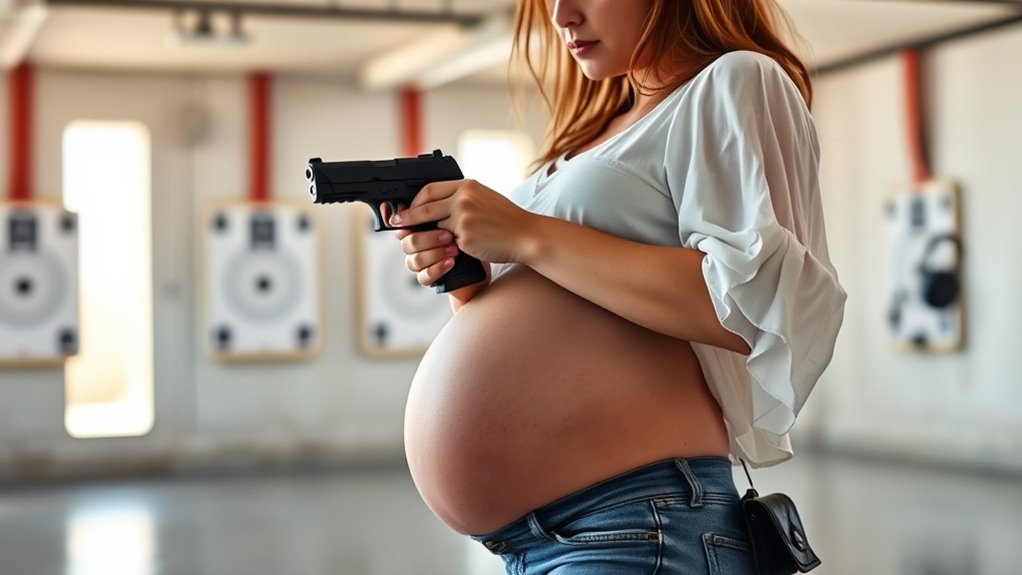
Is shooting guns during pregnancy safe? The answer really depends on gun safety and pregnancy considerations.
While some may feel comfortable shooting with proper precautions, others might prefer to avoid it altogether. If you decide to keep shooting, be extra careful about handling firearms responsibly and storing them securely.
Think about your environment—outdoor ranges are generally safer than indoor shooting spots, where noise levels and confined spaces could be risky. It’s also important to talk to your healthcare provider about your plans to see if there are any potential risks.
During pregnancy, it’s best to avoid loud noises and situations that might cause stress or physical strain. The main goal is to keep both you and your baby safe.
If you have any doubts or concerns, it’s probably best to stay on the safe side and avoid shooting until after your pregnancy.
What Are the Health Risks of Shooting During Pregnancy?
Shooting guns while you’re pregnant can be pretty risky for your health. For one, the loud noises can damage your hearing over time, which isn’t good for anyone, especially during pregnancy. It can also cause stress and anxiety, and we all know that high stress levels aren’t great for your baby’s development.
Plus, there’s always a chance of physical injury if you’re not super careful or if an accident happens. It’s really important to think about these risks and maybe consider avoiding shooting activities until after your pregnancy.
Noise-Induced Hearing Damage
Exposure to loud noises from gunfire can pose significant risks to your hearing health, especially during pregnancy when your body is more vulnerable. Prolonged or intense sound exposure can damage delicate hair cells in your inner ear, leading to temporary or permanent hearing loss.
To protect yourself, always wear proper hearing protection like earplugs or earmuffs. Even brief exposure to loud gunshots can cause damage if you’re not protected.
It’s vital to minimize your noise exposure and avoid standing too close to firing lines. Remember, your hearing health is essential, and taking precautions can prevent long-term damage.
Prioritize your safety by implementing effective hearing protection whenever you’re around gunfire during pregnancy.
Stress and Anxiety Levels
Because pregnancy already involves big hormonal and emotional changes, adding extra stress from shooting can increase anxiety and affect your overall well-being. High stress and anxiety can cause sleep problems, higher blood pressure, and emotional exhaustion, all of which can impact your health and your baby’s development.
To stay well, try stress reduction and anxiety management techniques like deep breathing exercises, mindfulness meditation, and gentle prenatal yoga. Taking breaks and staying hydrated also help, along with seeking support from loved ones.
Managing stress well helps keep your emotional balance, lowers the risk of complications, and supports a healthier pregnancy. Avoiding unnecessary stressors during this time is key to protecting both your physical and mental health.
Risk of Physical Injury
While shooting involves handling firearms that can produce loud noises and recoil, pregnancy increases your vulnerability to accidents and injuries. Even with proper gun safety, the risk of slips, misfires, or knocking over a firearm is higher when you’re pregnant.
Your coordination and reflexes might be affected, making accidents more likely. Recoil can also cause you to lose control, risking self-injury or harm to your abdominal area.
To reduce these dangers, follow pregnancy precautions, such as avoiding shooting altogether or ensuring a safe, controlled environment if you choose to participate. Always prioritize safety, and consult your healthcare provider before engaging in shooting activities.
How Do Noise and Recoil Affect You and Your Baby?
When you fire a gun, the loud noise and sudden recoil can have immediate physical effects on your body, which may also impact your developing baby. The impact evaluation of noise and recoil involves understanding both physical and emotional effects.
Loud sounds can cause stress and anxiety, affecting your emotional well-being. Recoil can lead to muscle strain or discomfort, which might influence your pregnancy health.
Consider these key points: increased stress levels triggering hormonal changes, sudden loud noises startling you and increasing anxiety, physical strain from recoil causing muscle tension, and potential impacts on blood pressure stability. Emotional effects like fear or panic during shooting are also important.
These factors highlight the importance of evaluating how noise and recoil might influence both your body and your baby’s safety. Reducing exposure and managing emotional responses are essential to safeguard your pregnancy during shooting activities.
What Environmental Hazards Should You Watch Out for When Shooting?
When you’re out shooting, it’s really important to keep an eye out for environmental hazards. For example, lead and other heavy metals can get into the air and settle on surfaces, which isn’t great for your health. So, making sure you’re in a well-ventilated area and cleaning up properly can help minimize those risks.
Noise pollution is another thing to watch for. Loud gunshots can damage your hearing over time, and if you’re pregnant or caring for a baby, it could even affect their development. Wearing good ear protection is a smart move to keep everyone safe.
And don’t forget about fire hazards, especially if you’re shooting in dry or forested areas. Wildfires can start easily and spread quickly, so always be cautious with your activities and have a plan in case of emergency. Staying aware of these hazards helps ensure that everyone stays safe and has a good time.
Lead and Heavy Metals
Have you ever thought about the dangers of lead and heavy metals at shooting ranges? Lead from bullets and contaminated surfaces can pose serious health risks, especially if you’re pregnant. Heavy metal toxicity can affect both you and your baby.
Be aware of these hazards: inhaling lead dust from firing and cleaning, and lead particles on your hands and clothes. Contaminated soil and water near ranges can also be risky.
Dust from bullet fragments can be inhaled, and residual lead on shooting benches and equipment is another concern. These metals can enter your body through breathing or skin contact.
This increases the risk of developmental issues and other health problems. Always take safety seriously and consider alternative shooting options if you’re pregnant to reduce exposure to lead and other heavy metals.
Noise Pollution Risks
Shooting guns produces loud noises that can pose significant environmental hazards, especially in areas lacking proper sound control measures. Excessive noise exposure can cause temporary or permanent hearing loss, which is especially concerning if you’re pregnant.
High decibel levels from gunfire can also contribute to stress and anxiety, affecting both your well-being and your baby’s development. To protect yourself, always wear appropriate hearing protection, like earplugs or earmuffs, when shooting.
Reducing noise exposure minimizes the risk of hearing damage and helps create a safer environment for everyone nearby. Remember, even moderate gunfire can be harmful without proper safeguards.
Prioritize hearing protection and environmental awareness to avoid unnecessary health risks while shooting.
Fire and Wildfire Hazards
Firing guns outdoors can accidentally cause fires if sparks or hot debris land on dry grass, leaves, or other flammable stuff. That’s why it’s super important to think about fire safety and wildfire prevention when shooting outside.
To keep things safe, check if there are any fire bans or restrictions before you start shooting. It’s also a good idea to have a fire extinguisher or water nearby just in case.
Try to avoid shooting on super dry or windy days, as those conditions make fires more likely. Clear the area of dry plants and debris to reduce the risk of sparks igniting something flammable.
Finally, always follow local rules about firearm use and fire safety. Staying mindful of these tips helps protect everyone and the environment around you.
Should You Talk to Your Healthcare Provider Before Shooting?
Is it really necessary to consult your healthcare provider before shooting guns during pregnancy? Yes, it’s a good idea to do so. Your doctor’s recommendations can help determine whether shooting is safe for you, especially if you have any pregnancy complications or health concerns.
They can advise on potential risks and whether your specific situation warrants avoiding certain activities. Your personal comfort also matters a lot. If you feel uneasy or anxious about shooting, it’s best to listen to those feelings and discuss them with your provider.
Open communication ensures you’re making informed decisions that prioritize your health and your baby’s well-being. Remember, your healthcare provider can offer tailored advice based on your medical history and current pregnancy status.
They can help you weigh the risks and benefits. When in doubt, always seek professional guidance before engaging in activities like shooting.
How Does Shooting Compare to Other Recreational Risks in Pregnancy?
Shooting does come with its own set of risks, but generally, those risks are lower compared to some other recreational activities you might try during pregnancy. If you think about activities like skiing, horseback riding, or swimming, they can sometimes pose a higher chance of falls or injuries. Shooting, especially when done with proper safety precautions, tends to be safer in comparison.
It’s all about understanding the differences and making smart choices. Just by following safety guidelines—like wearing protective gear and sticking to safe shooting practices—you can make shooting a much safer activity during pregnancy. So, while every activity has some level of risk, shooting can be a relatively safer option if you’re cautious.
Risk Levels of Shooting
While many recreational activities pose different levels of risk during pregnancy, shooting guns is generally considered lower risk compared to skiing or scuba diving. The main factors that affect safety include proper firearm regulations and following safety protocols.
Your prenatal care provider can help you evaluate your personal situation, but usually, shooting with the right precautions carries minimal risk. To stay safe, keep these tips in mind:
- Wear hearing and eye protection
- Avoid shooting during high-risk stages of pregnancy
- Follow firearm regulations carefully
- Ensure you have a stable stance and a safe environment
- Get guidance from qualified instructors
Comparing Recreational Hazards
Compared to other popular recreational activities during pregnancy, shooting guns usually has a lower risk when you take proper precautions. Activities like outdoor adventures, sports, or intense workouts can be more physically demanding or risky.
Shooting, when done safely, mainly involves mental focus and controlled movements. It can boost mental wellness and help manage stress. It’s a way to enjoy outdoor time and connect with others.
Unlike activities that might be too strenuous for pregnancy, shooting offers a controlled environment for relaxation and stress relief. With the right safety measures, it can be a safer option that supports mental clarity and calmness during pregnancy.
Safety Measures Importance
Because safety is paramount during pregnancy, understanding how shooting compares to other recreational risks highlights its relative manageability. Following proper pregnancy precautions and gun safety is essential to minimize risks.
Implementing strict safety measures can make shooting safer during pregnancy. Keep these in mind:
- Always wear hearing and eye protection.
- Use firearms with safe, manageable recoil.
- Avoid shooting in loud or crowded environments.
- Verify proper gun storage and handling.
- Consult your healthcare provider before participating.
Prioritizing gun safety and pregnancy precautions can considerably reduce potential hazards. While shooting may carry some risks, adhering to these safety measures helps keep you and your baby safe.
Educating yourself on proper practices guarantees that shooting remains a controlled, manageable activity during pregnancy.
What Are the Best Safety Practices for Shooting While Pregnant?
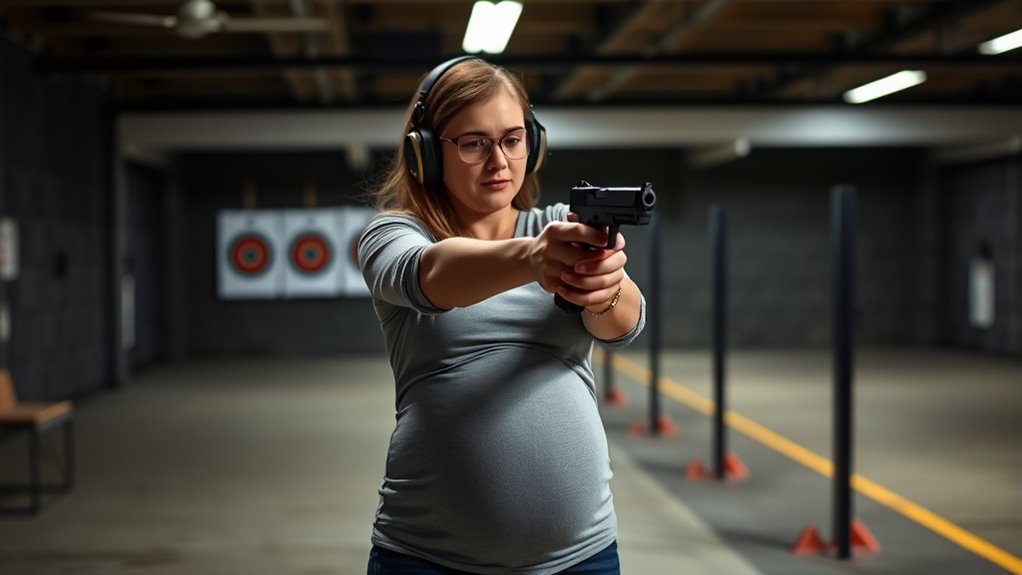
To guarantee your safety when shooting while pregnant, it’s essential to follow safety practices that minimize risk. First, always choose safe ammunition that produces minimal recoil and noise, reducing stress on your body and baby. Use proper shooting techniques, such as maintaining a stable stance and controlled breathing, to avoid unnecessary strain.
Make sure you shoot in a well-ventilated area or outdoors to prevent inhaling gunpowder fumes. Wear hearing protection and a comfortable, supportive seat or brace to stay steady. Avoid shooting when you’re feeling fatigued or unwell, as your body is more vulnerable.
Keep a safe distance from others and ensure everyone follows safety protocols. Never rush your shots or try complex maneuvers. Staying mindful of your body’s signals and practicing these safety measures helps protect both you and your developing baby during shooting sessions.
Are There Common Myths About Shooting During Pregnancy?
Many myths circulate about shooting during pregnancy, leading to unnecessary fear or misconceptions. These beliefs often exaggerate risks, causing women to avoid shooting altogether. It’s important to clarify what’s true and what’s not.
Common myths include: shooting will harm the baby’s development, the noise will cause miscarriage, gun recoil can cause abdominal injury, shooting will cause premature labor, and pregnant women shouldn’t be around firearms at all.
Common myths claim shooting harms the baby, causes miscarriage, or triggers premature labor—these are not supported by science.
These beliefs aren’t backed by scientific evidence. While it’s wise to check with your healthcare provider, most of these myths are just folklore that create unnecessary anxiety.
Understanding the facts can help you make informed decisions about shooting during pregnancy. Safety is important, but so is dispelling misconceptions that might make you avoid activities you enjoy or need for comfort.
Always seek professional advice rather than relying on myths or folklore beliefs.
How Can Shooting Stress Impact Your Pregnancy?
While myths about shooting during pregnancy often focus on physical risks, the emotional and mental effects of stress from shooting activities also deserve attention. Heightened stress levels can negatively influence your pregnancy by increasing cortisol, which may affect fetal development and prenatal wellness.
Shooting can be loud and intense, triggering anxiety or feelings of overwhelm, especially if you’re worried about safety. These stress responses can lead to physical symptoms like increased heart rate or tension, which aren’t ideal during pregnancy.
Managing stress effectively is vital; practicing stress management techniques such as deep breathing or mindfulness can help you stay calm. By prioritizing your mental health and staying relaxed during shooting activities, you support a healthier pregnancy.
What Safe Alternatives Can Keep You Engaged During Pregnancy?
Pregnancy is a time to prioritize your health and find activities that are safe and enjoyable. You can stay engaged and active without risking your well-being by exploring a variety of safe alternatives.
Try creative hobbies like painting or crafting, which keep your mind busy and help you relax. Prenatal fitness classes are great for maintaining your strength and stamina while being gentle on your body.
Outdoor activities like nature walks provide fresh air and gentle exercise, which can boost your mood. Artistic pursuits such as knitting or drawing promote mindfulness and help reduce stress.
Safe sports like swimming or yoga support your physical health without any harm. Additionally, taking educational classes or engaging in partner activities can deepen connections and keep your mind stimulated.
These options help you stay active, relaxed, and connected during pregnancy while ensuring your safety and well-being.
Frequently Asked Questions
Can Shooting Guns Cause Long-Term Health Issues for Pregnant Women?
Shooting guns while pregnant can pose risks to fetal development, especially due to noise exposure. Loud sounds may stress your body and potentially impact your baby’s health.
While occasional shooting might not cause long-term issues, consistent or intense noise exposure could increase risks like hearing problems or developmental delays. It’s best to avoid loud environments during pregnancy to protect your baby’s well-being and ensure healthy fetal development.
Are There Specific Types of Firearms Safer to Use During Pregnancy?
You should totally avoid all firearms during pregnancy, but if you must choose, pistols with excellent ergonomics are slightly safer because they’re easier to handle, reducing accidental slips.
Shotgun safety becomes trickier due to its recoil and size, making it less ideal. Remember, your safety and your baby’s come first, so consulting your doctor before handling any firearm is the smartest move you can make. Better safe than sorry!
How Does Shooting Impact the Risk of Preterm Labor?
Shooting guns increases your risk of preterm labor because of loud noise and physical stress. The noise can be overwhelming, and the physical jolt from firing a gun might trigger contractions.
This is especially true if you’ve had preterm labor before. The sudden vibrations or jolts could put you at higher risk. It’s best to avoid handling firearms during pregnancy to keep you and your baby safe.
If you really need to handle guns, talk to your healthcare provider first. Take extra precautions to reduce any potential risks and stay as safe as possible.
Are There Legal Restrictions on Pregnant Women Shooting Guns?
You need to be aware of legal implications and health guidelines before shooting guns while pregnant. Laws vary by state, and some places restrict firearm use for pregnant women due to safety concerns.
Even if there’s no strict legal restriction, health guidelines advise against shooting guns during pregnancy because of potential risks to both your health and the baby’s.
Always consult local laws and your healthcare provider before engaging in such activities.
What Are the Emotional or Psychological Effects of Shooting During Pregnancy?
Shooting guns during pregnancy can trigger a stress response that might affect fetal development. You may feel excited or anxious, but the loud noise and recoil could increase your stress levels.
Raised stress hormones can potentially influence your baby’s growth and development. It’s important to think about how your emotional state might impact your pregnancy.
Be sure to talk to your healthcare provider to understand the risks and make sure your pregnancy stays healthy.
Conclusion
While shooting can be exhilarating, pregnancy demands caution, turning thrill into mindfulness.
The contrast between adrenaline and safety highlights the importance of prioritizing health over hobbies.
You can find joy in alternative, less risky activities that keep you engaged without risking your well-being or your baby’s.
Adopt this delicate balance where excitement meets responsibility.
Remember, the greatest shot you can take is protecting your future, so it’s best to avoid shooting guns while pregnant.