10 Key Differences Between Soft Holster and Hard Holster
Finding the perfect holster can be overwhelming—there are so many options out there, and each one promises to be the best. Many people struggle with choosing between comfort, concealment, and quick access. You’re not alone; this decision can feel confusing, but understanding the differences can make it easier.
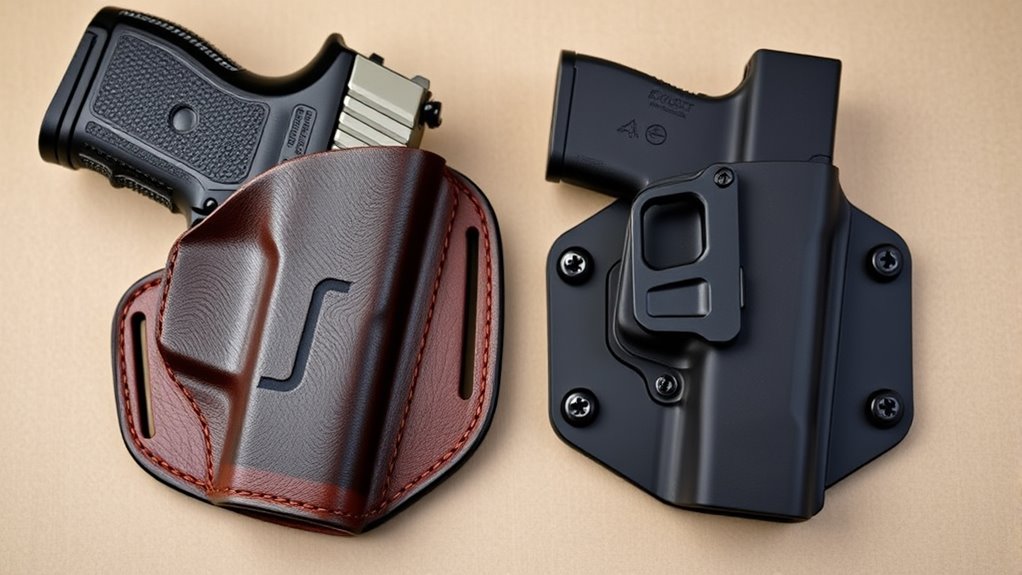
Soft holsters are made from flexible materials like neoprene or leather, offering better concealment and easier access, especially for quick draws.
Hard holsters use rigid materials like polymer or Kydex, providing superior protection and durability but being more noticeable and less comfortable.
Your choice depends on concealment, access speed, and environment. If you want to know more about these differences and which fits your needs best, keep exploring the details.
Key Takeaways
- Soft holsters offer better concealment and comfort because of their flexible, contouring materials. Hard holsters are bulkier but provide more protection.
- Soft holsters allow for faster draw access with open-top designs. Hard holsters might slow down your draw because of their rigidity.
- Hard holsters are more durable and impact-resistant. Soft holsters are more vulnerable to wear and environmental damage.
- Soft holsters tend to be more affordable and easier to maintain. Hard holsters usually last longer if you take good care of them.
- Soft holsters mold better to your body, making concealed carry easier. Hard holsters have a rigid shape, which can make hiding your gun more challenging.
Material and Construction Differences Between Soft and Hard Holsters
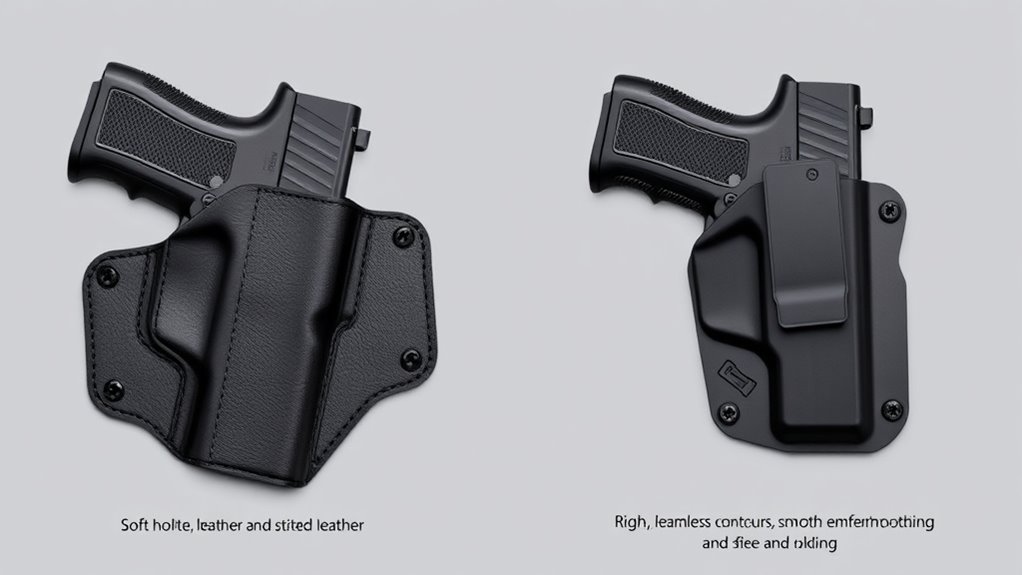
The materials and construction methods of soft and hard holsters greatly influence their performance and suitability for different users. Soft holsters typically use flexible materials like neoprene, nylon, or leather, which allow for easy bending and comfortable wear.
Their construction often involves stitching or bonding layers to guarantee durability while maintaining flexibility. Hard holsters, on the other hand, are made from rigid materials such as polymer, Kydex, or molded plastics.
These use precise molding or thermoforming techniques to create a snug fit for the firearm. The rigidity of hard holsters offers excellent retention and protection, but can be less comfortable for extended wear.
Conversely, soft holsters prioritize comfort and concealment thanks to their flexible materials and simpler construction methods. The choice between these types depends heavily on your needs for durability, ease of use, and comfort, all driven by their distinct material types and construction techniques.
Which Holster Offers Better Concealment and Discreet Carry?
With respect to concealment and discreet carry, soft holsters generally have the edge over hard holsters. Their flexible materials allow for better contouring to your body, making it easier to hide the firearm under everyday clothing.
Soft holsters also enable a wider range of concealment techniques, such as pocket carry or appendix carry. These methods are often more discreet and less noticeable.
Soft holsters support various concealment methods like pocket and appendix carry, making your firearm less noticeable and more accessible.
They’re less bulky and easier to hide beneath light or tight-fitting clothes, reducing the chances of printing or drawing unwanted attention. Hard holsters tend to be bulkier and more rigid, which can make concealment more challenging.
This is especially true with lighter clothing. If you prioritize discreet carry options, soft holsters are usually more adaptable and comfortable for everyday concealment.
They allow you to fine-tune your concealment techniques, ensuring your firearm remains hidden without sacrificing comfort or accessibility.
How Quickly Can You Access and Draw From Soft vs. Hard Holsters?
Soft holsters usually let you get to your firearm faster because they’re easier to handle and don’t take much effort to draw from. They’re more flexible, so you can quickly access your weapon when you need it. On the other hand, hard holsters tend to slow things down a bit because of their rigid design and retention features. These can add some extra steps or resistance when you’re trying to draw quickly, especially in stressful situations. Ultimately, how fast you can access your gun really depends on the holster’s retention system and how smoothly you can draw it in a pinch.
Draw Speed Differences
In terms of draw speed, soft holsters usually let you access your firearm faster because their flexible, open-top design allows for a smooth and quick draw. This makes them great for practicing draw techniques and speed drills, helping you get faster.
Soft holsters often require less effort to draw from, which helps reduce hesitation during quick access situations. On the other hand, hard holsters can slow you down because of their rigid construction and retention features.
To maximize your speed, focus on smooth, controlled draw techniques, and practice regular speed drills. Make sure your holster is well-maintained and fits your firearm snugly.
This approach ensures you’re prepared for rapid deployment, no matter what type of holster you use.
Accessibility Under Stress
When seconds matter, how quickly you can access and draw your firearm becomes a key factor in choosing a holster. Under stress, soft holsters often allow faster draws because they’re more flexible and easier to manipulate, helping you respond quickly in emergencies.
Their open design minimizes resistance, supporting better stress management during high-pressure situations. Hard holsters, while durable and secure, can slow your response because their rigid structure may require more effort to draw your weapon smoothly.
In emergency response scenarios, this difference can be critical. You need a holster that promotes quick, confident access without sacrificing safety. Ultimately, your choice depends on how stress impacts your draw speed and whether you prioritize rapid access or secure retention in critical moments.
Holster Retention Factors
The ease and speed with which you can access and draw your firearm largely depend on the retention features of your holster. Soft and hard holsters differ markedly in their retention mechanisms, impacting holster security and draw speed.
Soft holsters typically use flexible materials and simple retention, offering quicker access but less security. Hard holsters incorporate locking mechanisms and active retention systems for better security but may slow your draw.
Consider these factors:
- Ease of draw with minimal resistance
- Speed of re-holstering
- Effectiveness of retention mechanisms
- Level of holster security needed in your environment
Choosing the right holster depends on balancing quick access with adequate retention, tailored to your specific needs and threat level.
Safety Factors to Consider When Choosing a Holster
Choosing a holster requires careful attention to safety, as the wrong one can increase the risk of accidental discharges or hinder quick access in emergencies. You should prioritize safety standards that guarantee secure retention mechanisms, preventing the firearm from falling out or unintentionally discharging.
Proper holster positioning is vital for accessibility and safe handling, especially during emergency scenarios. It’s important to practice user training and develop good safety protocols to minimize risks.
Proper holster placement and training are essential for safe, quick access during emergencies.
Maintaining situational awareness while drawing or reholstering helps prevent accidents. Consider how the holster’s design influences quick, safe access without compromising safety.
Always evaluate if the holster supports safe retention and easy reholstering. Remember, an effective holster improves safety by reducing accidental discharges and enabling rapid response in critical moments.
Making a well-informed choice based on safety factors guarantees both your protection and responsible firearm handling.
Durability: Which Holster Lasts Longer Under Heavy Use?
When you’re picking out a holster for heavy use, it’s really important to think about what material it’s made of and how tough it is overall. You want something that can handle the rough stuff without falling apart. Hard holsters tend to hold up better against impacts and can stand up to environmental elements like moisture and dirt pretty well.
On the other hand, soft holsters might not be as durable when the going gets tough. They can wear out faster if they’re constantly exposed to harsh conditions. So, if durability is your main concern, especially for tough, everyday use, a hard holster is usually the way to go.
Material Strength and Quality
Material strength and quality are crucial in determining how long a holster can handle heavy use. Higher-quality materials tend to be more durable and resilient.
For soft holsters, flexibility and moisture absorption affect comfort and how long they last. Abrasion resistance is important to handle daily wear and tear.
Hard holsters usually use tough materials that offer better thermal insulation and abrasion resistance, making them great for rugged environments.
Weight matters too—lighter options help reduce fatigue. Texture differences can impact grip and how easily the holster conceals your gear.
Customization options can also improve how well the holster fits and functions for you. Environmental factors are important—some materials perform better in extreme conditions.
Resistance to Wear and Tear
Durability under heavy use mainly depends on how well a holster resists wear and tear over time. Soft holsters usually have better wear resistance because their flexible materials can absorb impacts and reduce friction.
Hard holsters tend to show signs of deterioration faster when subjected to constant stress or rough handling. In a durability comparison, soft holsters often stay intact longer under frequent use because they can flex without cracking or breaking.
Hard holsters may crack or deform more easily with prolonged heavy use. Your choice should consider how much abuse the holster will endure, as wear resistance directly affects its longevity and performance in demanding situations.
Impact of Environmental Factors
Environmental factors like moisture, temperature, and exposure to sunlight can really affect how long a holster lasts with heavy use. Climate can cause materials to break down faster, especially if the holster isn’t moisture resistant.
Hard holsters made from rigid materials usually handle extreme conditions better, while soft holsters might soften or warp over time. To get the most durability, it’s important to think about these factors.
Moisture resistance is crucial if you’re in wet or humid environments. Temperature changes can cause materials to crack or warp, and sunlight exposure can fade or weaken the holster.
Choosing a holster made from high-quality materials will help it last longer under tough conditions. Picking the right holster for your environment will keep it functional and durable when you need it most.
Comfort and Fit: Soft vs. Hard Holsters for Daily Carry
Have you ever wondered how your holster’s design impacts your daily comfort? Soft holsters often contour more easily to your body, providing better fit adjustments that improve comfort levels during long wear. They tend to be flexible, which reduces pressure points and allows for a snug yet comfortable fit.
Hard holsters, on the other hand, offer a more rigid structure, which can feel bulkier and less forgiving. While they might provide a secure fit initially, they often require breaking in to achieve peak comfort. The rigidity can cause discomfort with extended use, especially if they don’t match your body shape perfectly.
Ultimately, your comfort depends on how well the holster fits your body and your daily activities. Soft holsters excel in offering a customizable fit, making them ideal for all-day carry. Hard holsters, while durable, may need more adjustments to match your comfort needs.
How to Maintain and Care for Your Soft or Hard Holster
Proper maintenance of your holster ensures it stays functional, comfortable, and secure over time. Make it a habit to regularly check your holster for signs of wear, tears, or any damage.
Use cleaning techniques suited to your holster type. Soft holsters might just need gentle wiping, while hard holsters could require a bit more thorough cleaning with mild soap and water. Always let it dry completely before storing.
Proper storage is key. Keep your holster in a cool, dry place away from direct sunlight and extreme temperatures to avoid warping or material breakdown.
To keep your holster in good shape, try these tips: clean with a soft cloth or brush to remove dirt and debris, avoid harsh chemicals that can damage the material, and store it in a breathable bag or container.
It’s also a good idea to regularly check for loose or worn parts and replace them if needed. Following these simple routines will help extend your holster’s lifespan and keep it performing reliably.
Cost and Value: Which Holster Fits Your Budget?
Are you wondering which holster offers the best value for your budget? When comparing soft and hard holsters, your budget considerations play a big role.
Soft holsters often cost less upfront, making them appealing if you’re watching expenses. They’re usually more affordable and easier to replace if damaged, offering good value for casual use or beginners.
Hard holsters tend to be pricier but provide better durability and retention. A value assessment involves weighing these costs against how often and how intensively you’ll use the holster.
If you need something reliable for daily carry, investing in a high-quality hard holster might save you money in the long run. Conversely, if your budget is tight and casual use suffices, a soft holster can provide adequate protection without breaking the bank.
Ultimately, choosing based on your budget ensures you get the best fit for your needs and financial situation.
Best Holster Types for Different Activities and Environments
Choosing the right holster depends a lot on what activity you’re doing and where you’ll be carrying your firearm. For tactical activities and law enforcement duties, a sturdy, retention-focused hard holster is best for secure retention and quick access.
In outdoor environments, look for a durable holster built for rugged terrain. It’s perfect for recreational shooting or hiking, offering the toughness you need.
Urban concealment calls for discreet, lightweight options that blend seamlessly with your attire. These are great for everyday carry, ensuring your firearm stays hidden yet accessible.
For competitive shooting, a fast-draw holster with adjustable retention helps you switch targets quickly. It’s all about speed and ease of access.
Self-defense scenarios often require a versatile holster that balances quick access with concealment. You want something reliable and comfortable for everyday use.
How to Choose the Right Holster for Your Carrying Needs
Deciding on the right holster depends on understanding your specific carrying needs and daily routines. To make the best choice, consider comfort, accessibility, and concealment.
Think about where you’ll carry your firearm—inside the waistband, outside, or appendix—and how often you’ll need to draw quickly. Personal preference matters too; some prefer soft holsters for lightweight, everyday use, while others go for hard holsters for durability and retention.
Assess your activity level and environment. If you’re active or in hot weather, breathable materials might be best. Also, think about your clothing style and whether you need a discreet option.
Ultimately, the right holster fits your lifestyle, ensuring safety, comfort, and quick access when needed. Take time to test different types and choose what feels most natural and secure for your daily carry.
Frequently Asked Questions
Are Soft Holsters More Prone to Wear and Tear Than Hard Holsters?
Yes, soft holsters are generally more prone to wear and tear than hard holsters. Their durability compared to hard holsters shows that soft materials, often fabric or leather, can degrade faster with frequent use, especially if made from lower-quality materials.
Hard holsters, usually made from rigid plastics or polymers, resist damage better over time. If you want longevity, investing in a high-quality material is essential, regardless of the holster type.
Can Hard Holsters Accommodate Different Firearm Models Easily?
Hard holsters generally don’t accommodate different firearm models easily because of their fixed, form-fitting designs. They’re usually made for specific firearm models, which limits their interchangeability.
If you want versatility, soft holsters with interchangeable parts might be a better choice. They can adapt more easily to different firearm sizes and shapes.
For firearm compatibility, hard holsters excel at providing a secure fit for one particular model. But they’re less flexible if you need to carry different guns.
Do Soft Holsters Provide Better Retention Than Hard Holsters?
Soft holsters generally offer better retention than hard holsters because of their flexible material, which allows them to conform snugly to your firearm. Their retention mechanisms, like adjustable straps or friction fit, help keep your gun secure during movement.
In contrast, hard holsters rely on rigid shells that may not adapt as well to different models. They might provide less personalized retention but tend to be more durable.
Are Hard Holsters Suitable for Outdoor or Rugged Use?
Think of a hard holster as your rugged shield in the wilderness. It’s built tough for outdoor adventures and can handle rough conditions.
They excel in durability with sturdy shells that resist the elements and rough handling. While they might be less comfortable to carry, they make up for it with strength.
Hard holsters are ideal for rugged use, offering secure retention during strenuous activities. If you’re heading outdoors, they provide reliable protection.
This way, your firearm stays safe even amid the chaos of nature.
How Do Soft and Hard Holsters Affect Firearm Temperature Regulation?
Soft holsters typically allow better firearm insulation, helping regulate temperature by providing some breathability. This can prevent overheating or moisture buildup.
Hard holsters, on the other hand, tend to trap heat and moisture, which might cause the firearm to heat up or cool down more quickly. Your choice impacts moisture retention and temperature regulation.
Conclusion
Choosing the right holster depends on your needs, preferences, and budget. Consider factors like material, concealment, access, safety, durability, and cost to find the best fit for you.
Think about how often you’ll use it and the environment you’ll carry in. The right holster should feel comfortable and suit your lifestyle, whether you prefer a soft or hard holster.
Remember, the perfect fit offers peace of mind and practicality. Prioritize protection, performance, and personal preferences when selecting a soft or hard holster to match your shooting scenario and security standards.