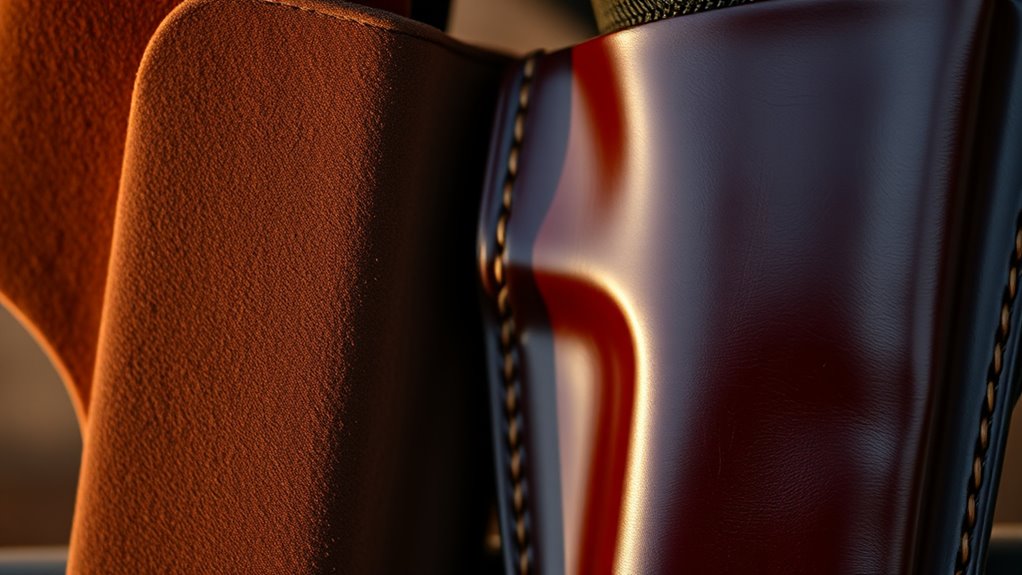
5 Key Differences: Suede Vs Leather Holsters
Finding the perfect holster can be tricky, especially with so many options out there. Many people struggle with choosing between materials that balance comfort, durability, and style.
You’re not alone in wanting a holster that fits your lifestyle and lasts over time.
When choosing between suede and leather holsters, you’ll notice that suede feels softer and molds more comfortably, while leather offers greater durability and a polished look.
Suede is more casual but stains easily and needs gentle care, whereas leather resists wear and develops a unique patina over time.
Suede’s breathability makes it great for all-day comfort, but leather’s sturdiness suits long-term use.
Keep exploring to uncover which material fits your lifestyle best.
Key Takeaways
- Leather holsters give a polished, durable look, while suede has a casual, rugged vibe.
- Leather resists moisture and stains better, but suede is more vulnerable to water and dirt.
- Leather molds to your body over time, making for a secure fit, whereas suede offers immediate comfort and flexibility.
- Leather needs regular conditioning to stay in good shape, while suede just needs gentle brushing and protective sprays.
- Leather tends to last longer and develops a nice patina, but suede can wear out and fade faster with use.
Suede vs. Leather: Material Differences
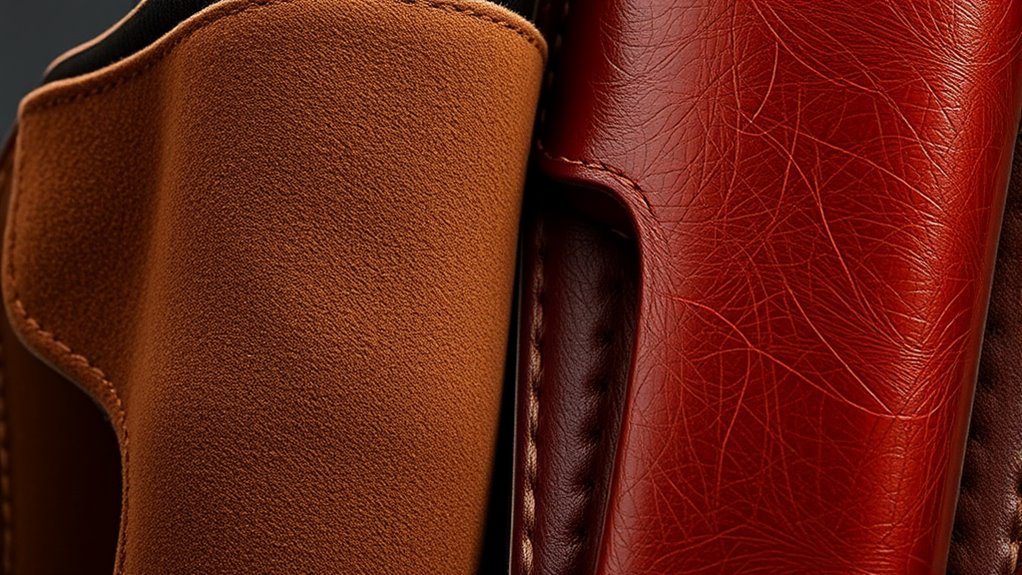
When comparing suede and leather holsters, understanding their material differences is key. The texture comparison shows that suede has a soft, fuzzy surface, giving it a plush feel, while leather is smooth and firm, gaining character over time.
Suede’s velvety surface is more delicate and can stain easily, whereas leather tends to resist wear better and is easier to clean. In terms of cost, suede holsters are usually cheaper upfront because the processing is simpler.
However, maintaining suede can add up since it needs special cleaning products and careful handling. Leather holsters often cost more initially but may save you money in the long run thanks to their durability and low maintenance.
Ultimately, your choice depends on whether you prefer the softer touch and lower starting cost of suede or the durability and classic look of leather.
Durability and Lifespan: Suede vs. Leather Holsters
While suede may feel luxurious and soft, it generally doesn’t hold up as well over time compared to leather. Suede’s lower wear resistance means it can scuff and stain more easily, especially with frequent use. Its porous surface makes it more susceptible to moisture absorption, which can lead to quicker deterioration and mold growth if not cared for properly.
Leather, on the other hand, offers better durability and a longer lifespan due to its tighter grain and natural oils, which protect against daily wear and environmental factors. Properly maintained leather holsters resist moisture better, preventing damage and extending usability.
Over time, leather tends to develop a patina that improves its appearance, while suede can become worn and faded faster. If longevity and resilience are your priorities, leather holsters generally outperform suede, making them a more reliable choice for everyday use.
Comfort and Fit: Which Holster Material Is Better?
Have you ever wondered which holster material offers a better fit and greater comfort for daily carry? Suede and leather differ significantly in comfort and fit, mainly because of breathability and flexibility.
Suede, being softer and more textured, tends to mold more comfortably to your body over time, giving you an almost custom fit. Its breathability allows air to circulate better, which helps reduce sweat buildup and discomfort during long wear.
Leather, on the other hand, is generally stiffer at first but offers excellent durability. With use, it gradually conforms to your body shape. While leather’s flexibility improves over time, it might feel less adaptable initially.
Overall, suede provides immediate comfort and better breathability, making it great for all-day wear. Leather’s rigidity can be a drawback at first but offers a secure fit once broken in.
Choosing between them really depends on your comfort preferences and how quickly you want the holster to conform to your body.
Caring for Your Holster: Suede vs. Leather Maintenance
Caring for your holster involves understanding the specific maintenance needs of suede and leather to keep them in top condition. Suede requires gentle cleaning techniques, like using a soft brush to remove dirt and stains, and avoiding water, which can damage its delicate fibers. For moisture resistance, consider applying a suede protector spray to help repel water and maintain its appearance.
Leather holsters, on the other hand, benefit from regular wiping with a damp cloth to remove dirt. Follow up with a leather conditioner to keep the material supple and prevent cracking. Leather naturally offers better moisture resistance, but applying a protective wax or oil can boost this further.
Both materials should be stored in a cool, dry place away from direct sunlight. Regular maintenance not only prolongs the lifespan of your holster but also guarantees it continues to look good and perform well over time.
Which Holster Material Suits Your Carrying Needs?
Choosing the right holster material depends on your daily activities and how you plan to carry your firearm. Your style and weight preferences are also important factors in making the best choice.
Selecting your holster material depends on your daily routine, style, and carrying preferences for optimal comfort and durability.
If you want a sleek, professional look, leather holsters give you a classic, polished appearance. For a more casual or rugged vibe, suede offers a softer, textured feel.
Think about your comfort and how much weight you’re willing to carry. Lighter materials like suede are easier on your body for all-day wear.
Durability matters too. Leather holsters tend to last longer and resist wear better over time.
If you need concealment, thinner materials can hide better under your clothing.
Environmental exposure is another consideration. Leather might need more upkeep, while suede is more sensitive to moisture.
Matching your style with practicality helps ensure you pick a holster that fits your lifestyle and carrying needs perfectly.
Frequently Asked Questions
Are Suede and Leather Holsters Suitable for Concealed Carry?
Suede and leather holsters can work for concealed carry, but how comfortable and discreet they are depends on the material and design.
Suede is softer and more flexible, which can make it more comfortable for long wear and help with concealment.
Leather holsters are durable and tend to fit snugly, but they might be a bit stiff when new.
Pick a holster that molds well to your body and feels comfortable against your skin to ensure good concealment and easy carry.
How Do Environmental Factors Affect Suede and Leather Holster Longevity?
Environmental factors greatly impact your suede and leather holster’s longevity. Moisture resistance is essential; exposure to rain or humidity can cause suede to stain or deteriorate faster. Leather may develop cracks if not properly conditioned.
Temperature effects also matter. Extreme heat can dry out and crack leather, while cold weather can make suede stiff. To keep your holster in good shape, keep it dry, conditioned, and stored in moderate temperatures.
Can Suede Holsters Be Waterproofed or Weatherproofed Effectively?
Yes, you can waterproof suede holsters using specific waterproofing techniques. Apply a suede protector spray designed for weatherproofing, and reapply regularly for the best results.
Remember, maintenance tips like avoiding excessive moisture and storing in a dry place can extend your holster’s lifespan. Keep in mind, waterproofing may slightly change the texture, so it’s a good idea to test on a small area first.
Proper care helps ensure your suede holster stays protected and durable over time.
Are There Specific Firearms Better Suited for Suede or Leather Holsters?
Certain firearms, like compact or lightweight models, are better suited for suede holsters because the soft material offers gentle protection and flexibility. Leather holsters, on the other hand, excel with larger or heavier firearms due to their durability and material advantages.
When choosing a holster, make sure it provides a secure fit and easy draw. The material should support your firearm’s size, weight, and how you plan to use it effectively.
How Do Price Differences Impact Durability and Quality of Holsters?
Price differences greatly impact the durability and quality of holsters because higher cost often reflects better material quality and craftsmanship.
A more expensive holster typically uses premium leather or suede, offering increased longevity and better protection for your firearm.
On the other hand, cheaper options may compromise material quality, leading to quicker wear and less reliable performance.
When comparing costs, think about the material’s durability to make sure you’re getting the best value for your investment.
Conclusion
Choosing between suede and leather holsters is like picking the right shoe for a journey—you want comfort, durability, and style. I once wore a suede holster on a rugged hike, only to find it wasn’t up to the task. It’s like trying to run a marathon in flip-flops.
Consider your needs carefully, and you’ll find the perfect match. Whether it’s for daily carry or tough outdoor use, the right holster keeps your firearm secure and you comfortable. When it comes to holsters, understanding the differences between suede and leather is key to making the best choice.