What Makes .380 Ammo Different From 9mm Ammo?
Are you feeling overwhelmed trying to choose between .380 and 9mm ammo? You’re not alone—many people struggle with understanding which round suits their needs best.
The right choice can make a big difference in handling, power, and capacity.
The main differences between .380 and 9mm ammo lie in size, power, and capacity. The .380 is smaller, with less recoil, making it easier to handle and ideal for concealment, but it offers less stopping power.
The 9mm is larger, more powerful, with higher capacity magazines, and better for self-defense.
If you want to understand how these factors impact performance and choice, there’s more to investigate ahead.
Key Takeaways
- The .380 has a smaller case size and lower recoil, making it easier to handle but less powerful than the 9mm.
- 9mm ammunition generally offers higher muzzle energy and stopping power compared to .380.
- 9mm magazines typically hold more rounds, usually 15 to 17, whereas .380 magazines hold about 6 to 8 rounds.
- The .380 is more compact and better suited for concealed carry, while the 9mm provides greater firepower.
- 9mm ammo is usually less expensive and more widely available than .380 rounds.
What Are the Basic Differences Between .380 and 9mm Ammo?
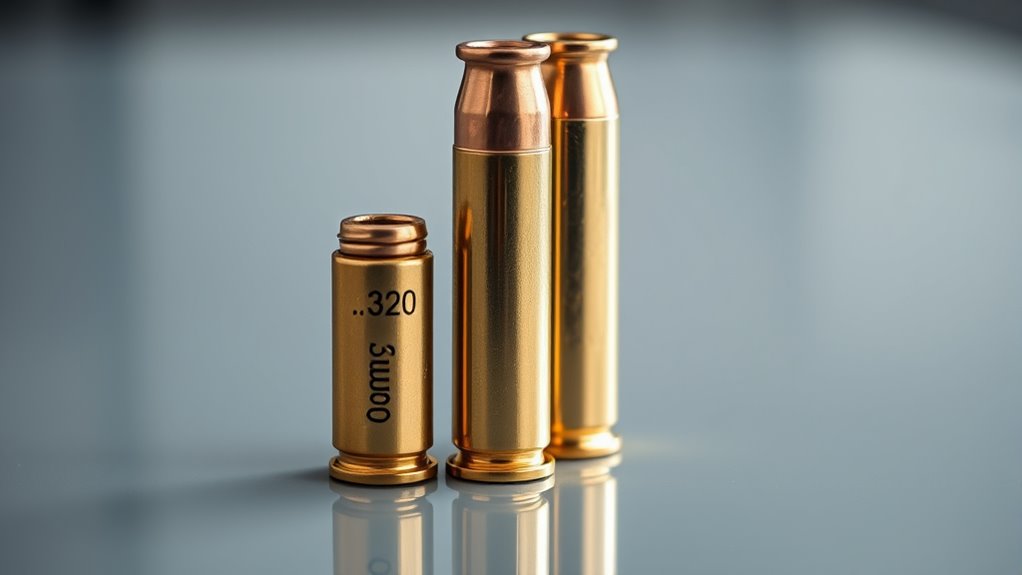
While both .380 and 9mm ammo are popular choices for concealed carry and self-defense, they differ quite a bit in size and performance. The history of these calibers shows that the .380 ACP was created in the early 1900s for small, easily concealed pistols.
Both .380 and 9mm ammo are popular for self-defense, but they differ significantly in size and performance.
In contrast, the 9mm Luger was introduced in 1902 and became popular because it offers a good balance of power and manageable recoil. When it comes to ammunition types, the .380 usually uses smaller, lighter rounds, which means less stopping power but easier to handle.
The 9mm, on the other hand, has a wider variety of ammo options, including high-velocity and hollow points. This makes it more versatile depending on your defensive needs. These differences come from their design goals: the .380 is built for concealability, while the 9mm focuses on power, capacity, and recoil control.
Knowing this background helps you understand why different shooters prefer one over the other based on what they prioritize.
How Do Size and Dimensions of .380 and 9mm Compare?
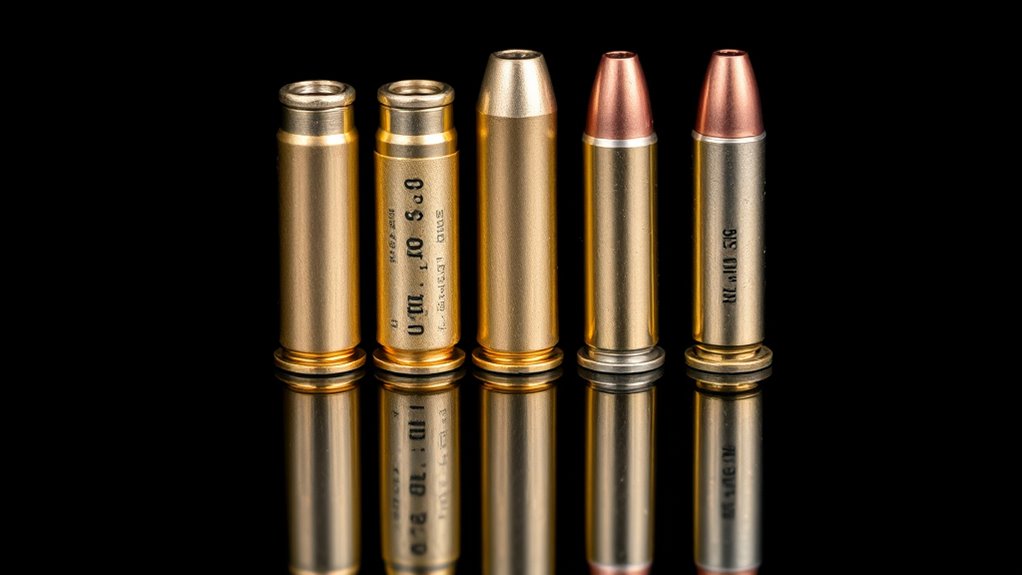
The size and dimensions of .380 and 9mm ammunition are important for their performance and how they handle. The main differences are in case size and bullet diameter, which affect how each fits in a firearm.
The 9mm has a larger case and bullet, giving it more powder capacity and energy. The .380, on the other hand, has smaller case dimensions, making it more compact and easier to conceal.
| Feature | .380 Ammo | 9mm Ammo |
|---|---|---|
| Case dimensions | Shorter and narrower | Slightly longer and wider |
| Bullet diameter | About 9mm (.355 inch) | About 9mm (.355 inch) |
Although both calibers have similar bullet diameters, the case size impacts recoil, magazine capacity, and firearm size. This comparison shows how size influences firearm handling and ammunition performance.
Which Caliber Is More Powerful: .380 or 9mm?
When comparing the power of .380 and 9mm calibers, the 9mm generally delivers more energy and stopping power because of its larger case capacity and higher velocity.
In this caliber comparison, 9mm rounds tend to have greater muzzle energy, making them more effective at incapacitating targets quickly.
The performance analysis shows that 9mm bullets usually travel faster and carry more kinetic energy, which means increased stopping power.
While .380 rounds are known for manageable recoil and concealability, they usually produce less penetration and terminal performance.
If your goal is maximum firepower, the 9mm stands out because of its superior ballistic performance.
But if ease of handling and discreet carry are priorities, the .380 might be more suitable.
Ultimately, your choice depends on your specific needs, but when it comes to raw power, the 9mm outperforms the .380 in most aspects.
How Do Recoil and Handling Differ for .380 and 9mm?
Have you noticed that shooting a .380 feels noticeably easier on your hand than a 9mm? That’s because the recoil management and handling comfort are quite different between the two. Usually, a .380 produces less recoil, making it more comfortable for beginners or during longer shooting sessions.
Here’s what you can expect:
- Recoil Management: The lighter recoil of the .380 allows for quicker follow-up shots and better control, especially for smaller hands.
- Handling Comfort: The reduced recoil makes the gun feel less jarring, which can boost your confidence and accuracy.
- Shooting Experience: With less muzzle rise, it’s easier to keep on target, especially during rapid fire.
What Are the Capacity and Magazine Differences?
You’ll probably notice that 9mm magazines usually hold more rounds than .380s. This means you get a higher capacity, which can be pretty handy depending on what you’re using the gun for.
The size of the ammunition itself also makes a difference—bigger rounds might take a bit longer to reload and can affect which magazines are compatible with your firearm.
Getting a handle on these differences can really help you pick the right gun and magazine setup that suits your needs and shooting style.
Magazine Capacity Variations
The magazine capacities for .380 ammo and 9mm ammo differ quite a bit, affecting how many rounds you can carry in one magazine. This mainly depends on the magazine design, which varies between calibers.
Typically, a 9mm magazine holds about 15 to 17 rounds, while a .380 magazine usually carries 6 to 8 rounds. These differences are influenced by a few key factors.
First, size constraints play a role. Smaller .380 magazines are limited by the cartridge’s dimensions. Second, magazine design matters—9mm magazines are often taller and more streamlined to maximize capacity.
Finally, the intended use influences capacity choices. Compact pistols designed for concealed carry tend to favor smaller magazines. Knowing these variations helps you pick the right firearm for your needs.
Ammunition Size Differences
While magazine capacity varies between .380 and 9mm firearms, the size of their cartridges also plays a big role in these differences. The bullet characteristics and cartridge design directly impact how many rounds you can fit in a magazine.
Typically, 9mm cartridges are longer and wider, which allows for more bullets to be stacked in the same space. On the other hand, .380 ammo features smaller, more compact cartridges, meaning fewer rounds per magazine.
This difference affects magazine capacity, with 9mm firearms usually offering higher capacity because of larger magazine sizes. The cartridge design also influences recoil, overall firearm size, and magazine capacity.
In short, 9mm tends to be a popular choice for those wanting higher capacity, while .380 offers a more compact, lightweight option.
Reloading and Compatibility
Because of their different cartridge sizes, .380 and 9mm magazines often aren’t interchangeable, and their reloading processes differ. It’s important to follow specific techniques to avoid compatibility issues.
First, make sure you use the correct magazine for each caliber. They’re designed differently and won’t fit properly if you mix them up.
Next, use proper sizing and seating techniques tailored to each cartridge. This helps prevent jams or malfunctions during reloading.
Finally, keep in mind that .380 magazines usually hold fewer rounds than 9mm ones. This affects your reload strategy and magazine management.
Which Firearms Shoot .380 and 9mm?
Many firearms are designed to shoot either .380 or 9mm rounds, and you’ll find a variety of options like compact pistols, subcompact guns, and full-size models. Each of these guns comes in different sizes and capacities, so some are better for concealment than others.
When you’re choosing between them, think about what works best for you—whether that’s easy carry for everyday use or more firepower for protection. It all depends on your personal needs and preferences!
Common Firearm Types
Firearms chambered for .380 ACP and 9mm Luger are among the most popular handguns on the market, and each suits different needs and preferences. These calibers are found in a variety of firearm types, making them very versatile choices.
Compact Pistols are perfect for concealed carry. They focus on good ergonomics and recoil control, making them easy to handle for everyday carry.
Subcompact Pistols are smaller and lightweight. They’re great for discreet use but still require good recoil control to shoot comfortably.
Full-Size Pistols are designed for stability and accuracy. They manage recoil better and are ideal for extended shooting sessions.
Knowing which firearm types shoot these calibers helps you pick the right weapon for your comfort and shooting style.
Size and Capacity Differences
Size and capacity of firearms chambered in .380 and 9mm vary a lot, affecting what they’re best for. Usually, .380 guns are smaller, making them great for concealed carry. On the other hand, 9mm pistols tend to be larger but can hold more rounds.
When it comes to capacity, 9mm magazines usually carry about 15 to 17 rounds. In comparison, .380 magazines typically hold 6 to 8 rounds. This means 9mm offers more firepower and means fewer reloads during shooting.
Your choice depends on what you need—something small and easy to hide or a bigger gun with more rounds. Knowing these size and capacity differences helps you pick the right firearm for your needs.
Suitable for Concealed Carry
Choosing the right firearm for concealed carry often depends on its size and how easily it can be hidden. Both .380 and 9mm firearms come in different sizes, so your choice depends on what feels comfortable and fits your personal style.
For example, compact .380 pistols like the Walther PPK are lightweight and easy to carry, making them ideal if you want minimal bulk.
Subcompact 9mm options, such as the Glock 43, strike a good balance between firepower and concealability.
Larger 9mm models, like the Glock 19, might sacrifice some concealment comfort but offer more capacity and versatility.
Ultimately, your personal preference and comfort will guide you to the firearm that feels right for discreet, everyday carry.
Is .380 or 9mm Ammo More Budget-Friendly and Available?
When comparing the affordability and availability of .380 and 9mm ammunition, these factors can really influence your choice.
In terms of cost, 9mm rounds usually cost less per shot because they’re produced in higher volumes and are in more demand. So, if you shoot often, 9mm is generally more budget-friendly.
Availability also favors 9mm ammo. It’s the most popular caliber for handguns, which means there’s a wider selection and easier access at most stores and online.
On the other hand, .380 ammo tends to be a bit more expensive and less easy to find. That’s mainly because it’s used in smaller, less common pistols.
If saving money and having a steady supply are your main concerns, 9mm clearly has the edge. Just keep in mind that local supply and market changes can affect availability, so it’s good to check your local options regularly.
Which Caliber Is Better for Personal Defense?
Is one caliber truly better for personal defense? It really depends on your specific self-defense situations and personal preferences. Both .380 and 9mm have their strengths, but the right choice depends on what you’re comfortable with and what you need.
When it comes to stopping power, 9mm generally packs more energy, which can increase the chances of stopping an attacker quickly. If power and longer-range effectiveness are your priorities, 9mm might be the better choice.
On the other hand, .380 usually has less recoil, making it easier to shoot accurately, especially under stress. If ease of control and comfort matter more to you, then .380 could be the way to go.
.380 offers less recoil and easier accuracy, making it ideal for comfortable, controlled shooting under stress.
Concealability is also worth considering. Both calibers are compact, but .380 guns are often smaller, which might make them better for discreet carry.
Ultimately, your decision should match your confidence, training, and how you plan to use your firearm. If you want more power, go with 9mm. If minimal recoil and concealment are more important, then .380 might suit you better.
Your comfort and familiarity with the firearm are key factors in personal defense scenarios.
Pros and Cons of Using .380 vs. 9mm in Different Shooting Scenarios
When you’re trying to decide between .380 and 9mm, you’ll quickly see that they differ in power and recoil. This means one might be easier to handle depending on your shooting experience, and it can really impact your control and accuracy.
These calibers also shine in different situations. For example, .380 might be more convenient for close-quarters, quick-draw scenarios because of its smaller size and lighter recoil. On the other hand, 9mm tends to pack a bit more punch and is often preferred for longer-range shooting or situations where stopping power is a top priority.
Knowing these pros and cons can really help you pick the right caliber for your specific needs, whether you’re carrying for self-defense, target practice, or other shooting activities.
Power and Recoil Differences
The power and recoil differences between .380 ACP and 9mm ammunition greatly impact their suitability for different shooting scenarios.
The power comparison shows that 9mm rounds usually deliver more energy, making them more effective for stopping power.
Recoil effects are also notable: .380 ACP offers lighter recoil, which can help with faster follow-up shots and easier handling, especially for beginners.
Consider these points:
- Recoil management: .380’s lighter recoil reduces fatigue and improves accuracy for new shooters.
- Power level: 9mm provides more stopping power, which is useful in self-defense situations.
- Shooting comfort: Less recoil in .380 allows for quicker shots, but with slightly less punch.
Your choice depends on balancing recoil effects with the power you want for your shooting needs.
Versatility in Situations
Choosing between .380 and 9mm depends a lot on the situations you might face. For self-defense, 9mm offers more versatility with higher capacity and stopping power, making it good for different environments. The .380, on the other hand, is better for concealed carry because it’s smaller and lighter.
When it comes to ammo availability, 9mm is more common and easier to find, which is helpful in emergencies. Here’s a quick comparison:
| Feature | .380 | 9mm |
|---|---|---|
| Self-defense scenarios | Great for concealed carry | Better for multiple threats |
| Ammunition availability | Less common, harder to find | Widely available, easy to get |
| Situational versatility | Good for discreet use | Suitable for many situations |
Your choice should match the scenarios you expect and the ammo you can access easily.
Factors to Consider When Choosing Between .380 and 9mm Ammo
Deciding between .380 and 9mm ammo depends on several key factors that can impact your shooting experience and effectiveness. First, consider the ballistics comparison: 9mm generally offers better velocity and stopping power, making it more effective for self-defense.
Second, think about ammunition types—some firearms are only compatible with specific calibers, so make sure to check your gun’s specifications.
Third, evaluate your comfort and skill level; lighter recoil from .380 can be easier for beginners, while experienced shooters might prefer the increased power of 9mm.
Moreover, consider your intended use—whether for concealed carry, home defense, or target practice—as this influences your choice.
Ultimately, your decision should balance firepower, ease of use, and firearm compatibility to ensure you pick the right ammunition for your needs.
Frequently Asked Questions
How Does the Accuracy of .380 Compare to 9mm?
You’ll find that 9mm ammo generally offers better accuracy than .380, especially over longer distances. This is partly because 9mm provides less recoil, making recoil management easier and allowing you to maintain shooting comfort.
As a result, you can shoot more precisely and consistently with 9mm, especially for beginners or quick follow-up shots. The reduced recoil helps you stay on target, improving overall accuracy compared to .380.
What Are the Long-Term Storage Considerations for .380 and 9mm Ammo?
When storing your .380 and 9mm ammo, focus on keeping conditions ideal to extend their lifespan. Store them in a cool, dry, and stable environment, avoiding extreme temperatures and humidity.
Use airtight containers to prevent moisture from getting in, which can damage the ammo over time. Proper storage helps keep the primer and powder in good shape, so your ammo performs reliably when you need it.
Make sure to check your ammo regularly to confirm it’s still in good condition and hasn’t been affected by any environmental factors.
How Do Different Bullet Types Impact Performance in Each Caliber?
Different bullet types influence performance quite a bit in each caliber, affecting things like recoil control and terminal effectiveness.
For example, hollow points expand upon impact, which gives better stopping power. Full metal jackets tend to penetrate deeper, making them useful for different situations.
In smaller calibers like .380, lighter and specialized bullet designs can help manage recoil better, making shooting more comfortable.
Understanding how bullet design works helps you pick the right round for your needs, so you get good performance and manageable recoil.
Are There Legal Restrictions on Owning .380 Versus 9mm Firearms?
You’ll find that legal requirements and ownership regulations for .380 and 9mm firearms vary by location. In some areas, restrictions might be stricter for certain calibers, requiring permits or background checks.
It’s important to check your local laws before buying or owning either firearm. Generally, both calibers are accessible to responsible gun owners, but always follow specific regulations to stay legal and safe.
Which Caliber Offers Better Penetration for Concealed Carry?
You’ll find that 9mm ammo generally offers better penetration than .380, thanks to its larger bullet size and design. Its bullet design allows it to pierce deeper, which is helpful for concealed carry.
Plus, 9mm’s manageable recoil helps you stay in control and improves accuracy. This makes it easier to handle rapid shots.
Conclusion
So, whether you’re aiming to dazzle with tiny, sneaky bullets or prefer the mighty thud of a 9mm, remember: choosing ammo is like dating—size isn’t everything, but it sure influences the experience.
If you want power, go big. If you want concealability, go small. Just don’t blame your gun when it’s your choice that’s the real problem.
Pick wisely, especially when considering .380 ammo versus 9mm ammo, and may your shots be as flawless as your ammo choices are questionable.