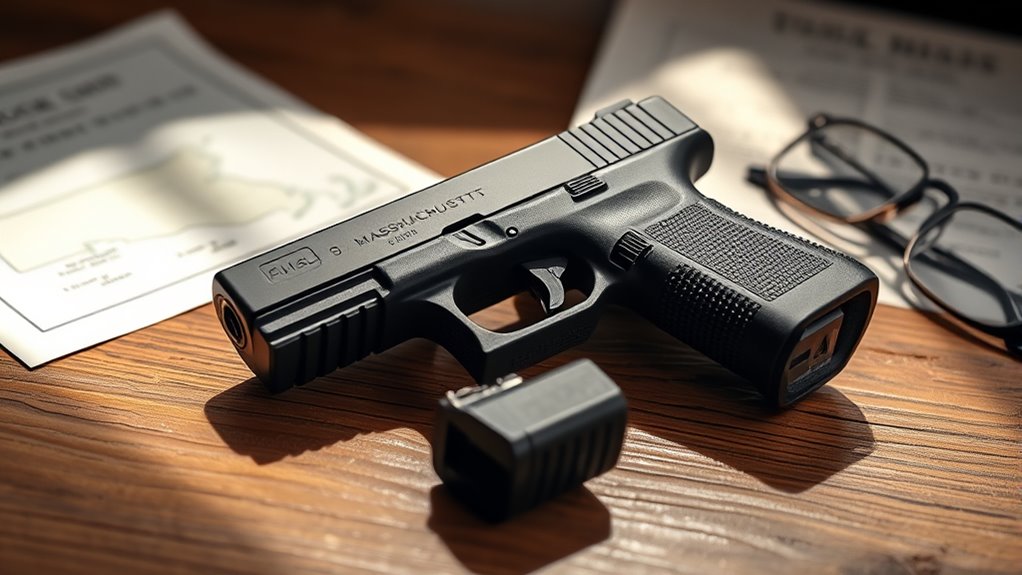
Legalities of Glocks in Massachusetts
Are you interested in owning a Glock in Massachusetts but feeling overwhelmed by the complex laws and restrictions? You’re not alone—many gun enthusiasts struggle to navigate the strict regulations that make firearm ownership challenging here.
In Massachusetts, Glock ownership is highly regulated due to strict gun laws. You must obtain a firearm license, register your Glock, and comply with restrictions on magazine capacity, which can’t exceed 10 rounds.
Modifications are restricted, and certain models with high-capacity features may be banned. Safe transport means unloaded and locked, and violating laws can lead to serious penalties.
If you keep exploring, you’ll learn how to navigate these rules effectively.
Key Takeaways
- Massachusetts limits Glock magazine capacity to 10 rounds and bans certain modifications and features.
- To legally own a Glock, you need a Firearm Identification (FID) card or License to Carry (LTC).
- All Glocks must be registered with local authorities, and transportation must follow safety and storage laws.
- Some Glock models or features are banned, especially those with high-capacity magazines or cosmetic modifications.
- Violating gun laws, like improper transport or unauthorized modifications, can lead to fines or jail time.
Massachusetts Gun Laws and How They Impact Glock Ownership
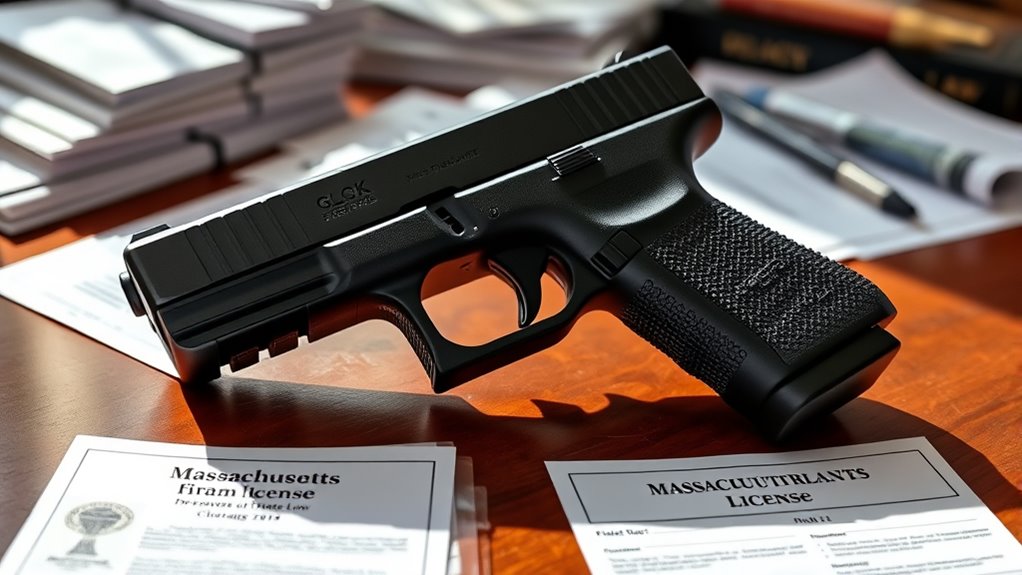
Massachusetts has some of the strictest gun laws in the country, which directly affects how you can own and carry Glocks. If you’re interested in Glock modifications, you’ll find that many are restricted or need special approval.
The state’s regulations limit what you can do to customize your firearm, focusing on safety and compliance. This impacts self-defense training because some modifications that could boost your firearm’s performance might be illegal.
You need to follow strict guidelines on carrying Glocks, including licensing and registration requirements. Massachusetts also enforces rules on storage to prevent unauthorized access.
These laws mean you should verify your Glock is compliant with state statutes before making any modifications or training for self-defense. Failing to do so could lead to serious legal consequences.
Always ensure your Glock complies with Massachusetts laws before modifying or training to avoid legal issues.
Staying informed about local laws helps you responsibly own and operate your Glock within the law. This ensures your self-defense efforts stay legal and effective.
How to Legally Purchase and Register a Glock in Massachusetts
To legally purchase and register a Glock in Massachusetts, you first need to get the proper permits and follow the state’s procedures. The process starts with understanding the Glock’s features, like its safety systems and magazine capacity, which could affect your eligibility.
Next, you’ll visit a licensed firearm dealer to look at Glocks and confirm their features. You then submit your application for a Firearm Identification (FID) card or License to Carry (LTC), including fingerprints and background checks.
After waiting for approval, you can complete the purchase within the dealer’s legal framework. Once you have your Glock, you must register it with local authorities according to Massachusetts’s specific rules.
Make sure to record your firearm properly to stay compliant with state regulations.
How to Obtain a License to Carry a Glock in Massachusetts
Securing a License to Carry a Glock in Massachusetts involves a clear application process and meeting specific eligibility criteria. First, you must submit a completed application to your local police chief, demonstrating a valid reason for carrying, such as self-defense.
Applying for a Massachusetts carry license requires submitting an application and demonstrating a valid reason like self-defense.
You’ll need to pass a thorough background check, which assesses your criminal history, mental health, and overall suitability. During the process, your Glock safety knowledge may be evaluated to ensure you understand proper handling and storage.
Be aware that Glock modifications, especially those affecting magazine capacity or safety features, could influence your application’s approval since Massachusetts enforces strict firearm regulations. You might also need to complete a safety training course approved by the state.
Once approved, you’ll receive your license, allowing you to carry your Glock legally. Remember, maintaining compliance with all safety standards and regulations is essential for keeping your license valid.
What Are the Restrictions on Glocks’ Magazines and Features?
Because Massachusetts enforces strict firearm laws, there are clear restrictions on Glock magazines and features that you must follow. You can’t have magazines with a capacity exceeding 10 rounds, so any Glock you own needs to be modified or purchased with that limit in mind.
Additionally, feature restrictions prevent certain modifications like high-capacity magazines or grip upgrades that could make the firearm more advantageous unlawfully.
To visualize these restrictions:
- Your Glock’s magazine must hold no more than 10 rounds.
- Any accessory or feature that boosts firing speed or grip size is off-limits.
- Modifications that change the firearm’s original setup could cause legal issues.
These rules are meant to limit firearm capabilities and ensure you stay compliant with state laws. Staying within these restrictions is essential for lawful possession.
Are Certain Glock Models Banned or Restricted in Massachusetts?
Are certain Glock models banned or restricted in Massachusetts? Yes. The state has specific restrictions on some Glock models, especially those with features that classify them as assault weapons.
Massachusetts laws prohibit models with certain characteristics, like high-capacity magazines or particular cosmetic features. Many Glock models made before the ban may still be legal if they don’t have banned features.
Massachusetts bans Glock models with certain features, but older models without those may still be legal.
However, newer models or those with modifications might fall into restricted categories. It’s important to review the Massachusetts Firearms Regulations to see if a specific Glock is allowed.
The rules focus on firearm features and specifications that determine if a Glock is considered an assault weapon or legally permitted. Always check the serial number and model details before buying or possessing one.
Staying informed about Massachusetts regulations helps avoid legal issues related to owning or carrying certain Glock models.
What Glocks Are Considered Assault Weapons or Restricted?
Certain Glock models are classified as assault weapons or restricted under Massachusetts law because of their features. These classifications depend on specific assault weapon criteria, like modifications that boost firing capacity or make the gun easier to hide.
Glock modifications such as collapsible stocks or high-capacity magazines can turn a standard model into an assault weapon. When checking Glocks, look for these features:
- A threaded barrel or barrel shroud that lets you attach flash suppressors or silencers.
- A magazine capacity over ten rounds, especially if combined with other modifications.
- The addition of tactical accessories like collapsible stocks or pistol grips, which change the gun’s original design.
If your Glock has any of these features or modifications, it could be considered an assault weapon or restricted under Massachusetts law. Always review the specific assault weapon criteria to stay compliant and avoid legal issues.
How to Store and Transport Your Glock Legally in Massachusetts
If you’re looking to store your Glock legally in Massachusetts, the key thing is to keep it in a secure, locked container when you’re not using it. Basically, you want to make sure it’s stored safely so it’s not easily accessible to others. This helps you stay within the law and keep everyone safe.
When you’re transporting your firearm, there are a few important rules to follow. For example, your Glock should be unloaded and stored in a locked case during transit. This way, you’re in compliance with state regulations and avoiding any unnecessary legal trouble. Just a little extra caution goes a long way in making sure you’re handling your firearm responsibly and legally.
Secure Storage Requirements
In Massachusetts, strict laws govern how you must store and transport your Glock to prevent unauthorized access and ensure legal compliance. To keep your firearm safe, follow these key practices:
Store your Glock in a locked container, like a gun safe or lockbox, when you’re not using it.
Keep the firearm unloaded and separate from any ammunition.
Make sure only authorized people, especially minors or those prohibited, can access the firearm.
Transportation Regulations Compliance
When transporting your Glock in Massachusetts, strict legal requirements ensure the firearm stays secure and out of reach of unauthorized people. You need to use specific methods, like keeping the gun unloaded and stored in a locked container separate from ammunition.
The firearm shouldn’t be easily accessible during transport. You also need to carry legal documents, such as a valid firearm license, to prove you’re legally allowed to have it if you’re stopped by authorities.
Transporting the Glock directly to a shooting range, gun shop, or repair facility is usually allowed. But any other deviations require proper justification. Always check that your transport methods follow Massachusetts law to avoid any legal trouble.
Staying informed about these rules helps you transport your Glock responsibly and legally.
Penalties for Violating Massachusetts Gun Laws
Violating Massachusetts gun laws can lead to serious legal consequences, including hefty fines, jail time, or both. The severity of the penalty depends on the type of violation and whether you have prior offenses.
For example, you might face felony charges that result in multi-year prison sentences for illegal possession or sale. You could also be hit with heavy fines that reach into the thousands of dollars, which can impact your financial future.
Additionally, you risk losing your firearm rights, meaning you might not be able to own or carry guns again. While legal defenses like showing lawful possession or lack of intent can help reduce penalties or lead to dismissal, Massachusetts enforces strict gun laws.
These strict laws mean penalties are harsh to prevent violations. It’s crucial to understand these consequences and get legal advice if you’re facing charges. Ignorance of the law isn’t a defense, and penalties can add up quickly without proper legal guidance.
How to Stay Up-to-Date on Changes in Massachusetts Firearm Laws
Are you aware of how quickly firearm laws can change in Massachusetts? Staying informed is key to avoiding legal trouble and making sure you’re compliant.
To keep up with updates, consider following local government websites like the Massachusetts Executive Office of Public Safety. Subscribing to official bulletins or newsletters is also helpful.
Engaging with firearm advocacy groups can be valuable since they often share timely updates and help interpret new laws for gun owners. Social media accounts and online forums focused on Massachusetts firearm regulations are good sources for real-time news.
Attending public hearings or community meetings about gun laws gives you direct insight into upcoming changes. Regularly consulting legal resources or working with legal professionals ensures you understand how legislation might impact your ownership rights.
Resources for Massachusetts Gun Owners and Glock Enthusiasts
If you’re a gun owner or a Glock enthusiast in Massachusetts, it’s really important to stay up-to-date with the local laws and regulations. Taking the time to research what’s legal and what’s not can save you a lot of trouble down the line. It’s always better to be informed and compliant, especially when it comes to firearm ownership.
Getting to know the nearby shooting ranges is also a great idea. They provide a safe and legal environment to practice your skills and enjoy your hobby. Plus, many ranges offer helpful advice and resources for gun owners. Whether you’re just starting out or you’re an experienced shooter, these places can be a real asset for staying safe and responsible with your Glock or other firearms.
Local Gun Laws
Wondering where to find reliable information about gun laws in Massachusetts? You should look into local resources that focus on your gun rights and safety training. Here are some ways to stay informed:
- Visit the Massachusetts Department of Public Safety website, where they explain licensing and storage rules.
- Reach out to local firearm advocacy groups for updates on any regulation changes.
- Join community safety training sessions to learn about legal requirements and best practices.
These resources will help you understand state-specific laws and make sure your Glock ownership stays in compliance. Staying informed lets you exercise your gun rights responsibly while keeping safety a priority. Remember, understanding local gun laws is crucial for lawful and confident firearm ownership in Massachusetts.
Shooting Range Resources
Finding a good shooting range is a key step for Massachusetts gun owners and Glock enthusiasts to practice safely and improve their skills. Look for ranges that prioritize shooting etiquette and strict safety protocols to ensure a secure environment.
Many ranges offer beginner classes or supervised sessions, which can help you learn proper handling and shooting techniques. It’s important to follow all rules, like keeping your firearm pointed in a safe direction and using designated shooting lanes.
Respect other shooters’ space and stay calm while at the range. Some places provide rental Glocks or accessories, making it easier to get started if you don’t have your own gear.
Frequently Asked Questions
Are Glock Accessories Legal to Own in Massachusetts?
You can own Glock accessories in Massachusetts, but you need to be cautious with modifications that might change how the firearm is classified.
Make sure your Glock storage complies with state laws to avoid any legal issues. Always check if any modifications, like custom triggers or magazines, are legal before adding them.
Staying informed about local regulations helps you enjoy your Glock accessories responsibly and lawfully in Massachusetts.
Can I Carry a Glock Openly in Public in Massachusetts?
In Massachusetts, you generally can’t openly carry a Glock in public because of strict open carry laws. The state focuses on public safety and prefers firearms to be carried in a way that doesn’t alarm others.
If you want to carry your Glock, you’ll need a valid concealed carry permit. Always check the latest local regulations to make sure you’re following the rules.
It’s also a good idea to get safety training so you can handle your firearm responsibly. Staying informed helps you stay compliant and safe.
Are Used Glocks Subject to the Same Regulations as New Ones?
Ever wonder if used Glocks face the same rules? Yes, they do. When you buy a used Glock, you still need to follow Glock transfer regulations and complete used Glock registration with local authorities.
The firearm’s age doesn’t exempt you from these legal procedures. Massachusetts treats used Glocks just like new ones, requiring proper transfer paperwork and registration to stay compliant with state gun laws.
Do I Need a Background Check to Buy Accessories for My Glock?
Yes, you generally need a background check to buy Glock modifications and accessories, as many retailers require them for firearm-related products.
Accessory regulations in Massachusetts can be strict, especially for modifications that might change the firearm’s features or capabilities.
Always check local laws before making a purchase, and make sure you’re buying from reputable sources that follow state regulations.
Staying informed helps you avoid legal issues and keeps your firearm setup compliant.
How Does Massachusetts Law Define “Assault Weapon” Regarding Glocks?
Massachusetts law paints Glocks with a broad brush, often classifying them as “assault weapons” based on their features, even if they’re not explicitly listed.
The legal definition hinges on specific characteristics like adjustable stocks or threaded barrels.
Think of it as a strict recipe—if your Glock has certain ingredients, it’s considered an assault weapon, making its classification a puzzle you must carefully piece together to stay compliant.
Conclusion
Maneuvering through Massachusetts gun laws can feel like walking a tightrope, but staying informed keeps you balanced. Understanding the rules around Glock ownership, registration, and storage helps you stay compliant.
Think of the laws as guiding stars in your firearm journey. They help you steer clear of trouble and ensure responsible Glock ownership.
Keep learning, stay compliant, and your Glock will be a trusted companion. Following Massachusetts gun laws makes sure you’re on the right side of the law and enjoying your firearm responsibly.