What Makes Gun Safes Easy or Hard to Break Into?
If you’re like many gun owners, keeping your firearms safe and secure is a top priority. But with so many options out there, it can be tough to tell which safes are truly secure and which are easier targets for intruders. You’re not alone in feeling overwhelmed by all the choices and technical details.
The security of your gun safe depends on its materials, locking mechanisms, and build quality. High-quality steel, reinforced corners, and multiple locking bolts make it harder for intruders to pry open.
Electronic, mechanical, or biometric locks each have strengths and vulnerabilities, so choosing the right combination matters. Additional security features like concealed hinges and sturdy construction also boost protection.
To truly understand what sets apart tough safes from easy targets, investigate these factors further.
Key Takeaways
- Strong locking mechanisms, like biometric or dual locks, make it harder for unauthorized people to get in.
- Solid construction with reinforced steel and multiple locking bolts helps resist prying and forced entry.
- Concealed hinges and reinforced corners remove weak points that someone might tamper with.
- Higher security ratings and thicker walls make safes more resistant to drilling, cutting, and brute force attacks.
- Features like fire and water resistance don’t stop break-ins directly but add extra layers of security overall.
What Are the Key Security Features of a Gun Safe?
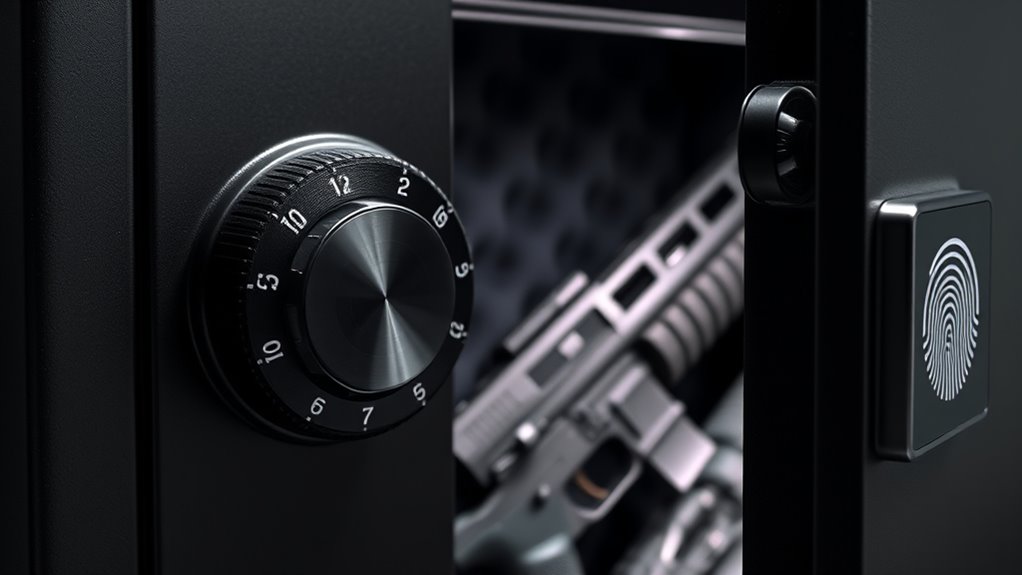
With regard to securing your firearms, understanding the key security features of a gun safe is essential. One of the most important aspects is the security ratings, which show how resistant the safe is to theft and tampering.
Higher ratings generally mean stronger construction, reinforced steel, and better resistance to drilling or prying. Look for safes with solid anchoring options to prevent theft even if someone gains access.
User testimonials can also offer valuable insights, revealing how well a safe performs in real-world situations. Many users praise safes that combine high security ratings with user-friendly features like quick access in emergencies.
Features like internal hinges, pry-resistant doors, and reinforced bolts contribute a lot to overall security. By paying attention to these key features and reading what others say, you can choose a model that offers the best protection for your firearms.
Are Different Locking Mechanisms Secure?
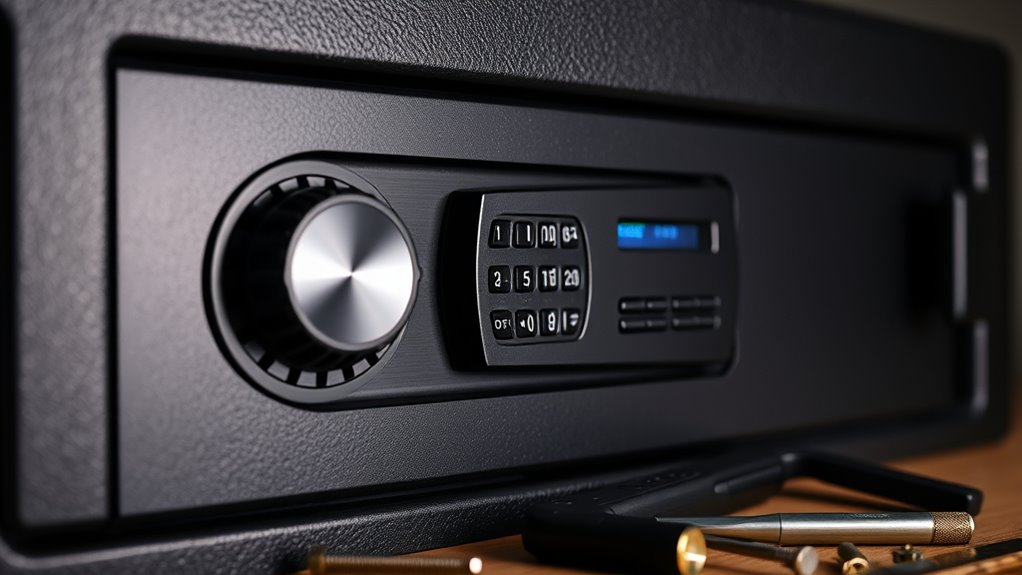
Different locking mechanisms can greatly influence a gun safe’s security, and understanding their strengths and weaknesses is vital. Locking mechanism types vary from electronic, mechanical, to dual systems, each with distinct features.
Electronic locks offer quick, keyless entry benefits and can be programmed for user-friendly designs. But they have vulnerabilities like hacking risks and power failures. Mechanical locks are known for their reliability and simplicity, making them harder to bypass, though they may take longer to open.
Dual locking systems combine both, enhancing security by providing layered protection. Biometric lock efficacy is rising due to quick access and difficulty in tampering, but they can be fooled by high-quality replicas.
While each lock type has advantages, vulnerabilities exist in every system. Electronic lock hacking or mechanical lock picking can still occur, so it’s important to weigh these factors carefully when choosing your safe.
How Do Safe Materials and Construction Affect Security?
The materials and construction of a safe directly impact its ability to withstand attacks and unauthorized access. Material durability is essential; high-quality steel, composite layers, and fire-resistant materials make it harder for intruders to breach the safe. Stronger materials resist drilling, cutting, and other forced-entry techniques.
Construction techniques also play an important role. Solid welds, reinforced corners, and tight seams prevent weak points that attackers could exploit. Thicker walls and multiple layers of protective material improve security and make it more difficult to penetrate.
The way the safe is assembled influences its overall strength. Well-constructed safes distribute force evenly, reducing the chance of damage. When evaluating a safe, pay close attention to the quality of its materials and the craftsmanship behind its construction.
Together, these factors determine how effectively the safe can resist tampering, drilling, or other forms of forced entry.
Does Safe Size and Design Influence Resistance?
Does the size and design of a safe really influence how resistant it is? Absolutely! When it comes to safes, bigger ones tend to have more material and sometimes extra security features, which can make them tougher to break into. On the flip side, smaller safes are usually easier to access quickly, but that can sometimes mean they’re less secure overall.
It’s also important to remember that the structural strength of a safe varies a lot. Some safes are built with heavy-duty materials that can stand up to forced entry, while others might not be as sturdy. So, when you’re choosing a safe, it’s a good idea to think about both its size and how well it’s designed to resist break-ins.
Larger Safes Offer More Resistance
Larger safes generally provide greater resistance to break-ins because their size makes them harder for intruders to manipulate or carry away. This size advantage increases features like thicker material, complex locking mechanisms, and weight.
Imagine a huge safe weighing hundreds of pounds, which needs heavy equipment to move. Its thick steel walls resist drilling and cutting, making it tough to break into.
Multiple locking bolts secure the door from different angles, adding another layer of protection. With these features, size acts as a deterrent, making forced entry more difficult and time-consuming.
The bigger the safe, the more obstacles intruders face, lowering their chances of success. If you want to maximize security, choosing a larger safe uses size advantages to boost resistance.
Compact Designs Ease Access
Smaller, compact safes are easier to handle and hide, which can make them more tempting for thieves. Their size allows for quick removal and discreet placement, increasing the risk of theft.
But keep in mind, the compact design often involves trade-offs. It might mean thinner walls or simpler locks, which can lower overall security. While portability is a plus for you, it might also mean less protection against determined intruders.
Thieves tend to prefer smaller safes because they’re easier to carry away without drawing attention. If you value quick access and concealment, just know these benefits could come at the cost of durability and security.
Finding the right balance between size and strong security features is key. That way, your safe can be both convenient and reliable for protecting your valuables.
Structural Integrity Varies Widely
Size and design choices greatly impact a safe’s resistance to break-ins. Larger safes often have thicker metal, which helps them stand up better against intrusion techniques.
Visualize these factors: heavy, reinforced steel walls that resist prying or drilling, and precise manufacturing standards that ensure consistent metal thickness and weld quality.
Proper installation methods are also key—they anchor the safe securely, preventing removal. A safe’s structural integrity depends on craftsmanship quality and attention to design flaws.
Poorly made safes might have weak spots, making them easier to breach. Regular maintenance, like checking hinges and locks, helps keep its resistance intact.
Ultimately, size and design influence how well your safe withstands break-in attempts. Better craftsmanship and standards mean stronger protection against intruders.
How Do Additional Security Layers Like Bolts and Hinges Help?
Additional security features like bolts and hinges really boost a gun safe’s defenses. Bolt security is crucial because it keeps the door firmly in place, even if someone tries to tamper with it or force their way in. The more bolts you have and the stronger they are, the harder it is for someone to pry the door open.
Hinge strength is just as important. High-quality hinges resist cutting or breaking, preventing attackers from removing the door completely. Some safes even use concealed or security hinges, making them harder to tamper with or remove.
Reinforced hinges also spread out force more evenly, reducing weak spots. These extra layers of security act as barriers, making it more difficult and time-consuming for someone to breach the safe. When combined, sturdy bolts and strong hinges make your safe much more resistant to forced entry, giving you peace of mind for your valuables.
Why Do Fire and Water Resistance Matter for Safe Security?
Fire and water resistance are really important because they help protect your valuables if something unexpected happens, like a fire or a flood. When your safe is resistant to these elements, your important documents, jewelry, or other items stay safe and undamaged, even during emergencies.
Plus, having these features can help your safe meet safety standards, which means you’re following best practices for security. That extra layer of protection not only keeps your belongings safe but also gives you peace of mind, knowing that your valuables are well-protected.
In the end, fire and water resistance make your environment safer and more secure, helping you feel confident that your valuables are protected no matter what.
Protects Contents From Damage
In regard to safeguarding your valuables, fire and water resistance play an essential role in preventing damage. These features guarantee your safe offers interior protection and moisture control during emergencies.
Imagine your safe:
- Resisting intense heat, preventing your items from warping or melting.
- Keeping water out, so your documents and firearms stay dry even if flooded.
- Maintaining a stable environment, reducing humidity that causes rust or mold.
This combination helps preserve your valuables’ integrity over time. Fire-resistant safes protect against heat exposure, while water-resistant ones prevent moisture infiltration.
Both features work together to keep your firearms, documents, and personal items in pristine condition, reducing the risk of deterioration caused by environmental elements.
Ensures Fire Safety Standards
Because fires pose a significant threat to your valuable belongings, having a safe that meets fire safety standards is essential for protecting your most important items. Fireproof materials, like specialized insulation and resistant outer shells, help prevent heat damage during a blaze.
Look for safes with high heat resistance ratings to ensure they can withstand extreme temperatures without compromising their contents. These safes are designed to delay heat transfer, giving you more time during a fire emergency.
Properly rated fire safes are tested to endure specific temperature and time benchmarks. This provides peace of mind that your valuables will stay safe.
Prioritizing fire safety standards guarantees your safe offers reliable protection against the destructive power of fire and safeguards your belongings when you need it most.
Maintains Safe Environment
Maintaining a safe environment means more than just stopping theft. You also need to protect your valuables from things like fire and water damage. Fire and water-resistant safes help keep your items safe even during disasters.
Imagine fireproof walls that can handle intense heat, keeping your documents and firearms secure. Waterproof seals prevent water from seeping in during floods or leaks. Insulated interiors help maintain a stable environment, protecting sensitive items from humidity.
These features make it easier to access your valuables confidently, knowing they won’t be compromised by environmental threats. Fire and water resistance are essential for keeping your valuables safe no matter what happens.
What Common Weaknesses Do Intruders Exploit?
Intruders often target the weakest points of a gun safe’s security, knowing these vulnerabilities make their job much easier. They look for weak spots like flaws in the lock mechanism or poor construction.
Bypass techniques, such as manipulating locks or drilling, exploit these flaws, especially when access methods aren’t well protected. Entry tools like crowbars or power tools can quickly overcome weak lock points if the safe isn’t reinforced.
Stealth tactics help intruders avoid detection, especially when they’re pressed for time or trying to keep noise down. Distraction strategies might divert attention elsewhere, giving them more time to get inside.
Environmental factors, like poor lighting or easy-to-access placement, can also help intruders succeed. Knowing these common weaknesses can help you spot where your safe might be vulnerable and highlights the importance of strong security features.
How Can User Practices Improve Safe Security?
You can improve your safe’s security by changing the lock periodically and updating the access codes. This way, it keeps potential intruders on their toes and makes it harder for them to guess the combination.
Also, be sure to store your keys somewhere secure, away from prying eyes and places where anyone could easily find them. These small steps can make a big difference in keeping your valuables safe and reducing the chances of unauthorized access.
Regular Lock Changes
Regularly changing your lock combinations or upgrading to newer locking mechanisms can really boost your safe’s security. This helps ensure your lock stays reliable and resistant to tampering.
During regular maintenance, make sure to inspect the lock’s internal components for wear or corrosion. If you notice any damaged or worn-out parts, replace them to keep the lock durable.
Also, don’t forget to update access codes or reprogram electronic locks as needed. This way, you can prevent unauthorized access and keep your safe secure.
Use Stronger Access Codes
Upgrading your safe’s access codes is an easy way to boost its security, especially when you do regular lock maintenance.
Use stronger passwords that mix letters, numbers, and symbols to make guessing harder. Avoid common or simple codes like birthdays or sequences.
Change your access code regularly to lower the chance someone has learned it over time. Think about how often you use your safe, since frequent use can increase exposure.
Using unique codes for different users can help limit the risk if someone knows a code. Be careful who you share the code with and avoid sharing it unnecessarily.
Store Keys Securely
While having a high-quality safe is essential, storing your keys securely is just as important to prevent unauthorized access. Proper key storage reduces the chances of someone finding and using your keys to bypass your safe.
To improve both security and accessibility, keep your keys out of sight, like in a locked drawer or a concealed compartment. Avoid hiding keys near the safe or in obvious spots like under mats or flower pots.
Consider using a separate, secure location, such as a lockbox or a trusted family member’s house, for spare keys. This way, you make it harder for someone to find them and gain access.
What Differentiates Cheap Safes From High-End Models?
The key differences between cheap safes and high-end models lie in the quality of materials, construction, and security features. If you’re on a budget, it’s tempting to pick the cheapest option, but lower-quality safes often use inferior materials that are easier to pry open or break.
High-end safes, on the other hand, use thicker steel, reinforced hinges, and advanced locking mechanisms, making them much harder to compromise. Your choice can also be influenced by brand reputation; trusted brands usually produce more reliable, durable safes.
User reviews offer valuable insights into real-world performance, helping you see if a safe really lives up to its claims. While high-end models may cost more upfront, they tend to offer better protection and last longer.
This makes them a smarter investment if security is your top priority. Ultimately, the right safe for you balances your budget with the need for effective, long-lasting security.
How Do Modern Technologies, Like Biometric Locks, Enhance Security?
Have you ever wondered how modern technology boosts the security of safes? Biometric locks are a great example. They use your unique fingerprint or other biometric data to grant entry, making unauthorized access much harder.
When considering these locks, think about:
- Biometric accuracy – advanced sensors ensure your fingerprint is recognized quickly and precisely, reducing false rejections.
- Technology reliability – high-quality biometric systems are designed to work consistently, even in tough conditions.
- Access speed and user convenience – opening is almost instant, so you don’t waste time or struggle trying to remember codes or find keys.
These features work together to make safes more secure and easier to access for those authorized. Biometric locks eliminate the risk of lost keys or forgotten codes, while their reliability and quick response times keep your firearm protected without hassle.
Frequently Asked Questions
How Often Should I Update or Change My Safe’s Security Features?
You should update your safe’s security features regularly, at least once a year or after any major security breach.
Proper safe maintenance includes inspecting locks and hinges and upgrading security features like advanced keypad systems or biometric access.
Staying proactive helps ensure your safe stays secure, adapts to new threats, and keeps your firearms protected.
Regularly reviewing and upgrading your security measures can prevent potential break-ins and give you peace of mind.
Can Environmental Factors Weaken a Safe’s Security Over Time?
Environmental factors can weaken your safe’s security over time. Rust from moisture, temperature changes, and pests can damage its structure.
When this happens, it becomes easier for intruders to pry or break in. To keep your safe secure, check it regularly for rust or damage.
Make sure it’s in a well-ventilated area and in a stable environment to prevent long-term weakening.
Are There Legal Restrictions on Installing Certain Types of Safes?
Yes, there are legal restrictions on installing certain types of safes. You need to make sure your installation follows local laws and regulations, including safety standards and zoning rules.
Check your state’s legal requirements before installing a gun safe, especially if it’s wall-mounted or fireproof. Following installation guidelines helps you avoid penalties and ensures your safe is legally secure and properly set up.
How Does the Location Where a Safe Is Installed Affect Its Security?
The location of your safe really impacts its security. Putting it somewhere hidden makes it harder for intruders to find and access. Avoid obvious spots so that its visibility is limited.
The way you install the safe also matters. Securing it to a solid surface prevents theft attempts. A discreet, well-anchored safe in a concealed spot offers better protection against break-ins.
Do Some Safes Have Vulnerabilities Specific to Their Intended Use Environments?
Some safes do have vulnerabilities specific to their intended environments, often because of design flaws or material weaknesses.
For example, safes meant for outdoor use might not resist corrosion, making them easier to damage over time.
Similarly, safes designed for quick access could have weaker locks or hinges, which can be a security risk.
It’s important to think about these potential issues when choosing a safe.
Make sure it’s built with durable materials and designed well for your specific environment.
Conclusion
In terms of securing your guns, understanding what makes safes easy or hard to break into can save your peace of mind—and maybe even your life. Think of your safe as a fortress; the stronger the walls, the tougher the intruder’s job.
By choosing high-quality locks, sturdy materials, and smart technology, you’re turning your safe into an impenetrable vault. Don’t settle for a flimsy box—make it so secure, even Houdini would give up!
Knowing what makes gun safes hard to break into is key to keeping your guns safe and secure.