How to Reset Your Gun Safe – Step-by-Step Guide
Many gun owners know the frustration of dealing with a safe that won’t unlock when you need it most.
If you’re struggling to reset your gun safe, you’re not alone—this is a common issue that many people face. Whether it’s a forgotten code or a mechanical glitch, getting your safe back in working order is important for your peace of mind.
To reset your gun safe, first identify if it has an electronic, mechanical, or biometric lock.
For electronic safes, locate the reset button or access port, replace batteries if needed, and follow the manufacturer’s instructions to set a new code.
For mechanical locks, find the reset mechanism, usually a lever or button, and follow specific steps.
Verify you test your safe thoroughly afterward.
Keep the process simple; more detailed instructions are ahead if you want to master it perfectly.
Key Takeaways
- Identify your safe’s lock type—whether it’s mechanical, electronic, or biometric—to find the right reset method.
- Gather tools like a screwdriver, flashlight, and fresh batteries, and check the user manual for specific instructions.
- Find the reset button, access port, or reset mechanism that matches your safe’s lock system.
- Follow the manufacturer’s instructions carefully to reset the code or combination securely.
- Test the new code thoroughly and make sure the safe works reliably before locking it up again.
Understanding How Different Gun Safes Reset
In regard to resetting your gun safe, understanding the different types and their mechanisms is essential. Safes technology varies widely, especially in their locking mechanisms, which directly influence how you reset the safe.
Mechanical safes typically use combination dials or key locks, so resetting involves turning dials or replacing keys. Electronic safes rely on keypad codes and often have reset buttons or procedures to reprogram access codes.
Mechanical safes reset by turning dials or replacing keys; electronic safes use reset buttons or reprogramming procedures.
Biometric safes use fingerprint recognition, and resetting usually requires re-enrollment of fingerprints or factory resets. Some safes incorporate multi-layer security with hybrid systems, combining features like keypad entry and biometric verification.
Each type’s reset process hinges on its specific safes technology and locking mechanisms. Knowing how these systems function helps you approach the reset confidently, avoiding damage or lockouts.
Familiarity with these mechanisms guarantees you can troubleshoot and reset your safe efficiently, maintaining security and accessibility.
What Tools and Info You Need Before Resetting
Before you go ahead and reset your gun safe, it’s a good idea to gather a few tools first. Things like a screwdriver or a keypad reset tool can come in handy. Also, make sure you know the details of your current lock system—like the model or any specific instructions. It’s smart to have backup access options ready just in case the main method doesn’t work out. Being prepared with the right tools and info makes the whole reset process much easier and less stressful.
Necessary Tools List
To successfully reset your gun safe, you’ll need a few essential tools and some key information on hand. Start with a quick overview of the tools: a small Phillips-head screwdriver to remove panels or batteries if needed.
You’ll also want a flashlight to see inside tight or dark compartments clearly. Make sure you have fresh batteries if your safe uses electronic components.
Having your original user manual or reset instructions is crucial since they provide specific details for your model.
It’s a good idea to have a clean workspace to organize these tools and avoid losing small parts.
Before you begin, understand the safe’s lock type and any unique reset procedures.
Gathering these tools and info beforehand helps ensure the reset process goes smoothly and efficiently.
Existing Locking System Info
Knowing the type of locking system your safe uses is key to a smooth reset. Different safes have various locking mechanisms, like electronic keypad, mechanical dial, or biometric locks. Each type has its own security features and reset procedures.
Before you start, gather any relevant info about your lock, such as model numbers or user manuals. This helps you understand its specific requirements.
Check if your safe’s locking mechanism has batteries or power sources that might need replacing before resetting. Knowing your current system can help you avoid unnecessary damage and follow the right steps.
Being aware of these details also makes troubleshooting easier during the reset process. This way, the entire procedure becomes more efficient and secure.
Backup Access Options
Having backup access options ready is essential in case the primary lock fails or you can’t remember the combination. Before resetting your gun safe, gather tools for alternative entry methods, such as a bypass key or override code if available.
Review your emergency access plans, which may include contact info for the safe manufacturer or locksmith services. Keep any spare keys or electronic backup devices in a secure but accessible location.
Knowing these options guarantees you can access your safe quickly during emergencies or lockouts. Confirm you have the necessary tools and information on hand before starting the reset process.
Preparing these backup access methods minimizes delays and helps you regain control of your safe efficiently.
How to Identify Your Safe’s Lock Type and Reset Method
Ever wonder how to figure out your safe’s lock type before trying to reset it? Start by inspecting the lock mechanism closely. Look for a keypad, a combination dial, or keyholes. These clues will tell you whether it’s electronic, dial, or mechanical.
Check the lock materials. Electronic locks often have a plastic or metal keypad, while mechanical locks use sturdy metal dials or key cylinders. If your safe has a digital keypad, it’s probably an electronic lock that needs specific reset steps.
For dial locks, resetting usually involves manipulating the combination by turning the dial in a certain sequence. Mechanical key locks typically require a key for reset or override. By understanding your safe’s features and lock materials, you can identify the lock type accurately.
Knowing this helps you follow the right reset method without damaging the lock or risking permanent lockouts.
How to Reset Digital or Electronic Gun Safes
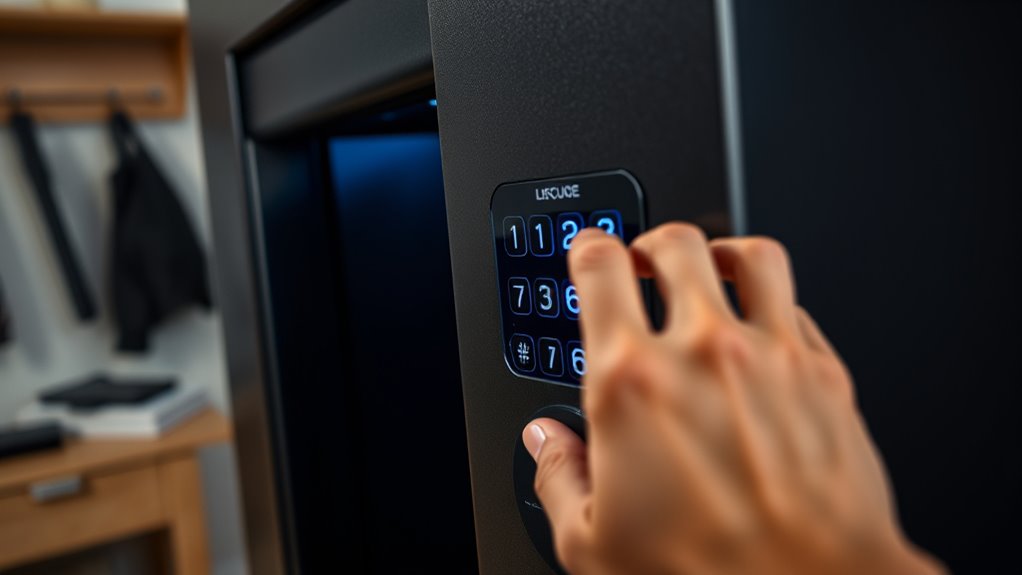
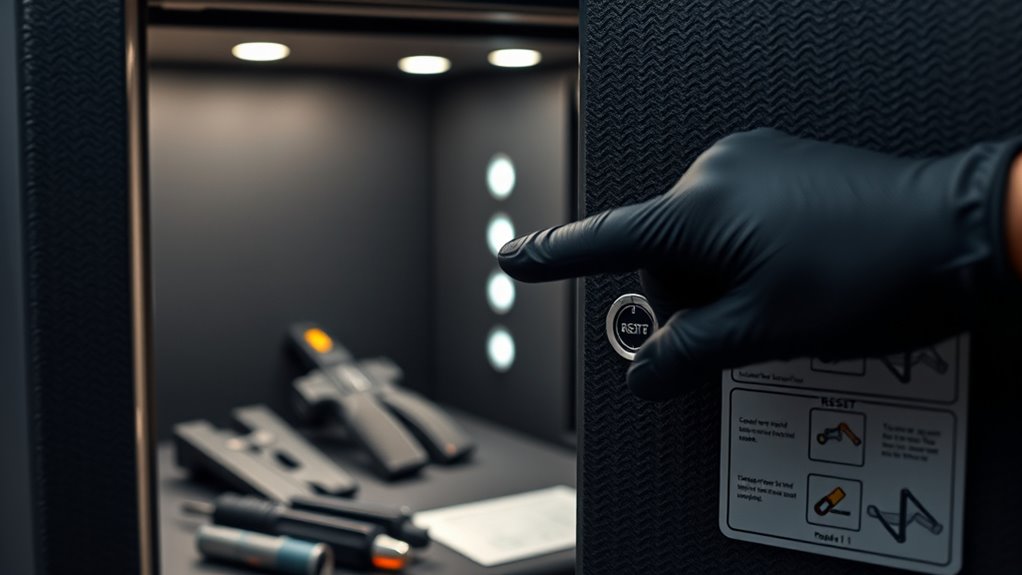
To reset a digital or electronic gun safe, start by locating the reset button or access port. It’s usually found behind the keypad or under a panel.
Once you’ve found it, follow the manufacturer’s instructions to initiate the reset. This often involves pressing and holding the button for a few seconds.
Keep in mind that digital security measures are designed to prevent unauthorized access, so resetting it too often might trigger security features or lock you out temporarily.
Frequent resets may activate security features, risking temporary lockouts or access issues.
Remember, electronic vulnerabilities can be exploited if the safe isn’t properly maintained or updated. Make sure to regularly update your safe’s firmware and change default codes to stay secure.
Before resetting, confirm you’re in a secure environment to prevent anyone unauthorized from accessing the safe.
It’s also a good idea to keep a record of your new code in a safe, private spot.
Resetting should be part of your routine digital security checks.
Finally, avoid rushing the process to prevent accidental lockouts or damage.
How to Reset Mechanical Combination Locks
Sure! Here’s a more conversational version of your text:
If you want to reset a mechanical combination lock, the first thing you need to do is find the reset mechanism. Usually, it’s a small button or lever located inside the lock. Once you’ve got that sorted, follow the instructions to set a new combination — something you’ll remember easily but others won’t guess.
After you’ve set your new code, be sure to test it out. Give the lock a few tries to make sure it opens smoothly with the new combination. That way, you’ll know it’s all set and ready to go!
Locate Reset Mechanism
Start by carefully examining your safe’s exterior and interior to locate the reset mechanism. Depending on your safe’s model, the reset mechanism types can vary, so you might need to find specific reset buttons or switches.
Look around the door frame, inside the lock panel, or near the keypad for small, discreet buttons or levers. Some safes have a reset hole that requires a paperclip or similar tool to activate.
Understanding the different reset mechanisms helps you identify the correct component. Check for hidden or recessed reset buttons that blend into the safe’s design.
Look for labels or markings that indicate reset functions. Be aware of mechanical versus electronic reset components, as they may require different approaches.
Using a flashlight can help you see better in tight or dark spaces when searching for the reset mechanism.
Set New Combination
Once you’ve located and accessed the reset mechanism, resetting a mechanical combination lock involves a specific sequence of turns and movements. To set your new combination, carefully follow the instructions, making sure you create a code that balances security with usability.
Remember, a more complex code improves your combination security, but it shouldn’t be so complicated that you forget it. Use this table to visualize your new code:
| Dial Position | Number/Letter |
|---|---|
| First Turn | 3 |
| Second Turn | 8 |
| Final Turn | 5 |
| Lock Closure | Secure |
Choose a combination that’s meaningful but not obvious. Increase code complexity without sacrificing ease of recall. This step secures your safe and your peace of mind.
Troubleshooting Common Resetting Problems
Have you ever run into a situation where your gun safe won’t reset or accept a new code? It can be pretty frustrating, but knowing common mistakes and reset tips can help you out.
First, make sure you’re following the manufacturer’s instructions exactly. Small errors like pressing the wrong buttons or not holding the reset button long enough are often the cause of problems.
Here are some troubleshooting tips:
- Check that the safe is powered or that your batteries are fresh. Low power can mess with the reset process.
- Be patient and don’t rush through the steps. Taking your time makes a difference.
- Double-check you’re using the correct reset sequence for your specific model.
- Avoid trying multiple resets quickly, as that can lock the system or lead to errors.
How to Verify Your Safe Is Fully Reset and Working Properly
After completing the reset process, it’s important to check that your safe is fully reset and working correctly. Start by testing the new code or combination, making sure it opens smoothly without any hesitation.
Next, perform some lock and release cycles to see if the safe consistently functions as expected. Listen carefully for any unusual sounds that might indicate mechanical issues.
If your safe has electronic components, verify that they respond properly. Use the table below as a guide to help you with the verification process:
| Step | Action | Result |
|---|---|---|
| 1. Enter new code | Test multiple times to open the safe | Opens reliably every time |
| 2. Perform lock cycles | Lock and release several times | No jamming or delays |
| 3. Check emergency features | Test backup keys or override buttons | Function as intended |
| 4. Assess safe’s response | Listen for abnormal noises or delays | No unusual sounds |
| 5. Confirm overall safe functionality | Make sure all components work smoothly | Safe works correctly overall |
Tips for Safely Changing Your Safe’s Code or Combination
Changing your safe’s code or combination requires careful attention to safety procedures to prevent accidental lockouts or security breaches. First, verify you’re in a secure, well-lit environment where you can focus. Always choose a unique, hard-to-guess code to improve your code security.
Before making changes, read your safe’s manual thoroughly to understand the proper reset process. After updating the code, test it multiple times to confirm it works smoothly. Remember, regular safe maintenance includes periodically reviewing your access codes for security updates.
Read your safe’s manual first, test the new code thoroughly, and review your access codes regularly for security.
Keep your new code confidential and avoid sharing it with others. Document your new code in a secure location separate from the safe. Use a combination or code that’s difficult for others to guess.
Verify the safe’s locking mechanism is functioning properly after the change. These tips help maintain your safe’s integrity and secure your valuables effectively.
Best Practices for Securing Your Safe After Reset
After you’ve reset your safe, it’s a good idea to change your access codes regularly. That way, you can prevent anyone unauthorized from getting in. It’s just a simple step that goes a long way in keeping your valuables safe.
Also, think about where you place your safe. Pick a spot that’s secure and a little discreet—somewhere not too obvious. Making sure your safe is well-placed adds an extra layer of security. Following these tips can help ensure your valuables stay protected and your safe stays secure over time.
Update Access Codes Regularly
To keep your safe secure, it’s important to update your access codes regularly. Doing this makes your code harder for others to guess or figure out over time.
Regular updates help strengthen your security and reduce the chances of unauthorized entry. It’s a simple step that makes a big difference.
Make sure to change your code immediately if you think it’s been compromised. Using unique, complex combinations instead of common patterns also helps.
Avoid sharing your code with unnecessary people, and keep a secure record of your current code. Remember to update that record each time you change your code.
Reinforce Safe Placement
Even if you’ve just reset your safe, its placement is key to keeping it secure. Picking the right spot can make a big difference in preventing theft or tampering.
Avoid placing it in easy-to-access or visible areas, like near windows or in open spaces. Instead, look for a discreet, solid spot that’s tough to tamper with.
Securing your safe to the floor or wall adds stability and helps prevent it from being stolen or tipped over. Make sure the surface can support its weight and that the safe stays level.
When to Call a Locksmith or Safe Technician
Knowing when to call a locksmith or safe technician is key to avoiding damage to your safe or risking its security. If you can’t open your safe after trying multiple times or if the lock feels jammed, it’s time to get professional help.
Trying DIY fixes beyond basic troubleshooting can lead to costly damage or even void your warranty. Regular maintenance by professionals ensures your safe works properly and keeps your valuables secure.
DIY repairs beyond basic tips can cause costly damage and void warranties. Trust professionals for maintenance and security.
Consider calling a locksmith or safe technician if you’ve lost the combination or keys and can’t access your safe. If the lock mechanism feels stuck or behaves unusually during use, it’s a good sign to call in a pro.
Signs of tampering or attempted forced entry mean you should seek expert help immediately. Also, if you want to upgrade or reprogram your safe’s security features, professionals are your best bet.
Using professional locksmith services guarantees the proper handling of your safe and helps keep its integrity intact. Don’t risk damage or security issues—know when to call in the experts.
Frequently Asked Questions
Can I Reset My Gun Safe Without Professional Help?
Yes, you can reset your gun safe without professional help if you’re comfortable with safe maintenance. First, find your safe’s manual or manufacturer instructions for resetting.
Follow the steps carefully to avoid compromising security. Be cautious during the process, making sure no damage occurs. Resetting your safe yourself keeps your firearms protected and maintains security.
However, if you’re unsure, it’s always a good idea to consult a professional.
What Are Signs My Safe’s Reset Was Unsuccessful?
If your safe’s reset didn’t work, you might notice it won’t open or doesn’t respond to the keypad or fingerprint scan.
Problems like misaligned sensors or battery issues could be the cause of the malfunction. Try checking the power supply and making sure your batteries are fresh.
Also, verify that the lock mechanism isn’t jammed. If things still aren’t working, check your safe’s manual or get in touch with a professional locksmith for help.
How Often Should I Change My Safe’s Code or Combination?
Don’t let your guard down; regular updates are key to keeping your code secure. Change your safe’s code or combination at least every six months or whenever you suspect it might have been compromised.
Good combination management keeps unauthorized users out. If you notice any signs of tampering or have forgotten your code, update it immediately.
Staying proactive helps prevent potential mishaps and ensures your valuables stay protected. This peace of mind comes from knowing your safe is secure and up to date.
Are There Risks of Damaging My Safe During Reset?
Resetting your safe’s combination locks usually doesn’t risk damaging the safe if you follow the manufacturer’s instructions carefully.
But if you rush or try to force the lock, it can compromise the safe’s security features.
To keep your safe secure, handle the reset process gently and correctly, avoiding excessive force.
Doing it properly helps preserve the safe’s integrity and keeps your valuables protected without risking damage to the locks or the safe itself.
How Do I Reset a Safe if I Lost the Override Key?
When you’ve lost the override key, don’t give up just yet. You can usually reset your safe by getting to the locking mechanism directly, often through a hidden panel or by removing the keypad.
Some safes have a backup method, like a reset button or a manual release. Just be careful—forcing things might damage the lock.
If you’re unsure what to do, reaching out to the manufacturer is your best option.
Conclusion
Resetting your gun safe is simple once you know what type of lock it has and follow the correct steps.
Most safe owners don’t change their combination regularly, which can put your security at risk. Over 70% of owners leave their codes unchanged, making their safes vulnerable.
By learning how to properly reset and secure your safe, you ensure your firearms stay safe and only accessible to you. If you’re ever unsure or get stuck, don’t hesitate to call a professional—they’re trained to help protect your valuables.
Remember, keeping your gun safe secure with a proper reset is key to maintaining your security.