6 Signs to Tell if Ammo Is Bad
Many gun owners worry about the safety and reliability of their ammo, especially when it might be compromised. You’re not alone—detecting bad ammo can be tricky, but it’s crucial for safe shooting. Knowing what signs to look for can save you from potential accidents or malfunctions.
You can spot bad ammo by inspecting for physical damage like rust, dents, cracks, or bulges. Check if the rounds are properly shaped and seated without resistance or irregularities.
Look for signs of deterioration such as corrosion, discoloration, or powder caking. Verify your storage conditions are ideal, with cool, dry, and airtight environments.
Feel for resistance when handling, and always test the rounds safely. Keep these tips in mind to guarantee safety and reliability; more details await if you continue exploring.
Key Takeaways
- Look for any physical damage, corrosion, or dents on the cartridge cases. These can be signs of trouble.
- Check primers and casings for cracks, hairline fractures, or signs of deterioration. If you see any, it might be time to retire the round.
- Make sure the rounds are properly seated in the magazine or chamber, and watch out for bulges or resistance when loading.
- Store your ammo in cool, dry, airtight conditions to prevent moisture damage and corrosion.
- Regularly inspect your ammunition for powder caking, discoloration, or any irregularities that could affect performance.
Recognize Physical Damage and Corrosion on Ammo
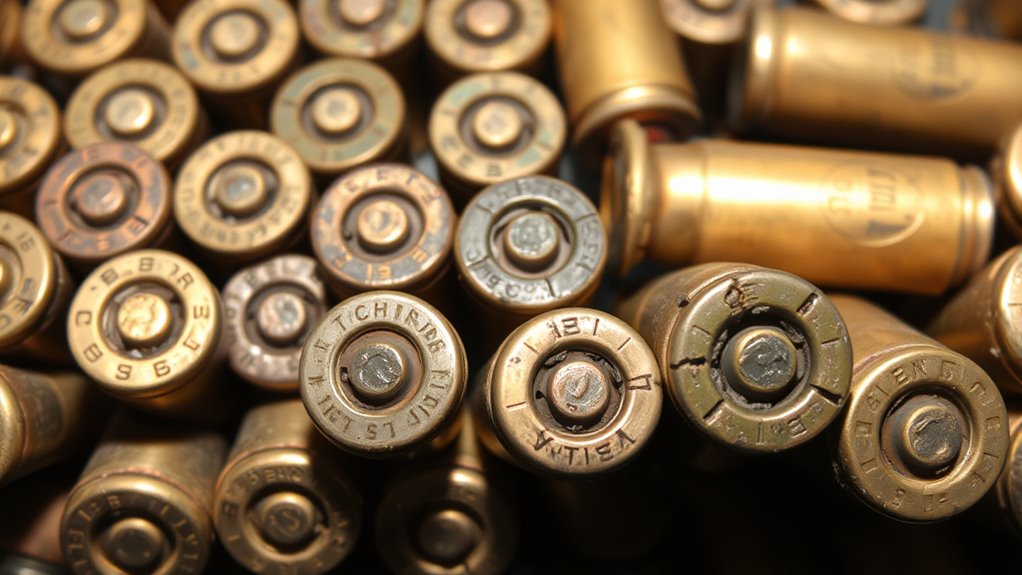
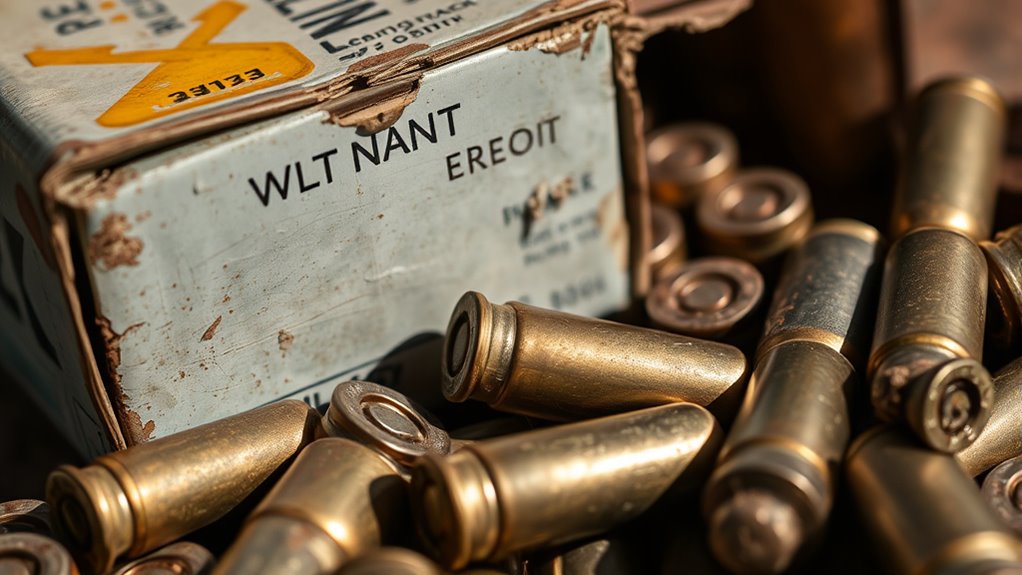
Physical damage and corrosion are clear signs that your ammunition may be compromised. During a visual inspection, look for corrosion signs like rust or surface anomalies on the cartridge case.
Rust indicates moisture damage, which can weaken the case and cause failures when firing. Check for dents, cracks, or bulges that suggest physical damage, as these could lead to misfires or unsafe conditions.
Rust weakens the case; dents, cracks, or bulges may cause misfires or safety issues.
Pay close attention to oxidation effects, especially around the primer. A compromised primer can result in misfires or delayed ignition. Examine the entire surface for pitting or discoloration that signals corrosion.
Corrosion and moisture damage weaken the structural integrity of your rounds and can affect their performance. If you notice any of these issues, it’s best to discard the ammunition to avoid safety hazards.
Inspect the Shape and Seating of Your Rounds
Take a good look at each round and check its shape and seating. Make sure there aren’t any dents, deformations, or cracks that could suggest the round’s been damaged. It’s also important to see if the bullet is seated properly in the case—there shouldn’t be any gaps or uneven spots.
If you spot anything that seems off, like irregularities or damage, it’s best to set that round aside. Better to be safe and avoid using it, rather than risking a problem when you’re shooting.
Check for Deformation
Inspecting your rounds for deformation is a key step to ensure they work reliably. Look out for dents, cracks, bulges, or flattened cases, as these can indicate problems.
These deformities often come from issues like improper storage, mishandling, or manufacturing flaws. When you check your ammo, look for any shapes or seating that seem off from what’s normal.
Bulges or cracks can weaken the round’s structure and might cause dangerous malfunctions. Also, examine for dents that could interfere with chambering or firing.
Damaged cases may not fire correctly or could lead to misfires. Spotting these signs helps prevent safety hazards and keeps your ammo performing consistently when it matters most.
- Look for dents, cracks, or bulges in the case
- Check for cases that appear flattened or misshapen
- Confirm the round seats properly in the chamber
- Observe for any irregularities caused by mishandling or storage
Ensure Proper Seating
Making sure your rounds are properly seated in the chamber is vital for safe and reliable firing. Check the seating depth to confirm the bullet is firmly pressed against the case’s shoulder, not too shallow or deep.
Proper seating guarantees consistent ignition and prevents misfires. Focus on bullet alignment; it should be centered and straight within the case, with no tilting or crooked positioning.
Misaligned bullets can cause uneven pressure and potentially dangerous malfunctions. When inspecting rounds, look for uniformity in seating and shape.
If a round appears out of place or the bullet isn’t flush with the case mouth, it’s likely improperly seated. Correctly seated rounds promote accuracy and safe operation, so don’t skip this vital step before shooting.
Look for Cracks
Cracks in your rounds can be a serious safety hazard. During crack identification, a thorough visual inspection is essential. Carefully examine each cartridge’s shape and seating, looking for any hairline fractures or irregularities.
Cracks often appear as fine lines on the casing, especially near the neck or base, and can weaken the ammunition’s integrity. Always inspect both the exterior and interior if possible. Damaged rounds may not fire correctly and could cause dangerous malfunctions.
Keep an eye out for any deformation or cracks that could get worse with use. Remember, even small cracks can be dangerous, so discard any suspect rounds immediately. Proper visual inspection and crack identification help keep you safe and ensure your ammunition is reliable.
Look for Powder and Primer Deterioration or Discoloration
Powder and primer deterioration or discoloration are clear signs that your ammunition may be compromised. Changes in powder quality often show as clumping, caking, or a dull, uneven appearance.
Signs of compromised ammunition include powder clumping and dull, uneven appearance.
If the powder looks old, crumbly, or has lost its original color, it could indicate moisture exposure or chemical breakdown. This can affect how well it performs when fired.
Likewise, primer integrity is essential. A primer that appears corroded, cracked, or discolored is a red flag. Discolored primers may suggest chemical reactions or age-related deterioration.
These issues increase the risk of misfire or delayed ignition. Always inspect your rounds closely, noting any abnormal color shifts or physical damage.
Poor powder quality and compromised primer integrity can lead to inconsistent firing, dangerous misfires, or even accidents. If you see these signs, it’s best to discard the ammunition.
Avoid risking your safety or the reliability of your firearm by using compromised rounds. When in doubt, it’s safer to replace questionable ammunition.
Learn How Storage Conditions Can Ruin Your Ammo
Poor storage conditions can quickly ruin your ammo, making it unreliable or unsafe to use. Environmental factors like humidity and temperature play a big role in breaking down your ammunition.
Exposure to moisture causes corrosion and weakens the primer and casing, which reduces shelf life. Using storage containers that don’t seal well lets moisture and dust settle on your ammo.
Poor air circulation in storage areas can trap humidity, speeding up deterioration. To keep your ammo in good shape, pay attention to these tips:
- Use airtight, moisture-resistant storage containers
- Store ammo in cool, stable temperatures away from direct sunlight
- Choose storage locations with good air circulation and low humidity
- Avoid areas with temperature swings or high moisture levels
Feel for Unusual Resistance or Feel When Handling
When you’re handling your ammo, pay close attention to how it feels. If you notice any unusual resistance or if it’s suddenly harder to load than usual, that’s worth checking out. Sometimes, there might be jagged or sticky spots that don’t feel right—that could be a sign of damage or contamination.
Basically, if something feels off or different from what you’re used to, it’s a good idea to take a closer look. Catching these little signs early can help prevent bigger problems down the road.
Increased Handling Difficulty
If your ammunition feels unusually stiff or resistant when handling, it might be a sign of a problem. Increased handling difficulty often comes from improper storage or humidity effects that can damage the ammo.
When ammo is exposed to moisture, the metal parts can corrode or swell, making it harder to handle or chamber. You might also notice more resistance when moving rounds or loading them into magazines.
This stiffness suggests the rounds may have deteriorated, which could cause misfires or jams. Always check your ammo for signs of corrosion, rust, or swelling.
Proper storage in dry, cool places can help prevent humidity damage and keep your ammo in good shape. If handling becomes unusually tough, don’t ignore it—your safety could depend on catching the problem early.
Unusual Resistance During Loading
Feeling unusual resistance when loading your rounds can mean something’s wrong with your ammo. If you notice extra force needed during loading, it might be due to issues with the ammunition or improper loading techniques.
Resistance can be caused by deformed cartridges, damaged bullets, or misaligned case necks. These problems can make loading tough and even dangerous. When you feel resistance, stop and carefully inspect the round.
Never force it into the chamber, as that can cause damage or misfire. If you keep experiencing resistance, it’s a sign of bad ammo. It’s best to discard suspicious rounds and not rush your loading process.
Using proper techniques, like making sure your case sizes match specifications, helps prevent resistance issues. Always handle rounds gently and check for any anomalies before loading to stay safe.
Feels Jagged or Sticky
A jagged or sticky sensation when handling or loading rounds often signals underlying issues with the ammunition. You might notice jagged edges on the casing or a sticky residue that clings to your fingers. This can indicate corrosion, damaged cartridges, or improper storage.
If the rounds feel unusually resistant or catch as you load, don’t ignore it. These signs suggest the ammo could be compromised or unsafe to fire.
Jagged edges may cut your fingers or cause feeding issues. Sticky residue hints at corrosion or chemical breakdown.
Increased resistance during chambering suggests deformation. Unusual textures can lead to misfires or jams.
How to Properly Inspect and Test Your Ammo Safely
Inspecting and testing your ammo is an important step to ensure safe and reliable shooting. Take your time to carefully look at each cartridge for any signs of damage, corrosion, or deformities.
Check the primer for cracks or irregularities, as these can mean the round might not fire properly. Be aware of your ammo’s age—old or poorly stored rounds can become unsafe, so toss out anything that looks questionable.
Inspect primers for cracks and irregularities; discard old or questionable ammo for safe, reliable shooting.
When testing, using a chronograph can help you check for consistent velocities, which can point to internal issues. Always handle your ammo in a safe spot, away from heat or moisture, to keep it in good shape.
Storing your ammo in a cool, dry place helps it last longer and reduces risks. If you spot any problems during inspection or testing, it’s best to dispose of those rounds responsibly.
Regularly inspecting and testing your ammo keeps your shooting safe, accurate, and stress-free.
Frequently Asked Questions
Can Expired Ammo Still Be Safely Fired?
Expired ammunition isn’t safe to fire because it can misfire, jam your gun, or even cause dangerous pressure buildup.
You should avoid using old ammo, especially if it’s been stored improperly or shows signs of corrosion. Always handle your ammunition with care, inspecting it for cracks or discoloration.
To guarantee safe handling, dispose of expired ammo responsibly and replace it with fresh rounds for reliable, safe shooting experiences.
How Long Can Ammo Be Stored Before It Becomes Unsafe?
Think of your ammo like a delicate garden that needs the right environment. You can store it safely for years if you keep the conditions just right, especially low humidity.
Avoid damp places, extreme temperatures, or direct sunlight. These can harm your ammo over time.
Properly sealed, labeled containers in a cool, dry area help keep your ammo stable. With these simple precautions, your ammunition stays safe and reliable.
That way, you’re always ready when you need it most.
Does Brand or Manufacturer Affect Ammo Longevity?
Yes, brand and manufacturer can affect ammo longevity. You trust brands with a good reputation because they follow stricter manufacturing processes, which means better quality control.
Poorly made ammo from less reputable brands may degrade faster or misfire, reducing safety and reliability. Always check reviews and choose reputable brands, especially for long-term storage.
This way, you can be confident your ammo stays safe and effective over time.
Are There Specific Signs of Ammo Deterioration in Different Calibers?
You can spot signs of ammo deterioration across different calibers by closely examining the casing and bullet. Look for corrosion, discoloration, or cracks, which are signs that the ammo may be compromised.
Caliber differences can influence how quickly these signs show up, especially if storage conditions aren’t ideal—like high humidity or temperature swings.
Proper storage is key. Keep your ammo in airtight containers stored in cool, dry places to prevent deterioration and ensure it stays reliable, no matter the caliber.
What Are the Risks of Using Compromised Ammo?
Using compromised ammo risks serious safety issues, like a cartridge misfiring unexpectedly, which can cause injury. When ammo doesn’t meet safety standards, it can lead to misfires, barrel damage, or even explosions.
These failures put your ammo’s performance and safety at risk. Always inspect your ammo for signs of deterioration and stick to reputable sources to ensure your rounds meet safety standards. This helps keep you safe during every shot.
Conclusion
So, next time you’re about to fire up your weapon, keep these signs in mind—because nobody wants to find out their ammo is as bad as last week’s leftovers. Stay alert and trust what your senses tell you.
Don’t be that person who’s surprised when a dud turns into a dangerous situation. Recognizing bad ammo isn’t just about avoiding embarrassment at the range; it’s about staying safe and in one piece.
Remember, safe shooting starts with good ammo. Keep an eye out for these signs, and your ammo will thank you. Stay vigilant!