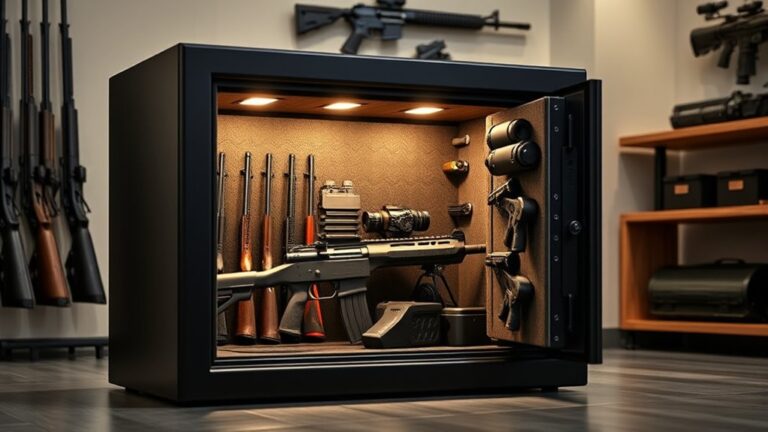
Best Humidity Levels for Your Gun Safe
Are you tired of worrying about rust, corrosion, or mold damaging your firearms? You’re not alone—many gun owners struggle with keeping their guns in perfect condition over time.
One of the main challenges is maintaining the right humidity inside your gun safe.
To protect your firearms, keep your gun safe’s humidity between 40% and 60%, ideally around 50%. This range prevents rust, corrosion, and mold while avoiding dryness that could damage gunpowder or cause static.
Use a hygrometer to monitor levels regularly, and adjust with desiccants or dehumidifiers as needed.
Maintaining stable humidity is key, and you’ll find more tips to keep your guns in top shape as you investigate further.
Key Takeaways
- Keep humidity levels between 40% and 60%, ideally around 50%, to prevent rust and damage to wood.
- Use a hygrometer regularly to check and adjust humidity with desiccants or dehumidifiers as needed.
- Too much moisture can cause rust and mold, while low humidity can dry out gunpowder and create static.
- Pick the right devices like silica gel packs or electric dehumidifiers to keep humidity steady.
- Regularly check vents, organize your safe, and perform routine maintenance to maintain stable, ideal humidity.
Why Maintaining Proper Humidity in Your Gun Safe Matters
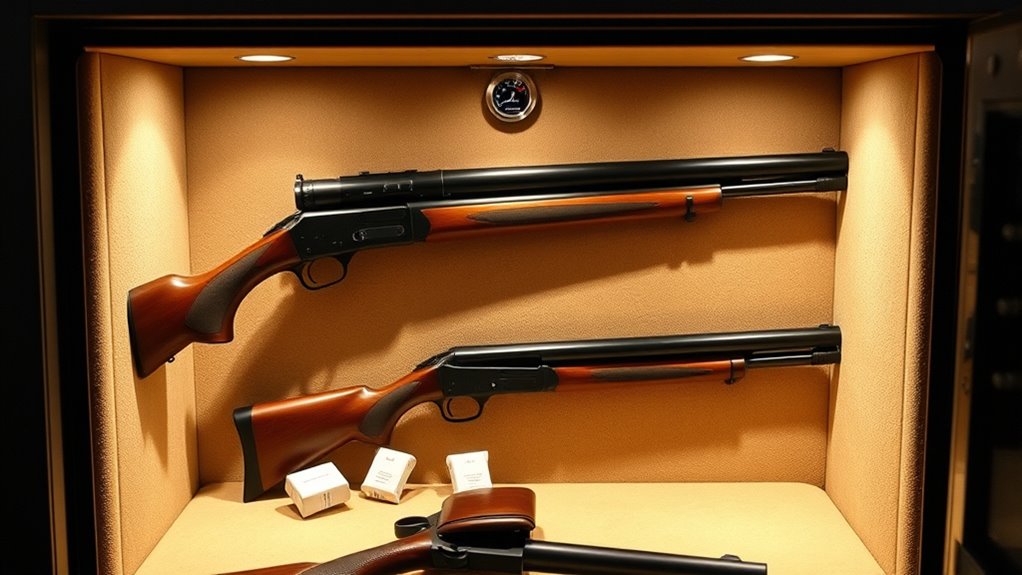
Maintaining proper humidity in your gun safe is essential to prevent rust and corrosion on your firearms. Without good humidity control, moisture can build up inside, causing damage over time. Keeping the environment dry helps metal parts resist oxidation, protecting your guns’ condition and value.
On the other hand, too much humidity creates a damp atmosphere that promotes rust and mold growth. Ensuring your gun safe has balanced humidity levels creates a safe environment that preserves your collection and extends its lifespan.
Too much humidity fosters rust and mold, harming your firearms and reducing their lifespan. Maintain balanced moisture levels for optimal preservation.
Proper humidity control also stops wood stocks from warping or cracking, helping your firearms stay in good shape. Regularly monitoring and adjusting humidity levels lets you avoid unexpected damage and costly repairs.
Think of humidity regulation as a key part of firearm maintenance. It keeps your guns in top condition and ready for use. Creating a stable environment safeguards your investment and keeps your firearms in prime condition for years to come.
What’s the Right Humidity Level for Your Guns?
Have you ever wondered what the ideal humidity level is to keep your firearms in top condition? For effective gun storage, maintaining the right humidity is essential for moisture control. Too much moisture can lead to rust, while too little can cause wood stocks to crack.
The best humidity range for your gun safe is generally between 40% and 60%. Within this range, your guns stay protected without risking corrosion or dryness. Here’s what to keep in mind:
- Aim for 50% humidity as a balanced target that minimizes rust and prevents wood damage.
- Use a hygrometer to monitor moisture levels regularly.
- Adjust humidity with desiccants or a dehumidifier to stay within the best range.
How Do You Measure Humidity in Your Gun Safe?
Wondering how to accurately measure humidity inside your gun safe? The key is using reliable humidity measurement tools like a hygrometer. These devices help you monitor moisture levels and prevent damage.
To get accurate readings, make sure to install the hygrometer properly. Place it at eye level and away from the door or vents, where humidity levels can fluctuate.
Here’s a quick comparison of common hygrometers:
| Type | Pros | Cons |
|---|---|---|
| Analog | Easy to read, inexpensive | Less precise, no digital |
| Digital | Accurate, easy to calibrate | Slightly more costly |
| Wireless | Monitors remotely | Requires power or batteries |
Choose the right hygrometer based on your needs. Regularly check it to keep your gun safe within ideal humidity levels, protecting your firearms.
Risks of Excess Moisture: Rust, Corrosion, and Mold
Excess moisture can really cause some issues for your guns. For starters, it can lead to rust forming on the metal parts, which can weaken the overall structure of your firearms. Nobody wants their guns to become fragile or damaged because of something preventable.
It also ramps up the chances of corrosion, which over time can eat away at the metal surfaces and make your guns less reliable. And let’s not forget about mold—when the environment stays humid, mold can start to grow, not just on your firearms but in your storage area as well. That’s not only bad for your guns but can also pose health risks, especially if mold spores become airborne. So, keeping your firearms dry and well-ventilated is key to avoiding all these problems.
Rust Formation Risks
When humidity levels are too high inside your gun safe, moisture can settle on metal surfaces, creating the perfect environment for rust and corrosion to develop. This can lead to damage to your firearms and accessories over time.
To reduce the risk of rust, focus on rust prevention and effective moisture control. Consider these simple steps:
- Regularly check humidity levels and keep them within recommended ranges.
- Use desiccants or moisture absorbers to keep the interior dry.
- Make sure your safe has proper ventilation to prevent moisture buildup.
Corrosion Damage Potential
Maintaining proper humidity levels is essential because too much moisture inside your gun safe can accelerate corrosion and mold growth. Excess moisture creates an environment where corrosion prevention becomes difficult, increasing the risk of rust damaging your firearms and accessories.
When humidity levels are high, metal surfaces react with moisture, leading to corrosion that weakens and degrades your weapons over time. By controlling moisture, you reduce the chances of rust formation and other forms of corrosion that threaten your collection’s integrity.
Proper moisture control involves using dehumidifiers or moisture-absorbing products to keep humidity within ideal ranges. Staying vigilant about humidity levels helps safeguard your guns from corrosion damage, ensuring they remain in excellent condition for years to come.
Mold Growth Hazards
High humidity inside your gun safe creates the perfect environment for mold to develop, which can quickly damage your firearms and accessories. To prevent this, you need effective mold prevention methods and humidity control techniques.
First, keep the humidity level steady with a reliable hygrometer. Second, use silica gel packs or desiccants to soak up excess moisture. Third, ensure proper ventilation or consider a dehumidifier made for safes.
These steps help control moisture levels and stop mold from growing. Mold loves damp conditions, so managing humidity is key to protecting your collection. Regularly check your safe and replace desiccants to further cut down on mold risks.
What Happens When Humidity Is Too Low?
When the humidity gets too low, your gunpowder can dry out, making it more likely to misfire. It’s like when things get too dry, they don’t work quite right.
Plus, with less moisture in the air, metal parts on your firearm are more vulnerable to corrosion. That’s not something you want, especially if you want your gun to stay in good shape.
Dry Gunpowder Risks
If the humidity inside your gun safe drops too low, it can cause gunpowder to become overly dry and brittle. This can make the powder less stable, increasing the chance it degrades over time.
When gunpowder degrades, it might not ignite properly, which can lead to misfires or inconsistent shots. Plus, brittle powder can burn unevenly, affecting accuracy and safety.
To avoid these problems, keep an eye out for:
- Crumbly or flaky powder, a sign it’s too dry.
- Trouble igniting cartridges, caused by poor combustion.
- More residue left behind from incomplete burning.
Maintaining the right humidity levels helps keep your gunpowder stable. This ensures your ammo performs reliably and stays safe to use over the long haul. Proper storage is key to preserving your ammunition’s integrity.
Increased Corrosion Potential
Even though low humidity levels help prevent rust, they can also increase the risk of corrosion inside your gun safe. When humidity drops too low, moisture in the air becomes insufficient for effective humidity control, leading to static and metal brittleness.
This environment can accelerate corrosion, especially on firearms with protective coatings or exposed metal parts. Without proper humidity control, your guns are more vulnerable to surface damage and corrosion buildup, which can weaken metal structures over time.
To prevent this, maintain a balanced humidity level that minimizes rust while avoiding excessively dry conditions. Consistent monitoring and proper ventilation are essential tools for corrosion prevention, ensuring your firearms stay protected without risking increased corrosion potential.
Best Devices to Control Gun Safe Humidity
Choosing the right devices to control humidity in your gun safe ensures your firearms stay in top condition. You have several effective options to keep moisture under control.
First, consider dehumidifier options like small electric dehumidifiers made for safes. They actively remove moisture and help keep humidity levels steady.
Second, humidity absorbers such as silica gel packs or desiccants can be placed inside the safe. They absorb excess moisture and are easy to replace or recharge.
Third, you might go with auto-regulating moisture control devices that combine features of dehumidifiers and absorbers. These provide ongoing, maintenance-free humidity management.
Each of these options helps prevent corrosion and mold growth. When choosing, think about your safe’s size, your local climate, and how much moisture control you need.
Picking the right device keeps your firearms in excellent shape and protects your investment over time.
Practical Tips to Keep Humidity Stable Over Time
To keep the humidity levels steady in your gun safe, it’s a good idea to use reliable humidity monitors. They help you keep an eye on any changes so you can act quickly if needed.
Also, make sure your safe is well-ventilated. Regularly check the vents to prevent moisture from building up inside, which can lead to rust or other damage.
And don’t forget about routine maintenance! Keep all your humidity control devices in good shape to make sure they’re working properly and keeping everything inside safe and dry.
Use of Humidity Monitors
Have you thought about how important it is to monitor humidity levels regularly to protect your valuables? Using a humidity monitor is the best way to do this.
First, pick the right type of monitor, like digital hygrometers, which give accurate readings. Second, learn about the benefits of digital hygrometers, such as quick data updates and easy calibration, to help you keep the humidity just right.
Third, place your monitor in a central spot inside your gun safe, away from doors or vents, so you get reliable readings. Check your humidity levels often, especially during seasonal changes, to avoid moisture buildup or dryness.
Investing in a good monitor ensures you’re always aware and can act quickly to keep your gun safe environment stable.
Proper Ventilation Strategies
Ensuring proper ventilation is key to keeping the humidity levels inside your gun safe stable over time. Good air circulation helps prevent moisture buildup and lowers the risk of rust or corrosion.
Installing ventilation fans can promote fresh air exchange and stop stale, humid air from lingering. Just make sure the fans are quiet and energy-efficient so they don’t disturb your firearms or bump up your energy bills.
Position the fans thoughtfully to encourage airflow throughout the safe, especially in spots prone to moisture buildup. Regularly check that vents are clear and consider adding small vents if your safe doesn’t have built-in ventilation.
Consistent air circulation keeps humidity steady, protecting your firearms and helping your safe stay dry and secure.
Regular Maintenance Checks
Regular maintenance checks are essential for keeping your gun safe’s humidity levels stable over time. By routinely inspecting your safe, you guarantee proper humidity control and keep your firearms organized and secure. Here are three key steps:
- Monitor the humidity levels regularly with a hygrometer, and adjust moisture absorbers or desiccants as needed.
- Check for signs of excess moisture or rust, especially around seals and corners, and address issues promptly.
- Clean and organize your safe periodically, removing dust and debris that could interfere with humidity regulation.
Performing these checks helps prevent corrosion and keeps your firearms in top condition. Consistent maintenance ensures your gun safe remains a reliable environment for your collection, preserving safety and value.
How to Adjust Humidity for Different Firearm Types
Different firearm types require specific humidity levels to prevent corrosion and maintain their condition. To get the right humidity, you need to adjust settings based on your firearm’s material and how you use it.
For example, steel firearms are more prone to rust, so aim for a humidity level around 40-50%. Wooden or antique firearms might need slightly higher humidity, around 50-55%, to prevent cracking or warping.
Metal firearms stored in high humidity environments benefit from desiccants or dehumidifiers to reduce moisture. Electronic humidity controllers make it easy to fine-tune the environment, so set the device based on your firearm type.
Regularly monitor the humidity levels with a hygrometer to ensure consistency. Adjust your humidity control devices as needed, especially during seasonal changes or if you notice signs of corrosion or dryness.
Proper humidity adjustment tailored to your firearm types helps preserve their condition and prolongs their lifespan.
Common Mistakes That Disrupt Humidity Balance
Even with the right humidity levels in your gun safe, certain common mistakes can throw off the balance and put your firearms at risk. Poor humidity control often happens because of neglecting maintenance or misusing equipment. Here are three mistakes to avoid:
- Overusing desiccants or moisture absorbers, which can cause the guns to become too dry and get damaged.
- Leaving the safe door open for long periods, letting moisture get in and disrupt the humidity balance.
- Ignoring regular checks of humidity levels, so fluctuations go unnoticed and can harm your firearms.
These mistakes can lead to rust or corrosion, putting your guns in danger. To keep humidity in check, monitor the levels regularly and don’t overload the safe with moisture-absorbing products. Proper management of humidity helps keep your guns protected and in great shape, preventing damage from moisture fluctuations.
Simple Steps to Protect Your Guns From Humidity Damage
To effectively protect your guns from humidity damage, you need to take proactive steps to keep the right moisture levels inside your safe. Proper gun storage involves controlling humidity to prevent rust and corrosion.
Start by placing silica gel packs or a dehumidifier inside your safe to absorb excess moisture. Regularly check the humidity levels with a hygrometer and adjust your humidity control tools as needed.
Keep your safe in a cool, dry spot away from temperature fluctuations. This helps maintain a stable environment that protects your guns from humidity damage.
| Tip | Benefit |
|---|---|
| Use silica gel packs | Absorbs excess moisture, prevents rust |
| Install a dehumidifier | Keeps humidity levels steady |
| Check humidity regularly | Ensures ongoing protection |
Frequently Asked Questions
Can Humidity Levels Vary Depending on Your Geographic Location?
Yes, humidity levels can vary depending on your geographic location. In more humid areas, high humidity can cause rust or mold to develop on your gun safe if it’s not properly managed.
On the other hand, drier regions might require adding some humidity to prevent your guns from drying out or cracking. It’s important to monitor and adjust your safe’s humidity to suit your environment.
Doing this will help protect your firearms from the specific environmental challenges in your area.
How Often Should You Check the Humidity in Your Gun Safe?
You should check the humidity in your gun safe at least once a month to keep everything in check. Use reliable tools like digital hygrometers for accurate readings.
Regularly measuring humidity helps you catch any fluctuations early, which can prevent rust and corrosion on your firearms.
If you notice consistent changes, adjust your dehumidifier or silica gel packs accordingly.
Staying attentive to humidity levels keeps your guns in top condition and protects your investment.
Are There Specific Humidity Levels for Different Firearm Materials?
Yes, different firearm materials need specific humidity levels to stay in good shape. Metal parts do best at around 40-50% humidity to prevent rust from forming.
Wooden stocks and grips prefer slightly lower levels, about 40%, to avoid warping or cracking. Keeping the right humidity helps protect your firearms from corrosion and damage over time.
Maintaining proper humidity is key to preserving your guns’ integrity and ensuring they stay in good condition for years to come.
What Are the Signs of Improper Humidity Inside Your Gun Safe?
If you notice rust spots, corrosion, or a musty smell, these are signs of improper humidity inside your gun safe. Excess moisture can cause damage and compromise your firearms.
You might also see condensation or fingerprints smudged with moisture. To keep your guns in top shape, maintain proper humidity levels, use dehumidifiers, and check regularly for excess moisture.
Acting quickly helps prevent rust and keeps your firearms in great condition.
Can Climate Control Devices Help Maintain Consistent Humidity?
Yes, climate control devices help maintain consistent humidity levels in your gun safe. They provide effective humidity control, keeping the climate stable and protecting your firearms from rust and corrosion.
By regulating moisture, these devices prevent fluctuations that can damage your guns. You’ll find it easier to keep your weapons in top condition when you use climate control devices.
They create a stable environment that’s ideal for storing firearms, helping to preserve their quality over time.
Conclusion
Keeping your gun safe at the right humidity level is essential. Did you know that even a 10% increase in moisture can cause rust and corrosion? Regularly monitoring and adjusting humidity helps protect your firearms from damage. This way, they stay in top condition for years.
By following simple tips and avoiding common mistakes, you can confidently preserve your collection’s value and functionality. Staying vigilant about humidity levels is key. Your guns will thank you for it, and they’ll stay in great shape for the long haul.